A new automaker has entered Canada’s electric vehicle market giving some consumers looking to purchase a new vehicle more options.
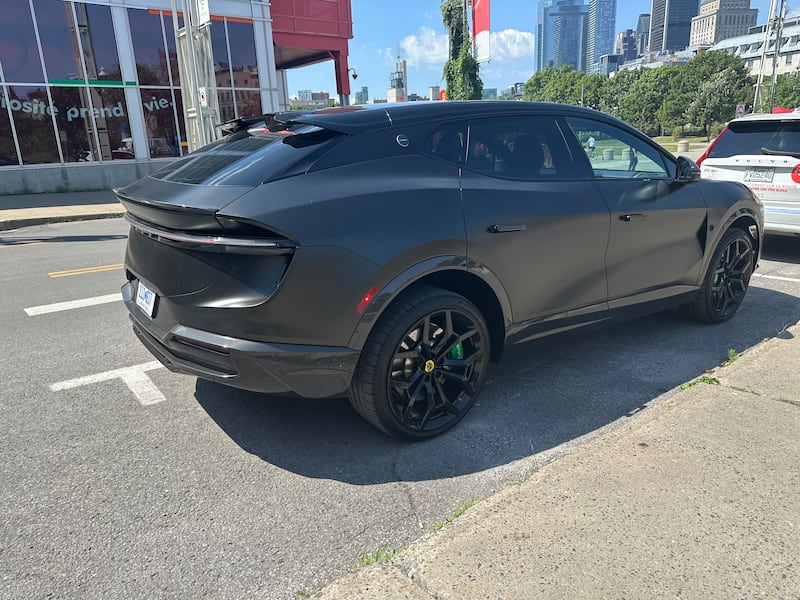
Lotus, owned by the Chinese Geely Group, recently shipped its first Eletre EVs to Canada under a Canada-China deal signed in January. The premium SUV, made in Wuhan, is the first Chinese-owned and Chinese-built EV available for sale in Canada. The high-end vehicle starts at $119,000, while the fully loaded model sells for $159,000.
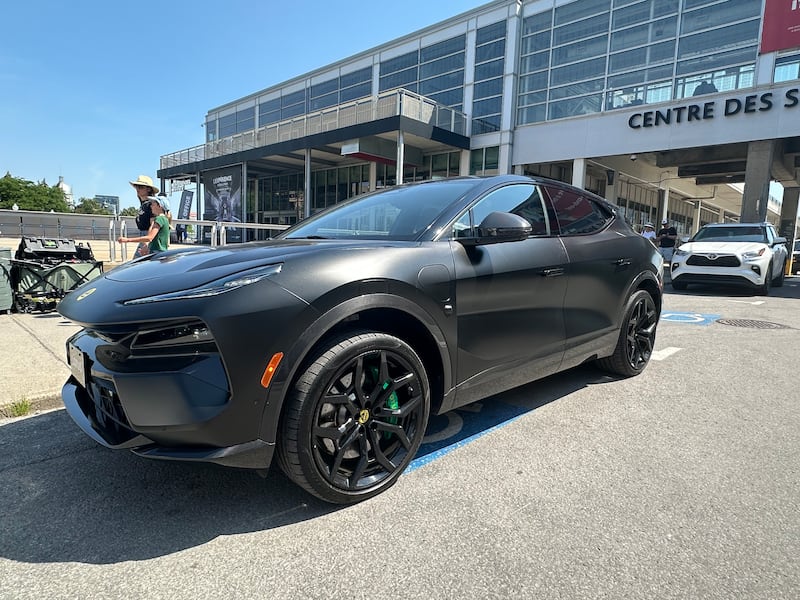
The CEO of Lotus Cars Americas, Max Trantini, says orders for the SUV — which can drive more than 600 kilometres on a single charge and go from 20 to 80 per cent charged in less than 20 minutes — have been high.
He says the first shipment of nearly 20 cars has already arrived, with more imports expected as the cars hit dealership showrooms and city roads.
“The Canadian customer really liked the car, and there is a high request for this car even before they saw the car,” he said. “So we are expecting now that we finally see the car at the dealership and also on the street, that our customer will really start loving it even more.”
The Eletre is the first of the Chinese made EVs imported into Canada after Prime Minister Mark Carney made a deal with Chinese President Xi Jinping in January. The agreement allows up to 49,000 Chinese EVs to enter the country per year, at a 6.1 per cent tariff rate. The change lifted a 100 per cent tariff on those vehicles implemented in 2024. In exchange, China agreed to drop duties on agricultural products.
Trantini says after the car launched in Europe three years ago, the plan was to launch in Canada before the 100 per cent tariff was placed on Chinese-made EVs in 2024.
“We developed the U.S market for this car, and also the Canadian market for this car, but then due to the tariff we had to hold the import because of that situation,” he said. “We believe that the car is perfect for the Canadian market.”
Data provided by Global Affairs Canada says that 2,910 EVs from China have arrived since March 1, though the agency could not say where they are located or what companies imported them. No new cars have arrived in the country since the end of May.
The managing director & publisher of Automotive News Canada Tim Dimopoulos says he expects that most of the early EV entering the country will be from well known brands like Lotus, Tesla and Volvo who already have dealerships in Canada.
“They’re going to take up a big part of that 49,000 unit volume that we’ll see, but you’ll start to see new entrants like BYD coming to the country,” he said.
Lotus currently has six dealerships in Canada but company officials say they are looking into options to expand their reach in Canada now that the Eletre is open for orders.
“Our dealer network… it was quite small, and that was the right size for the car we were selling until today because we were selling a sports car,” Trantini said. “Now that we have this new car coming, we are already talking with our dealer in order to expand their business, and I’m also receiving daily requests from investors that want to join.”
What’s next?
Data from Transport Canada shows Polestar, which is also owned by the Geely Group, is already listed in Transport Canada’s Appendix G pre-clearance program — a registry that allows foreign vehicle manufacturers to import new cars that comply with Canadian Motor Vehicle Safety Standards. The automaker is registered for passenger cars produced in Chengdu and Taizhou, China, as well as vehicles manufactured in the U.S. and South Korea.
Chinese companies BYD and Chery are also expected to enter the Canadian market in the coming months.
BYD already has Appendix G approval for an unknown kind of passenger car made in Shenzhen City and Xi’An, China. It’s unclear when the approval was received.
Dimopoulos says those companies will likely begin by importing high-end luxury models that offer dealers higher profit margins and appeal to a niche market.
“If they’re going to invest in dealer networks or partnerships with existing networks, or even set up offices here, they need to make some money initially to do that, and the more expensive stuff will allow them to do that,” he said.
However, Ottawa has said by 2030 it wants half of the Chinese EVs imported into Canada to cost less than $35,000. As more Chinese EVs, especially cheaper models, enter the market experts predict EVs across the spectrum to come down in price.
“Overall it should bring prices down from other manufacturers,” said Dimopoulos. “That’s going to be the first kind of pressure you’ll see in the marketplace.”
According to Transport Canada, there are at least 726,126 light-duty battery EVs, including popular vehicles on Canadian roads representing 2.7 per cent of the market share. The department says there are an additional 304,823 light-duty plug-in hybrid vehicles on the roads, representing 1.1 per cent of the market share.
Buy at your own risk
Intelligence and cybersecurity experts have repeatedly raised concerns with the Chinese-made vehicles citing significant national security and privacy concerns. Experts consider the EVs smartphones on wheels. The experts say their concerns stem from laws in China that require Chinese companies, especially those with some degree of state ownership, to hand over data if requested.
Jody Thomas, Canada’s former National Security and Intelligence Advisor to prime minister Justin Trudeau, said that by law the Chinese state has access to any data gathered by the EVs.
“It doesn’t mean they will access the data, but it means they can, should they choose to,” she said. “The risk at this point is more a plausible risk.”
Thomas says data like routes, cell phone contacts, driving patterns, phone conversations, and recordings from your car’s camera, all provide information about a driver.
“At sort of the base level, it’s a privacy issue, but broader than that, it becomes a potential for espionage when you aggregate the data, when you look at it as more than just the individual driver.”
Thomas says consumers need to consider these potential risks when purchasing a Chinese made EV and potentially mitigate the risk by choosing to avoid connecting a work device to their vehicle.
“This is about a personal choice, privacy, and who you want to buy from,” she said. “If you work in the military, if you work in sensitive sectors, if you’re an employee of some elements of the federal government, provincial governments, sensitive industries, you perhaps are not going to want to buy one of these vehicles.”
Some security experts have even gone so far as to suggest the federal government should ban the vehicles from sensitive sites like military bases and certain government sites.
Asked about these concerns, Trantini says his vehicles comply with all the federal government’s rules and regulations.
“Our cars are fully certified and all our hardware and our software follow the rules,” he said. “We disclosed to the government everything that is related to our software, everything related on our hardware, and we pass all the examinations, so as long as we are compliant, I don’t think we have anything to fear.”
When asked about what potential risks Chinese EVs pose, Public Safety Minister Gary Anandasangaree told a parliamentary committee that Ottawa needs to ensure the vehicles in Canada do not have the ability to transmit information back to other countries, including China.
Canada has repeatedly said it expects Chinese automakers in the Canadian market to build where they sell. Government officials, including Industry Minister Melanie Joly, have said Chinese automakers must partner with Canadian companies to not only build but sell their vehicles.
Experts have said its possible Canada could make a deal that prohibits Chinese companies who choose to make EVs in Canada from collecting data gathered domestically.
Trantini says if any future government regulations come forward from the government around data and security, the company will follow suit.
“We will adjust and always be compliant,” he said.

