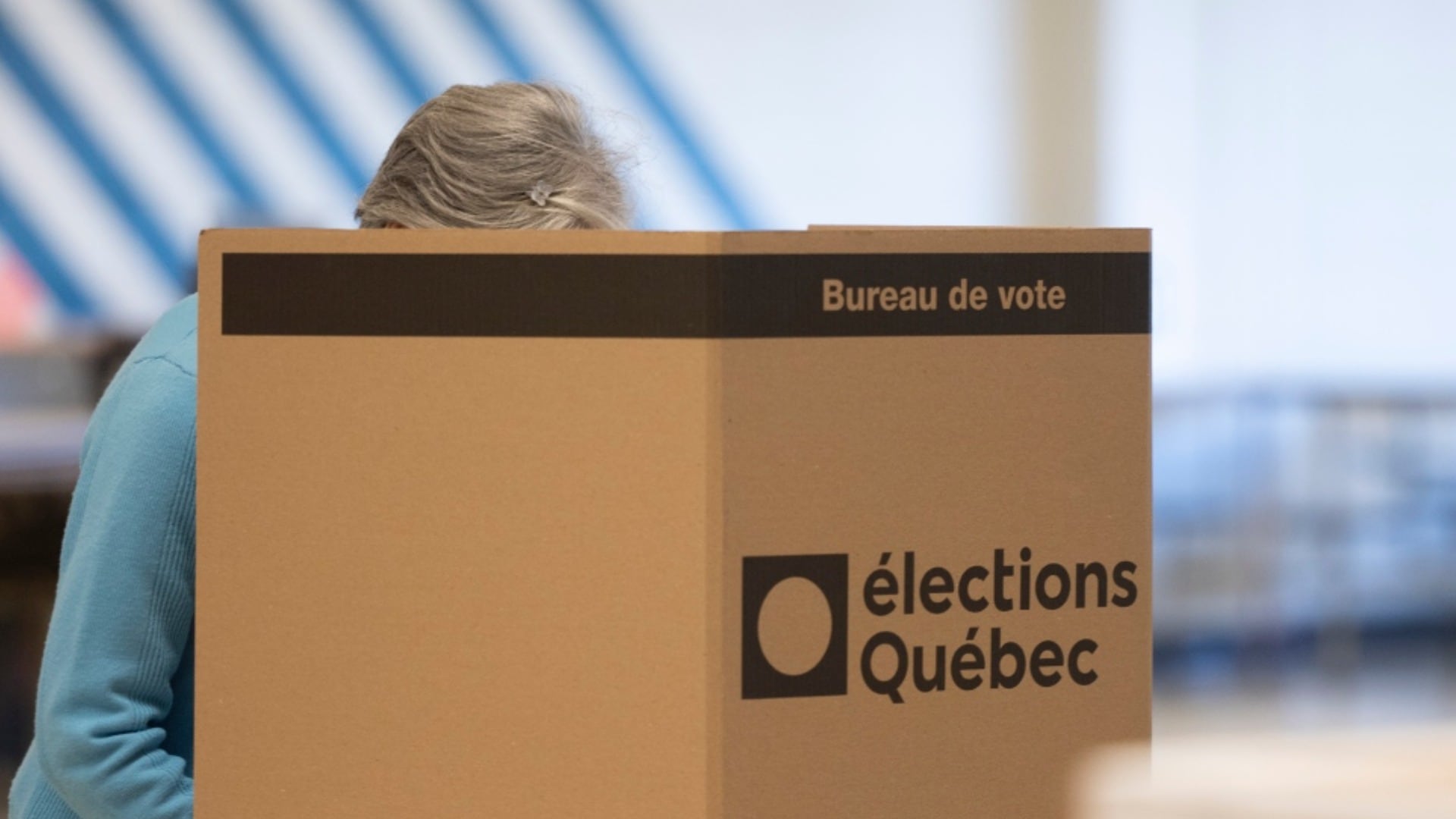
Lawyers are preparing to send a formal letter to Élections Québec and the Attorney General after the province’s independent electoral agency instructed workers to limit their use of English with voters at polling stations on voting days.
The move comes after an Élections Québec poll worker anonymously told CTV News that employees could speak to voters in English only if they say they have an English eligibility certificate or are Indigenous.
The lawyers preparing the formal letter are also involved in an ongoing legal challenge against the Director General of Élections Québec and the Attorney General of Quebec over French-only election mailouts.
The lead plaintiff in the lawsuit, Geoffrey Chambers, told CTV News he was disappointed to learn of the directive to poll workers.
“We’re very disappointed to learn that they were going to proceed with a practice which is really going to discourage electors at the voting station,” Chambers said.
The letter will formally ask Élections Québec to suspend the practice of instructing workers to limit their use of English at polling stations and allow employees to communicate with voters in English under any circumstances, as they have in previous elections.
The demand will also include a deadline, although that deadline was not disclosed to CTV News. Chambers said if Élections Québec does not comply, the lawyers will ask the court to add the issue to the ongoing lawsuit and seek to prohibit both practices.
“The chief electoral officers have instituted new practices that are, in our view, in violation of the Constitution, and certainly in violation of the rights of the English-speaking voters,” Chambers said.
“It will make the election much less efficient, to the point where possibly the election’s results could be called into question.”
When asked about the legal challenge, Élections Québec spokesperson Julie St-Arnaud-Drolet told CTV News, “We will respect the ruling of the court, as we respect the laws.”
The agency said it would not elaborate further.
The Élections Québec document provided to CTV News by the poll worker who was granted anonymity to protect their job gives employees sample questions to determine whether they can communicate with a voter in English.
The two sample questions listed are: “Have you been declared eligible to get an education in English?” and “Are you a member of the Native community?”
If a voter responds yes, the document states that the poll worker can speak to them in English. If a voter responds no, the poll worker must tell the voter the conversation will continue in French to respect the Charter of the French Language.
Poll workers are also advised to tell voters they can repeat what was said in French if the voter does not understand.
Élections Québec had previously told CTV News that the directive stems from its obligation to comply with the Charter of the French Language while ensuring voters “have the right to communicate” with staff in English.
“For our part, we are applying the provisions of this Charter for the first time, since we were not subject to them prior to the passage of Bill 96—Act respecting the official and common language of Quebec, French,” Élections Québec wrote.
“That said, we rely on the person’s statement and do not require any certification or other proof.”
The directive was made public after the provincial government filed an application seeking to appeal a ruling that ordered Élections Québec to send voter reminder cards in English and French for the election by suspending the province’s language law, Bill 96.
The government’s request is expected to be heard by the Quebec Court of Appeal on the same day as the election, on Oct. 5.
“I’m entirely disappointed Élections Québec didn’t recognize, based on the court’s ruling on the first move, that this would compromise the rights of the English-speaking population,” Chambers said.
“It’s another example that they are changing a long-established practice.”

