Justice Minister Sean Fraser says he’s “not interested” in splitting apart the government’s new legislation on medical assistance in dying, pushing back against critics who say the plan to allow advance directives has not been studied as much in Canada as the issue of excluding mental illness as a sole qualifying condition.
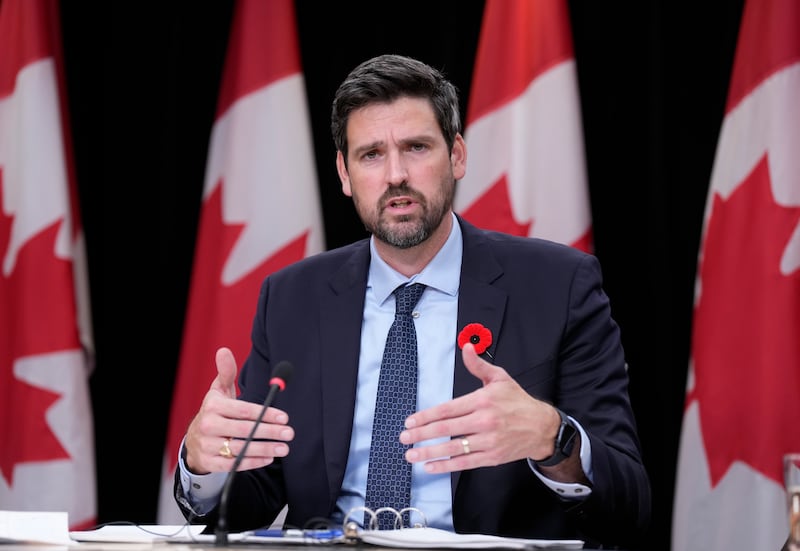
“I’m not interested in splitting the bill,” Fraser told reporters on Parliament Hill on Wednesday.
“We have a unique opportunity to move forward on two important issues, which are both the source of extensive study, both by government departments and the parliamentary committee. And we have an opportunity to address two major outstanding questions at the same time.”
On Tuesday, Fraser tabled Bill C-41, the MAID Safeguards Act, a 12-page piece of legislation that proposes to indefinitely exclude those whose sole underlying condition is a mental illness from qualifying for assisted death, and to allow people to make advance plans to pursue MAID in certain cases.
Challenged on the extent of the considerations made around the advance directive element of the bill, the minister cited a “What we heard” report from Health Canada published last year, as well as past debates in Parliament.
“It’s been a subject that I’ve been hearing about in my own community long before I’ve been hearing about the issue around mental health as the sole underlying medical condition,” Fraser said. “So, I would take a different view, respectfully of course, with those who share the perspective that one has been studied more than the other.”
Fraser’s pushback comes after swift criticism about Bill C-41 was levelled by some stakeholders on Tuesday, given the mental illness element of the legislation is facing a condensed timeline to pass, as the current exclusion written into the law is scheduled to expire on March 17, 2027.
Planning to push advance directives through alongside this extensively studied proposal – one that parliamentarians from all sides support – is the source of concern for groups including Inclusion Canada.
“Parliamentarians in this bill are going to have to accept one to get the other,” Inclusion Canada CEO Krista Carr told CTV News on Tuesday. “We’re saying remove advance requests from the bill. Go forward with MAID for mental illness and do the proper work.”
Inclusion Canada also questioned the government’s citing of public opinion polling and recent consultations on MAID as part of the work done already, noting that the conversations the organization was a part of, were not focused on advance requests.
“Although unanimity is nice if you can achieve it in the House of Commons, it’s not an essential ingredient to do what’s right,” Fraser said. “It’s not my primary goal. Implementing the measures that we believe are right is more important to me than having unanimous support of the House of Commons.”

