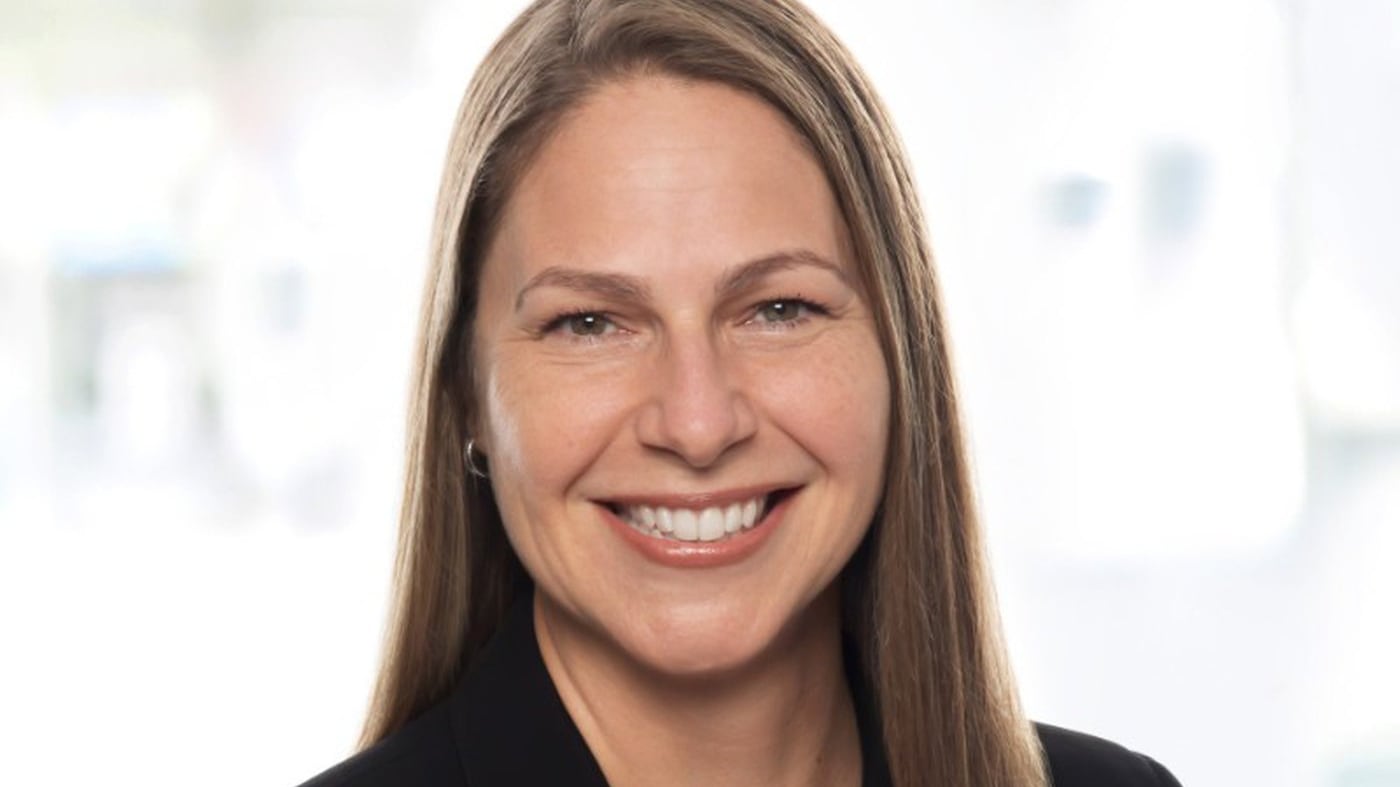
HALIFAX — Becky Druhan says her experience as a provincial Progressive Conservative cabinet minister gives her an upper hand as the new leader of Nova Scotia’s opposition Liberals.
Druhan, in an interview Sunday, said she knows how Premier Tim Houston’s Tory government operates and she will use that to her advantage as she takes the reins of the Liberal party.
She said her previous experiences as education minister and later as justice minister have taught her how to run government efficiently.
But she said she will take a different approach to decision-making than her former party.
The MLA for Lunenburg West said she’s witnessed Houston’s government make decisions without listening to Nova Scotians, something that prompted her to walk away from the party and vie for the Liberal leadership.
“I think that Nova Scotians deserve better than they’re getting right now,” she said. “The job of government is to listen to the people they represent … and to do the things that are in the best interest of the province. And I am not seeing that out of Tim Houston.”
Druhan was named the new Liberal leader at a convention Saturday in Halifax, defeating lone rival Amanda Mombourquette by a wide margin and becoming the first woman to lead the provincial party.
She joined the Liberals in May after she was ousted from cabinet last fall and sat as an Independent during the spring sitting of the provincial legislature.
Her move gave the Liberals a much-needed boost after securing just two seats in the 2024 provincial election, which saw the party lose its role as Official Opposition.
Tom Urbaniak, a professor of political science at Cape Breton University, said Druhan’s election is the start of a new chapter for the Liberals, who were last in power in 2021.
The party dropped 10 seats to 17 in the 2021 election after Houston led the Conservatives to a surprise majority win. Former Liberal premier Stephen McNeil had led the Liberals to back-to-back majority governments before stepping down in 2021.
Much has changed since for Houston since his party’s landslide victory. Now, in his second term, he’s seeing controversies — including backlash against cuts to funding for arts and Mi’kmaw and African Nova Scotian programs and fierce opposition to a proposed AI data centre in southern Cape Breton — pile up, Urbaniak said.
“The (Conservatives) are in a vulnerable position and the NDP and now the Liberals are gaining strength and gaining profile with solid leaders,” he said.
There is a growing trend across the country where voters are showing an interest in a professional, even keeled, non-polarizing approach to politics, said Urbaniak, suggesting Druhan may be able to respond to that appetite in Nova Scotia.
“I think Nova Scotians will be looking for credibility around financial management, they’ll be looking at actual measures to enhance affordability and to make life sustainable,” he said. “They will be looking at a new way of doing politics.”
Despite the changing political tide, the road ahead will be challenging for Druhan, who is now tasked with rebuilding a party she once had a hand in defeating.
“Her bigger challenge still, despite the fact that she won decisively, is making sure she can persuade longtime, diehard liberals that she has their interests at heart,” said Urbaniak.
Nova Scotia has a long history of politicians crossing the floor, including former interim Conservative leader Karen Casey who defected to the Liberals in 2011 and current Public Works Minister Fred Tilley who left the Liberals for the Conservative caucus before the 2024 election.
However, Druhan’s swift ascent to Liberal leader, just over a year after leaving the Conservatives, is unprecedented in the province, Urbaniak said.
Druhan, however, said she’s confident that her values align with new and longtime members of the Liberal party.
“I appreciate the trust that they’ve placed in me and I’m confident that we are all moving forward together with the same vision and mission,” she said, adding that work to rebuild the party is already underway.
“We need to bring people together, we need to listen, we need to build strong policies, we need to have candidates ready,” she said.
Of the 2,869 ballots cast by delegates Saturday, Druhan received 1,915 votes, representing 68 per cent of the available points using the party’s weighted voting system.
In a press release Saturday, the Progressive Conservative caucus took aim at the number of delegates who voted in the leadership election, saying a turnout of fewer than 3,000 voters suggested a lack of enthusiasm for both Druhan and Mombourquette.
“The Liberal Party’s record in Nova Scotia is starving health care, shutting down industry, and failing to get housing built in our province. The new Liberal leader will need to contend with that record,” said a statement from caucus chair Chris Palmer.
Urbaniak says that response from the Conservatives suggest the party considers the Liberals a legitimate threat in the next election.
“The (Conservatives) believe … that Becky Druhan is a leader that they don’t want to underestimate,” he said.
In contrast to his party’s remarks, Houston congratulated Druhan on social media Saturday, suggesting that he and the new Liberal leader agree on the need to grow the economy and create good-paying jobs.
This report by The Canadian Press was first published Nov. 22, 2026.

