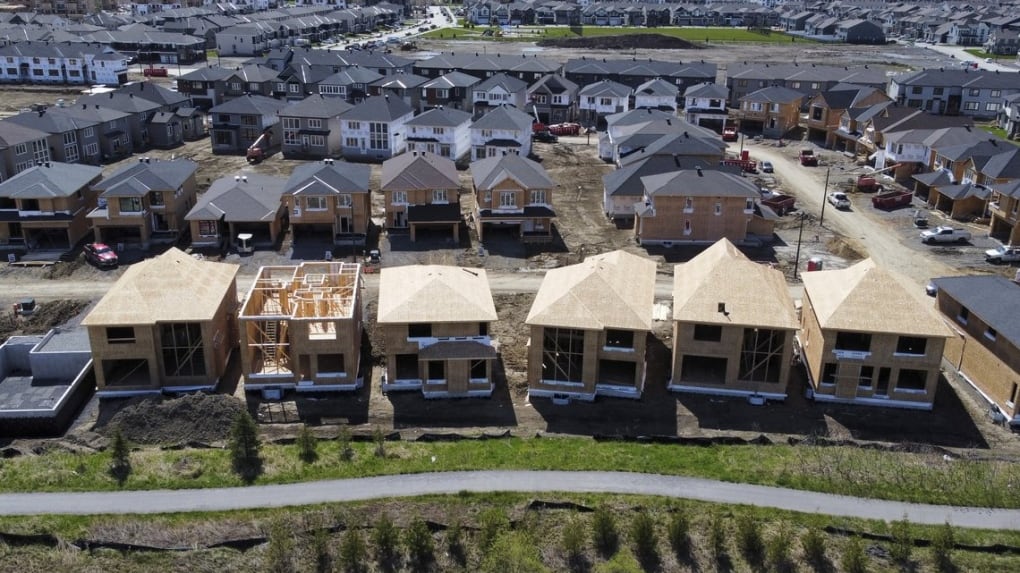
A regulatory body meant to protect new homebuyers from problem builders and sellers is effectively failing to meet its mandate, Ontario’s auditor general says.
By failing to carry out its mandate properly, the Home Construction Regulatory Authority (HCRA) “is potentially putting new homebuyers at risk,” Auditor General Shelley Spence wrote in a scathing report released Wednesday.
In 2021, the province charged HCRA with enforcing The New Home Construction Licensing Act of 2017, making it the administrative authority responsible for licensing and regulating new home builders and sellers in Ontario.
However the auditor found that the HCRA has fast-tracked renewal licenses without staff review even when a licensee has a history of conduct issues and has approved licences without conditions for over 99 per cent of applicants whose credit scores failed to meet its threshold.
“HCRA’s assessment process is insufficient to form an opinion on whether the applicant can reasonably be expected to be financially responsible in the conduct of business,” Spence wrote.
She found that the organization primarily relies on a credit score alone to determine the financial position of license applicants. Applicants whose credit scores don’t meet the threshold are assessed by the assistant deputy registrar of licensing, but there are no guidelines for what constitutes a pass and decisions are made on a case-by-case basis, the auditor found.
She found that since its inception, HCRA has approved 99.2 per cent of the 2,042 applicants with a failing credit score, with no conditions.
“The remaining 16 applications were approved with conditions, and only one included conditions relating to the financial position of the applicant. These facts call into question the value of the ADR review process in assessing an applicant’s financial position.”
Spence found that HCRA does not obtain updated information about licensees’ financial positions, does not consistently consider insolvency history when reviewing applicants, and obtains but does not review or consider financial statements from applicants.
“HCRA does not assign risk ratings to licensees to guide its oversight and enforcement activities,” Spence wrote. “HCRA also does not conduct regular, proactive oversight with a focus on preventing issues before they impact homebuyers. Instead, inspections, investigations and other enforcement activities are reactive and initiated in response to complaints received.”
Complaints against a builder or vendor don’t seem to impact license renewal either in many cases.
In 2024/24, the auditor found 134 licensees who had open complaints with HCRA were fast-tracked for renewal.
In one case, HCRA provided a builder with a fast-track renewal six days before closing a more than year-long investigation that resulted in over $16 million in administrative penalties for 76 contraventions of the Code of Ethics.
Complaints have grown ‘significantly’
The HCRA is currently sitting on a backlog of over 1,500 complaints, with an average open time of more than a year.
“HCRA has seen its backlog of open complaints against new home builders and vendors increase significantly each year since its inception,” Spence wrote.
From 2021 to 2025, that number grew from 129 open complaints against new home builders and vendors to 1,526 as of March 31.
“HCRA has not set any targets or benchmarks for how long on average complaints should take to close,” Spence wrote. “We obtained HCRA’s complaint data and calculated that the average time it takes HCRA to close complaints against licensees has increased significantly each year since it began operations in 2021, reaching 419 days in 2024/25.”
The auditor found that HCRA has been making progress on reducing the time it takes to close an illegal building complaint against unlicensed builders, shortening it from a peak of 331 days in 2022/23 to an average of 232 days in 2024/25. Still, that remains about 7.5 months.
The agency is also ignoring municipal building permit data that could be used to proactively identify illegal builders, the auditor found.
“Buying a home is one of the largest investments a person makes in their lifetime. When they sign a contract with a builder or vendor there is an expectation that the builder/vendor is reliable,” Spence wrote.
“An HCRA licence can provide the homebuyer with additional assurance. By automatically renewing licensees without evaluating its own licensee complaints and inspections data, HCRA is potentially putting new homebuyers at risk.”
In all, HCRA has agreed with 10 recommendations made by the auditor.
“As one of Ontario’s newest regulators, the HCRA sees the Auditor General’s recommendations as aligned with our commitment to continuous improvement, and we look forward to addressing them,” Wendy Moir, the HCRA’s CEO and registrar, said in a statement after the report was released.
Moir added that “we take these recommendations seriously and will work collaboratively with stakeholders across the sector.”
The Ministry of Public and Business Service Delivery and Procurement, which oversees the HCRA, agreed with or conditionally accepted three of the four recommendations addressed to it.
The ministry did not accept a recommendation from the auditor that HCRA work with the ministry to establish competency standards for construction supervisors in home building companies; establish mandatory continuing education requirements for all licensees; and implement monitoring practices to ensure compliance with the standards.
“The Ministry will assess the potential impact of this recommendation, including impacts on housing supply and the new home sector, before determining whether to consider changes that would be required to implement this recommendation,” the ministry told the auditor.

