At the height of a snowstorm that shut down highways, schools and daycares, some Ontario public servants were being reminded they still had to show up to work — or take a vacation day.
CTV News Toronto has obtained a copy of an internal email sent to some staff within the Ministry of Transportation reminding employees of the province’s new five-day-a-week, in-office requirement.
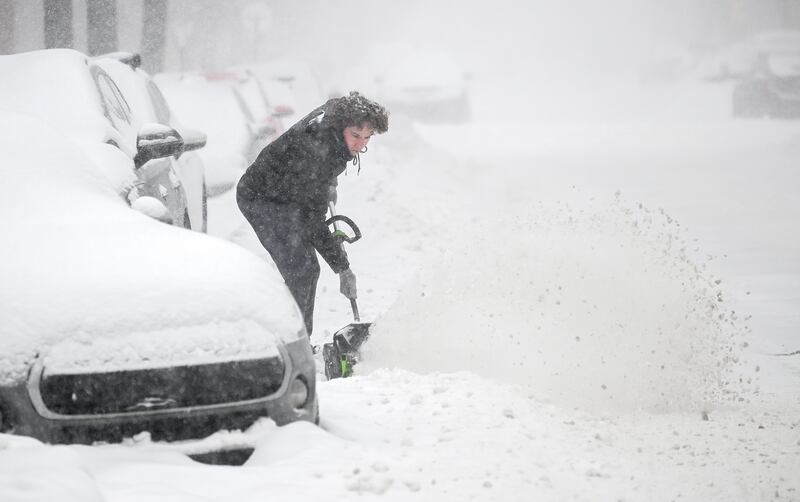
It came Thursday morning as up to 40 centimetres of snow fell across the GTA, hundreds of collisions and officials across the region urging people to “stay off the roads.”
The message, sent around 9:30 a.m., has once again renewed criticism of the Ford government’s return-to-office mandate and raised questions about how worker safety is being weighed during extreme weather.
Here’s what the email said
The email, sent by a team leader and shared with CTV News by a source, thanked staff for their “flexibility” during the storm before laying out and reminding workers of provincial expectations.
“Moving forward, I want to clarify our expectations during inclement weather,” the message reads. “We have a five-day per week in-person work requirement.”
The email went on to say that if travel conditions were challenging, employees could “adjust” their schedules by arriving later or leaving earlier. If they couldn’t comply with that, staff were told: “use a vacation day if you are unable to attend in person.”

“Your safety is important to us,” the message added, while thanking employees for their “commitment to maintaining our work requirements while navigating winter conditions.”
CTV News Toronto has confirmed the email came from within the Ministry of Transportation. However, the ministry did not immediately respond to a request for comment.
How bad was the storm?
Throughout the day, Environment Canada upgraded parts of the region from a yellow snowfall warning to an orange alert around 8 a.m., warning that “travel will be hazardous” and that there could be a “significant impact on rush hour traffic.”
“Orange alerts are uncommon,” the agency notes, and are used when “impacts are major, widespread and/or may last a few days.”
By mid-morning, the impacts were already evident. Toronto police closed both directions of the Don Valley Parkway due to driving conditions, collisions and black ice.
The Toronto Zoo closed. Six city-run childcare centres shut their doors. Dozens of school boards and some universities cancelled in-person classes.
At the time, Ontario Provincial Police Sgt. Kerry Schmidt told CP24 that about 150 crashes had been reported across the GTA in roughly 24 hours. That number later climbed to 200.
It was around that same time, the source said, that staff received the email reminding them of “expectations during inclement weather.”
In a statement to CTV News, the City of Toronto also shared how they instructed their staff during the storm:
“Given the diverse nature of the City’s operations, each division assesses its operational and health and safety requirements during weather events and provides direction to staff based on the work being performed.”
“Some roles require on site presence to maintain essential and critical services, while others may be performed remotely.”
A response from the Ford government
CTV News Toronto reached out to the Ford government about the email.
In a statement, a spokesperson said, “As part of the OPS in-office standard, managers can approve ad hoc, occasional or temporary remote work requests to provide short-term flexibility for various extenuating circumstances - including inclement weather. As such, an OPS directive was not issued yesterday because local managers already have the discretion to offer this flexibility.”

But the union representing thousands of Ontario public servants says “employees should not be put at risk.”
“An employer with 70,000 employees should have an inclement weather policy in place similar to that used successfully within the province’s school system,” said Dave Bulmer, President and CEO of the Association of Management, Administrative and Professional Crown Employees of Ontario (AMAPCEO).
“When bad weather is imminent and police and weather services are strongly advising against non-essential travel the day before a storm hits, employees should not be put at risk, nor should they be directed to use a vacation day (if they have one to use) to protect their own safety,” Bulmer said, adding that the email “may have been a message a few local managers worked on together.”
In an email on Friday, the Ontario Public Service Employees Union (OPSEU) told CTV News that while some workers were expected to commute, “many OPS members” were in fact allowed to work from home.
Amanda Usher, Chair of the OPS Unified Central Employee Relations Committee, said the storm exposed the contradictions in the current policy.
“Yesterday’s snowstorm proves what we’ve been saying all along: OPS employees can do their jobs effectively and seamlessly from home when the situation requires it,” she said.
“But while some staff were able to work safely from home, others faced overwhelming workloads onsite and were denied basic breaks because of staffing pressures. That is unacceptable. No worker should have to choose between their safety and their job.”
A mandate already under pressure
The news comes just months after the province announced that all 60,000 Ontario Public Service employees would be required to return to the office full-time starting in January.
In a previous report just weeks ago, CTV News Toronto spoke with OPS worker Mike Skurra from the Ministry of Children, Community and Social Services, who not only predicted scenarios like this, but said the policy ignores real-world conditions.
“In the peak of the worst weather, they expect us to be scraping the car off and driving through horrible weather,” he said.
Bulmer noted that between April 2022 and August 2025, most civil servants worked under a hybrid model and adapted easily when severe weather hit.
He added: “While a local manager may exercise last-minute discretion to send an email saying ‘work from home’ — sending it during the storm itself — to an employee who can only receive it online when they get to the office — has no effect other than to demonstrate a lack of genuine care for employee safety.”

