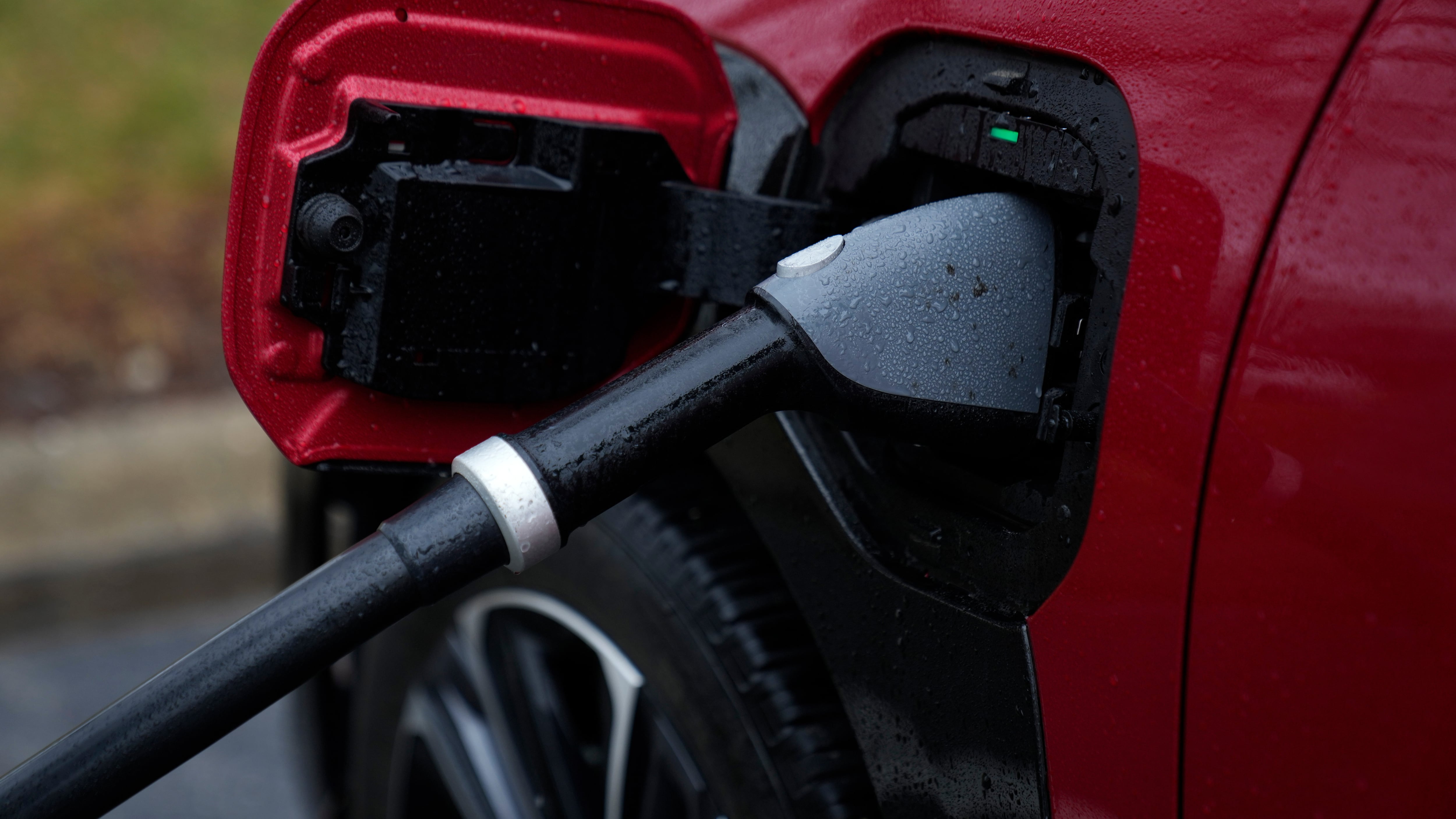
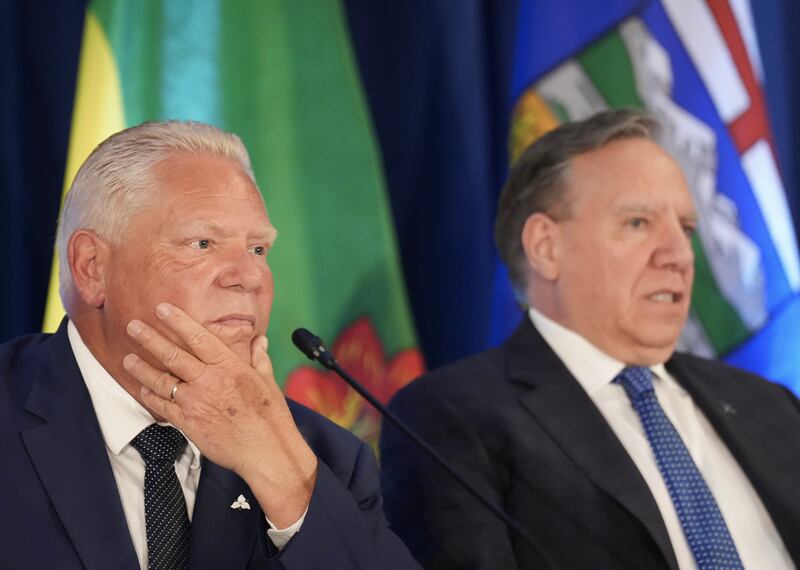
Premier Doug Ford is calling on his counterparts in Quebec and British Columbia to end all electric vehicle mandates, arguing that the policies are “threatening the livelihoods of tens of thousands of Canadian workers.”
“As workers and businesses across Canada face down the impact of U.S. tariffs, I know we are united in our efforts to do everything we can to protect Canadian workers and their jobs,” Ford wrote to Quebec Premier François Legault and B.C. Premier David Eby on March 17.
“A we fight to keep workers on the job, we need to do everything we can to ensure our auto sector is as competitive as possible. Unfortunately, existing EV mandates in Canada are making our auto sector less competitive and threatening the livelihoods of tens of thousands of Canadian workers.”
The premier said provincial EV mandates make the country particularly vulnerable in the context of the U.S. rolling back its EV policies.
“Given this context, keeping EV sales in only certain Canadian jurisdictions, currently only Quebec and British Columbia, creates a fragmented, uncompetitive market that risks pushing investment, jobs, and production out of Canada and into the U.S.,” Ford said.
In February, Prime Minister Mark Carney moved to scrap a Trudeau-era EV sales mandate that would have seen EVs account for 100 per cent of Canadian sales by 2035.
The prime minister introduced a new greenhouse gas emission standard for model years 2027 to 2032. By 2035, Carney said, the goal is to have 75 per cent of vehicle sales be EVs and 90 per cent by 2040.
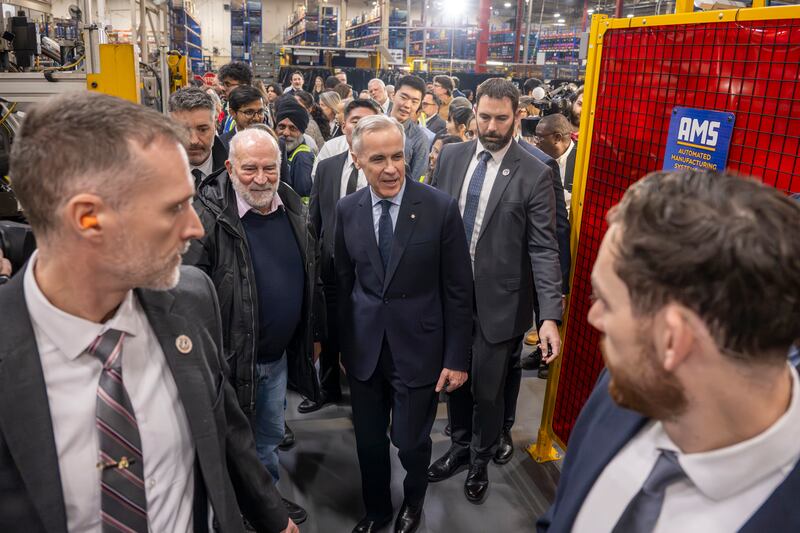
Ottawa also launched a new five-year $2.3 billion EV affordability program, that offers individuals and businesses purchase or lease incentives of up to $5,000 for battery electric and fuel EVs, and up to $2,500 for plug-in hybrid models (PHEVs).
“While I was pleased to see the federal government remove its EV mandate, I will continue to push for the removal of the remaining federal regulations that continue to undermine our auto sector,” Ford’s letters continued.
The premier noted that Quebec “partially” lifted the ban on gas-powered cars that would have come into effect in 2035. The province is now aiming for a target of 90 per cent of new vehicle sales to be hybrid or electric in 2035.
“Given the federal government’s decision to repeal its EV mandate, I am calling on Quebec to take the next step by fully repealing its own mandate,” Ford wrote.
B.C.’s energy minister announced last year that the province was abandoning its rebate program for new EVs and would scrap a mandate that every new vehicle sold in the province must be zero-emission by 2035. He added that plans to revise the mandates were in the works.
“I recognize your government called for one harmonized EV sales target for the country before the federal government’s changes,” Ford said in the letter.
“In that same spirit, I am now urging you to align British Columbia’s approach with that of the federal government’s new direction by repealing your province’s EV mandates altogether.”
He assured the premiers of both provinces that Ontario is ready to stand up to tariffs on “key” Quebec and B.C. industries, including forestry, steel, and aluminum, and metal manufacturing.
“I hope that Ontario auto workers can count on your support at a time when their jobs and (paychecks) are under direct attack from U.S. tariffs,” Ford wrote.
With files from The Canadian Press and Rachel Aiello, National Correspondent, CTV News

