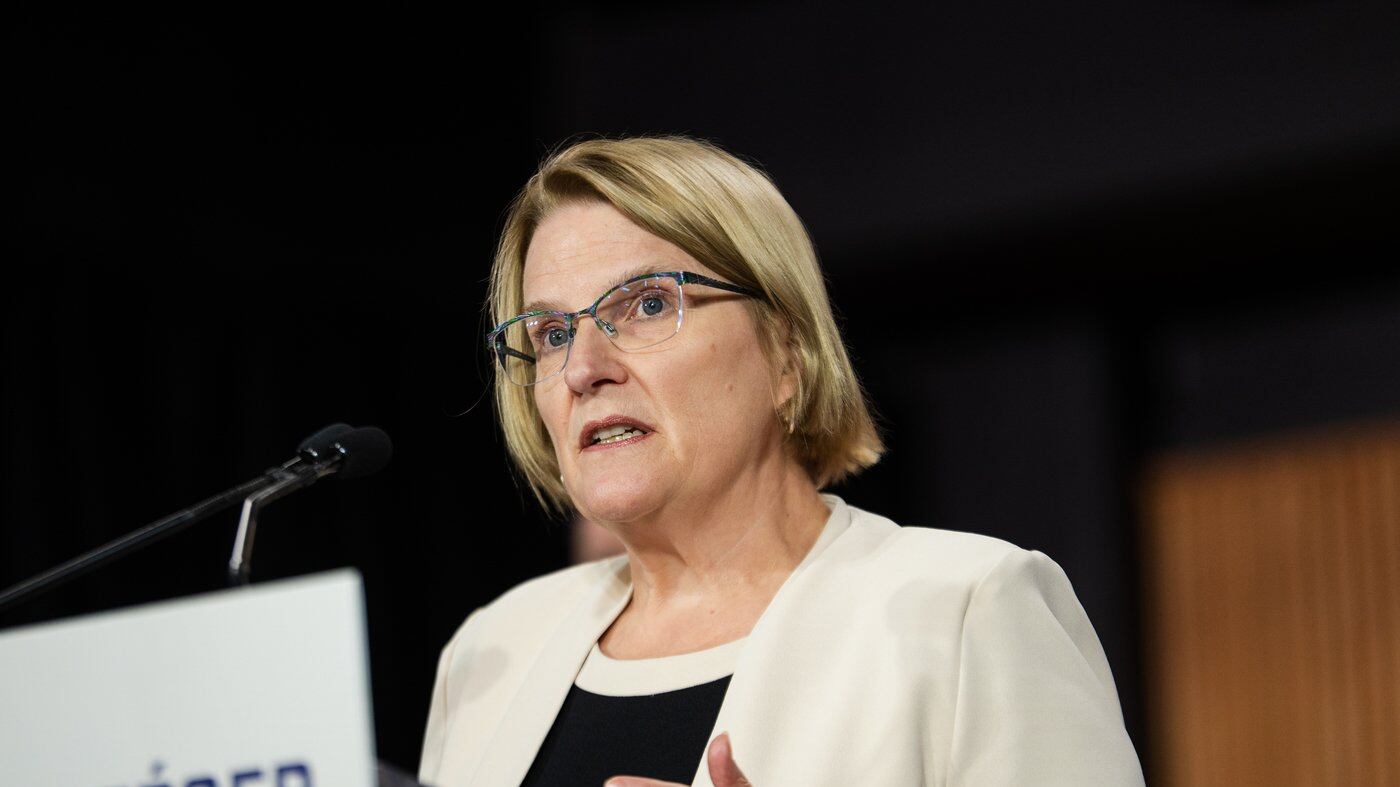
TORONTO — Ontario’s health minister said Wednesday she is “disappointed” the federal government has left provinces and territories on their own to set rules for publicly funding nurse practitioners instead of creating a consistent, national standard.
Ottawa has clarified that nurse practitioner services equivalent to what physicians provide are covered by the Canada Health Act’s requirement that medically necessary services are publicly funded, and gave provinces until April 1 to do so.
Despite Ontario Health Minister Sylvia Jones pushing the federal government years ago for that clarification, the province won’t have a system in place by then for ensuring nurse practitioners are publicly funded.
Jones said Ontario will be in compliance by April 1, 2027, which is when the federal government says penalties for non-compliance will be in effect.
But she is “disappointed,” she said, that each jurisdiction will now have to make its own systems for how to fix a “loophole” in the Act.
“What (the federal government has) said is, ‘It’s your problem. You fix it,’” Jones said Wednesday.
“So we’re going to have a whole bunch of different fixes across the Canadian jurisdictions. I was looking for some leadership from the federal government to make sure that there was consistency. We obviously aren’t going to get that. That’s fine. We’ll do what we need to do in Ontario.”
Liberal primary care critic Adil Shamji said that reasoning does not hold water.
“I have no doubt she would have objected if the feds had prescribed to her precisely how to fund NPs,” he said.
“The timing of the federal interpretation letter has overlapped very conveniently with the launch of the province’s Primary Care Action Plan. If they were serious about incorporating NPs into the public system, they’ve had the perfect instrument to do so. This makes their failure to meet the deadline even more inexcusable.”
Nurse practitioners in Ontario can assess patients, order and interpret tests, and prescribe medication and treatment. They work in a variety of settings, including family health teams and community health teams, hospitals and long-term care homes, as well as in more than two dozen publicly funded nurse practitioner-led clinics.
In most of those settings, nurse practitioners are paid a salary, but they are unable to widely set up nurse practitioner-led clinics or establish independent practices. Their association would like to see flexible funding models, such as those for family doctors, who can bill OHIP on a fee-for-service basis or who are paid per patient enrolled.
Jones responded Tuesday to a question in the legislature from Shamji on nurse practitioner funding by touting her Primary Care Action Plan and suggesting she wants to continue the emphasis on team-based care.
“A $3.4-billion investment in interprofessional primary care teams means that nurse practitioners, doctors, physicians, RNs, dietitians, mental health workers are actually working together,” she said.
“The member opposite is suggesting that we want all these stand-alone individuals to be able to bill when we know patients want and practitioners want the ability to work together in an interprofessional team.”
This report by The Canadian Press was first published March 25, 2026.
Allison Jones, The Canadian Press

