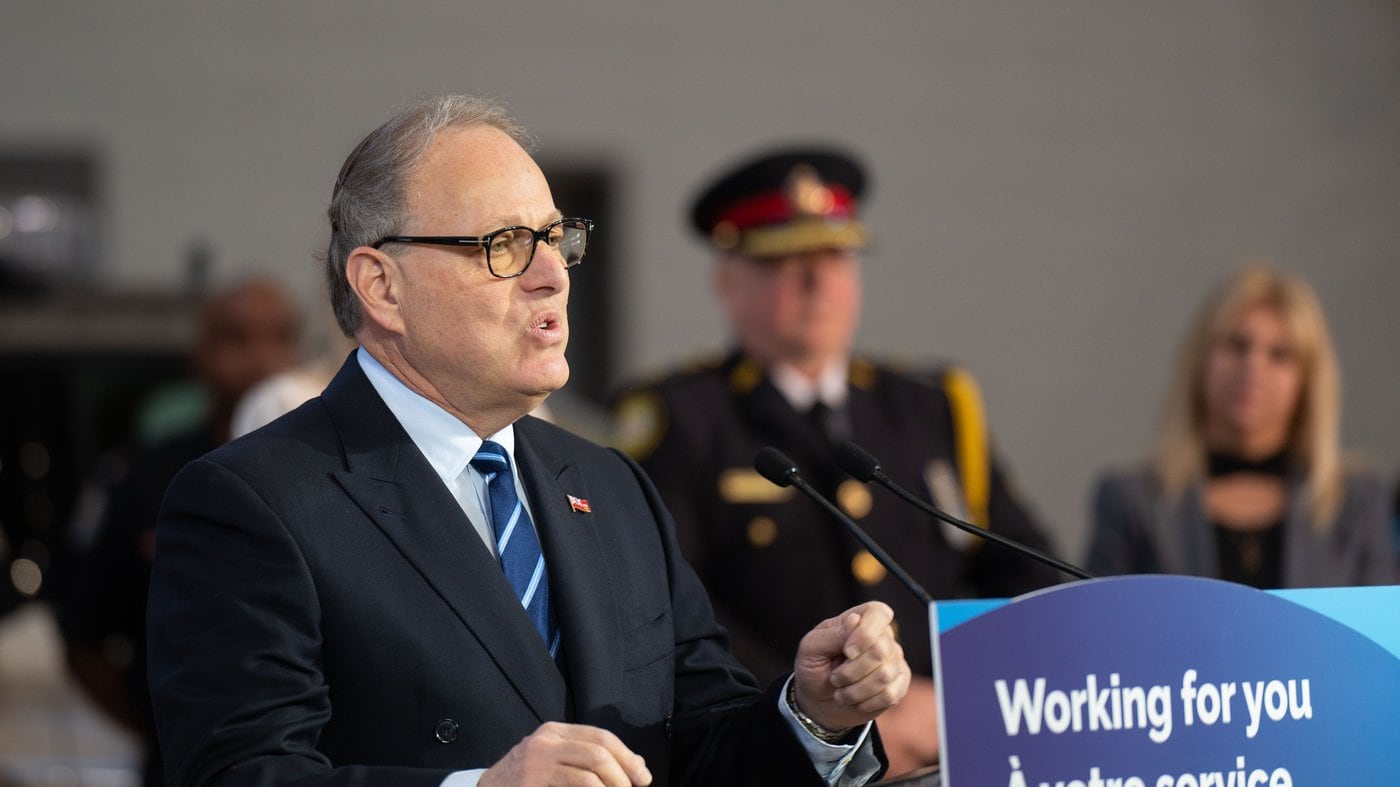
Ontario’s solicitor general is defending the new powers he is giving himself to direct police boards to follow provincial priorities.
Michael Kerzner said the new powers in the province’s recent omnibus legislation will be used to align local police priorities with what the province wants to focus on.
“If we’re concerned about getting drugs out of our communities and out of parks, if we’re concerned to get illegal guns out of our communities, we want to have a way to communicate that to the boards so the alignment of their local priorities are reflected in seeing what is important to the government,” he said.
Kerzner said he will not be directing police otherwise.
One section of Bill 119, Protecting Ontario’s Streets and Communities Act, reads: “The Minister may issue a directive to a police service board to establish priorities for the board that must be reflected in the board’s strategic plan.”
Kerzner said the government is generally aligned with police priorities across the province.
“It has to do with the clarity to police boards,” he said.
NDP Leader Marit Stiles said she’s worried about Kerzner’s new powers.
“I am concerned about this government having the kind of power to direct police in that way,” Stiles said, adding she’s also worried about the size and variation of the new bill.
“This legislation is very complex,” she said.
The bill, when passed, will also give new arrest powers to transit officers and ban future purchases of Chinese-made drones.
It would also allow the creation of a website that names high-risk offenders who are being released from jail or prison and allow restraining orders filed in other provinces to be enforced in Ontario.
The province will also ban medically unnecessary procedures on animals, including cat declawing as well as dog ear cropping and devocalization, which involves removing or altering a dog’s vocal cords to reduce barking.
This report by The Canadian Press was first published May 27, 2026.
Liam Casey, The Canadian Press

