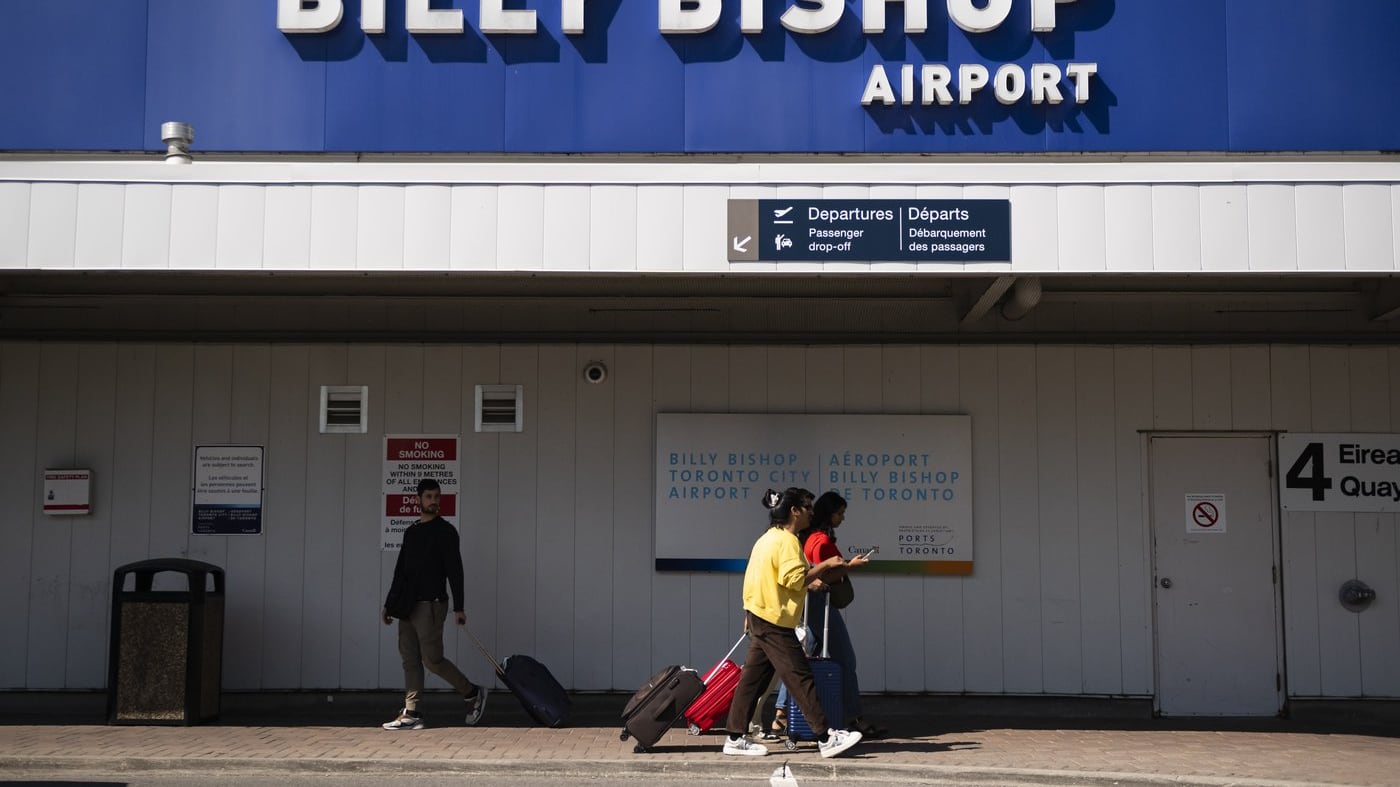
Ontario will soon designate Toronto’s island airport as a so-called special economic zone in an effort to fast track its expansion now that the province has taken over the land, Transportation Minister Prabmeet Sarkaria said Thursday.
The province passed into law Thursday a bill that allows it to take over all the land on the Toronto Islands where Billy Bishop Toronto City Airport is located.
The province has said it will not take over the entirety of the Toronto Islands despite the language in the legislation, and will work with the city to only use the land needed to make the airport bigger.
Premier Doug Ford wants to expand the airport, which he calls a “crown jewel,” to allow jets to take off and land there. The runways are currently too short for jets.
The new law also allows the province to take Toronto’s spot in a tripartite agreement that governs the land, an accord that is currently between the city, the federal government and the Toronto Port Authority, which is a federal agency.
“We’re going to work with the Toronto Port Authority to ensure that we move forward with that and deploy the special economic zones and other tools that are needed to ensure that this project is moved forward,” Sarkaria said.
“It’s too important for Ontario, for Canada, not to get this project moving forward,” he said. “We’re talking about nation-building projects across this country, this is going to be one of them.”
Toronto Mayor Olivia Chow has called the project a land grab without consultation.
“Once again, Torontonians are the victims of provincial overreach, robbed of their say over the future of their own waterfront,” Chow said in a statement on Thursday.
“We have not seen a formal proposal for airport expansion. The province and the Toronto Port Authority must stop keeping Torontonians in the dark and release their plans now.”
The port authority, however, is on board with the plan, which Ford hopes will increase passenger traffic from two million a year to 10 million.
Port Authority CEO RJ Steenstra has said the airport, like all other commercial airports in the country, will be paid for by passengers and airlines. The expansion project is expected to cost between $4 and $5 billion over 25 years, he has said.
The federal government has been publicly noncommittal on the idea. Transport Minister Steven MacKinnon’s office said Thursday it will work closely with the province and other partners on the airport and support its long-term success.
“Consultations will launch this summer providing communities and residents with an opportunity to share their perspectives. Feedback gathered through this process will play a role in guiding any future decisions and shaping the tripartite agreement,” his office said in an email.
Prime Minister Mark Carney has called Ford’s idea a “very interesting vision” with “big possibilities.”
The province passed a controversial law last year that gives cabinet the power to create special economic zones, areas where it can suspend any and all provincial and municipal laws, including environmental assessments.
The change was meant to help build mega projects quickly. It was initially pitched as a way to approve and build mines faster.
The bill sparked protests at Queen’s Park and beyond, particularly among Ontario’s First Nations, who largely condemned it as trampling on their rights and ignoring their concerns.
The province initially intended to designate the Ring of Fire, a proposed mining area in northern Ontario, as the first such zone but backed off under pressure from First Nations.
The government’s takeover of the Toronto Islands and its plan for the airport have also drawn criticism, with all three opposition parties objecting to the move.
“He’s done this against the will of the people of Toronto because this is his latest vanity project,” NDP Leader Marit Stiles said.
Interim Liberal Leader John Fraser said Ford’s priorities are all wrong, calling the bill that passed Thursday “just another piece in the premier’s land grab on the Toronto waterfront.”
“He’s not doing that, I think, in the public interest,” Fraser said.
Green Party Leader Mike Schreiner said he worries about the shortcuts the province could take once it invokes the powers granted by the special economic zone.
“The fact that they want to turn Toronto island into a lawless zone where essentially cabinet makes all the rules, that threatens Indigenous consultation, environmental laws, worker health and safety laws, and basic democracy,” he said.
“So I’m deeply concerned about the use of special economic zones, period, but especially when it comes to expanding the island airport.”
The premier’s plan for Toronto’s waterfront also includes redeveloping Ontario Place with a new science centre, a massive spa, a waterpark, beaches and a new all-season concert venue.
Toronto’s waterfront secretariat has warned of terrible traffic congestion when Ford’s vision becomes reality.
This report by The Canadian Press was first published May 28, 2026.
Liam Casey, The Canadian Press

