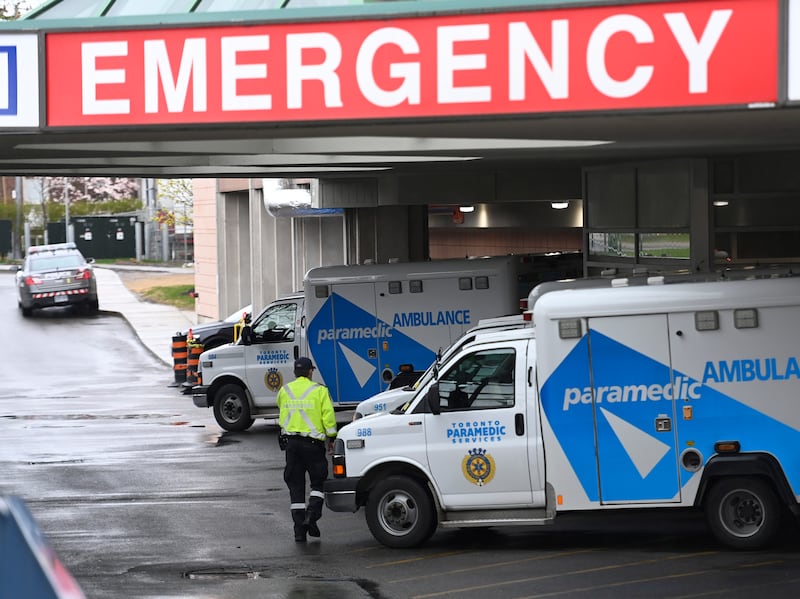
The Ontario Medical Association (OMA) is warning that the province’s emergency departments are already facing crowding as the busy summer season begins.
According to the results of a new survey released by the OMA, nearly three quarters (74 per cent) of emergency department (ED) doctors in Ontario say overcrowding is at critical or severe levels.
Three quarters of respondents also said ED beds or treatment spaces in their hospitals are occupied by patients awaiting admission nearly every shift, and that overcrowding affects the provision of timely care on most shifts or nearly every shift.
There were 288 respondents to the online survey, accounting for approximately 15 per cent of Ontario’s emergency room physicians.
Low public confidence in speed of treatment
The OMA also released another poll Monday indicating most Ontario residents do not feel confident they’d receive timely emergency care if they needed it. Just 30 per cent of respondents said they felt confident or very confident that they would receive timely care.
The online survey was conducted by Ipsos research between March 19 and 20 on behalf of the OMA. It surveyed 1,000 Ontario residents aged 18 and over. A traditional poll of a similar size would be considered accurate to within plus or minus 3.8 percentage points, 19 times out of 20.
“We think that it’s really important to continue to highlight what’s going on, because this is what people are experiencing on the ground, both physicians experiencing that on the ground and patients experiencing it when they attend the emergency department,” OMA president Dr. Rebecca Hicks told CP24.com.
She noted that while emergency room congestion in the winter is often related to respiratory illnesses, the summertime often brings an increased number of visits due to injuries associated with outdoor activities.
“I think the challenges is that we sometimes look at the emergency department and we think about the winter as the time where we’re going to be seeing more challenges, but really this is a full-year concern,” Hicks said. “The numbers that we’re seeing, maybe the reason for them changes, but we’re still seeing an incredible amount of visits to the emergency department across the province.”
According to the latest data from Ontario Health, just 30 per cent of patients admitted to hospital from the emergency department in Ontario completed their ED visit within the target time of eight hours. On average, those patients spent 17.2 hours in the emergency department.
Wait times were much better for those who weren’t admitted to hospital. For example, 75 per cent of low-urgency patients were seen within a target time of four hours, spending an average of 3.1 hours in the ED.
High-urgency patients who were not admitted to hospital spent an average of 4.5 hours in the ED, with 89 per cent being seen within a target time of eight hours.
Hicks pointed out that while the public has low confidence their emergency care will move quickly, they do have strong confidence in the quality of care they will eventually receive, with 56 per cent saying they are confident or very confident they would receive high-quality treatment in an emergency department.
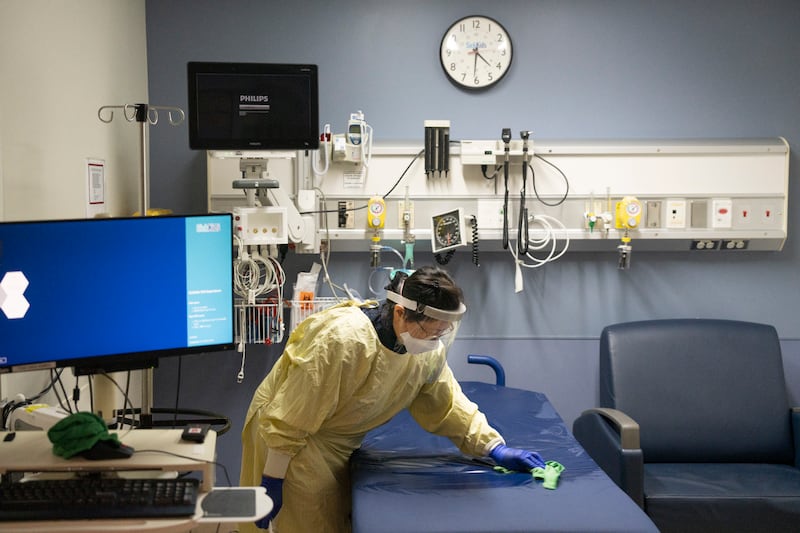
“The majority of respondents state that they believe that the care that they receive in our emergency departments is high quality care. The challenge is accessing it,” Hicks said.
She noted that doctors and nurses do “incredible work” in emergency departments and already do their best to make them run as efficiently as possible.
Province working to bring down wait times
In a statement to CP24.com, a spokesperson for Health Minister Sylvia Jones said Ontario has some of the shortest wait times in the country and the province continues to work to get them even lower.
“Ontario is proud to have some of the shortest wait times across the country,” Lily Barnes, a spokesperson for Jones, wrote.
“Over the last year, we have achieved our lowest Alternate Level of Care (ALC) rate in over a decade, freeing up the equivalent capacity of two large community hospitals, and we have reduced emergency department volumes by nearly 200,000, meaning more people are accessing care in the right setting.”
She pointed out 3,500 new hospital beds have been created since 2018, and the province has hired thousands more doctors and nurses.
“We continue to work with our partners, including the Ontario Medical Association, to build on this progress, including through our $3.4 billion Primary Care Action Plan and by expanding the scope of practice for highly skilled health-care professionals, including pharmacists, to treat more conditions outside the emergency department,” Barnes said.
Hicks said focusing on connecting more people to primary care has been a good place to start, but said there is more to do yet.
“We need to be focusing on making sure that we’re attaching people to family doctors, so that we do our best to kind of avert the emergencies from happening in the first place, and then we also need to be increasing resources on the other side of it, so increasing community supports, increasing long-term care availability, increasing acute hospital bed capacity,” she said.
“That’s going to allow the flow of patients to work a little bit more, so that our ER doctors aren’t left taking care of patients who have been admitted but don’t have a spot in their hospital as of yet.”

