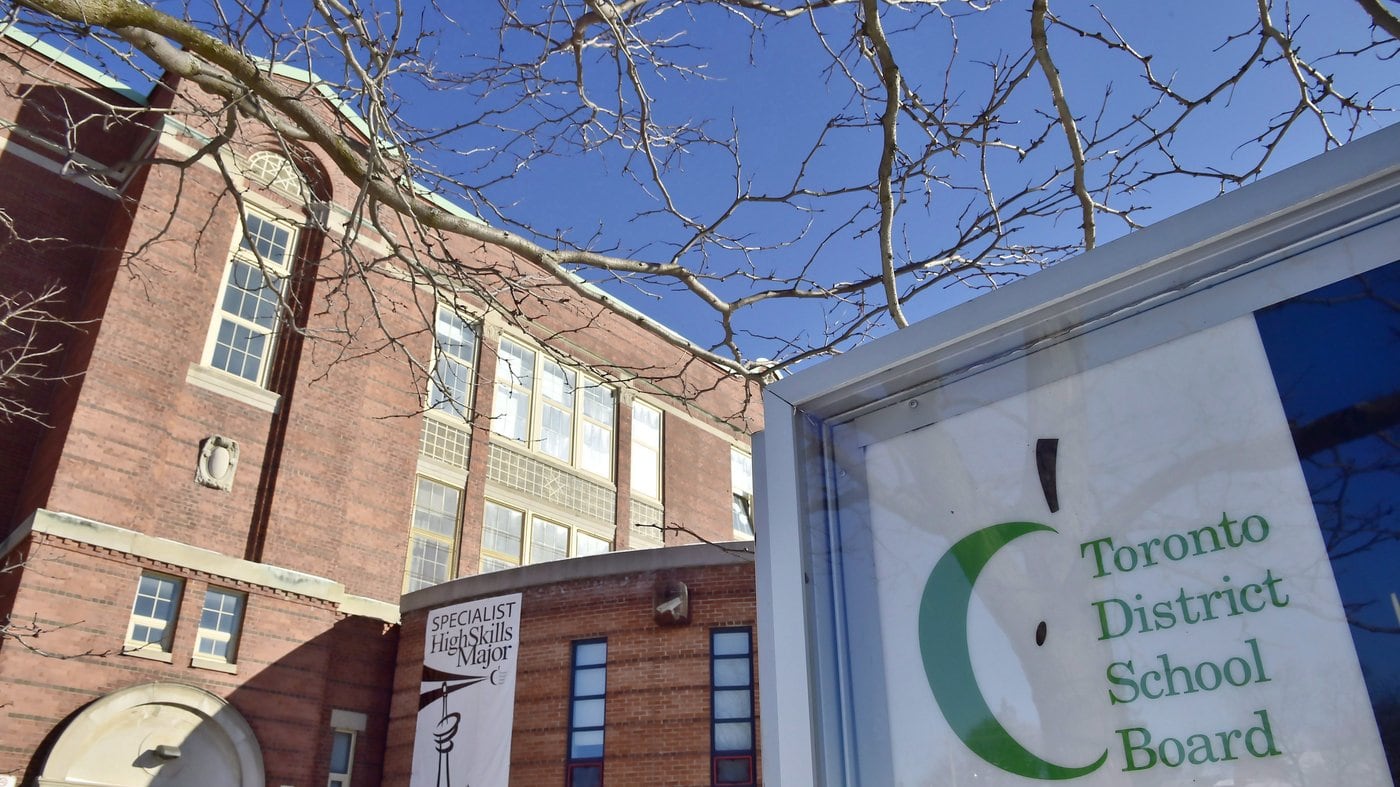
Despite some program cuts, Toronto’s two public school boards, which are under provincial supervision, approved their budgets with projected multi-million-dollar deficits.
According to the Toronto District School Board (TDSB), the 2026-27 deficit is down $15 million from the $74.5 million that was initially projected.
The board said the supervisor’s measures, which include elimination of hundreds of teaching positions and central staff and several programs such as outdoor education, resulted in $59.5 million in savings.
In its budget report, the board noted the $15 million deficit, a decrease from last year’s, “represents significant progress in restoring long-term financial sustainability.”
The TDSB and the Toronto Catholic District School Board (TCDSB) are among eight boards that are being run by provincially-appointed supervisors due to alleged financial mismanagement, multi-million dollar deficit, and a failure to implement cost-saving measures.
The TDSB said its budget “protects classroom learning” and “supports student achievement.”
Meanwhile, the TCDSB is projecting a deficit of $39.5 million, down from the $65.3 million that was initially anticipated.
According to the Catholic school board, the deficit was lowered as a result of its supervisor’s saving measures, which include cuts to central staffing and the weekday international language programming.
In a statement, Emma Testani, the press secretary for Education Minister Paul Calandra, said that supervisors are “putting school boards back on track to long-term financial sustainability following years of mismanagement.”
Testani claimed that since supervisors were appointed, nearly $150 million in savings have been identified.
“Those savings ensure more education funding is focused back on student achievement and not decisions like international trips to buy artwork or attending sports games with public education dollars,” Testani said.
Declining enrolment
Both Toronto school boards are expecting a decrease in enrolment in the 2026-2027 school year.
The TDSB says it will have nearly 5,000 fewer students while the TCDSB is projecting a decrease of 1,500 students.
In its budget report, the TDSB says it is expecting to see enrolment numbers will decline, citing federal immigration changes, fewer school-age children and more families moving out of the Greater Toronto Area.
As a result of the decline, the TDSB reported a projected revenue decrease of $48.2 million, while the TCDSB forecast a revenue decrease of $7.7 million.
Peel board also reveal deficits
The Peel District School Board (PDSB) also approved a budget with a $10.9-million deficit, down from the preliminary figure of $35 million.
The Peel board cited that supervisory savings cut the deficit by $24.1 million, with the bulk coming from central office staffing adjustments.
“This budget has been developed during a period of significant financial and organizational transformation and reflects the Board’s commitment to responsible stewardship of public funds while maintaining a steadfast focus on student achievement, well-being, and success,” Rashmi Swarup, the board’s chief executive officer, said in a letter included in the budget report.
Swarup noted that the board took a “deliberate and student-centred approach” to the cuts, with the majority accomplished through “restructuring, consolidation, and right-sizing of central and administrative functions.”
“Every effort was made to minimize impacts on students, classrooms, and direct supports,” the CEO said.
Like its Toronto counterparts, PDSB noted that enrolment decline is the most significant factor impacting its financial position. The board reported that a decrease of 6,418 is projected for the next school year.
“This decline reflects broader demographic shifts and changing immigration patterns across the region,” Swarup said.
The CEO noted that the decline in immigration has resulted in the decrease of eligible students for English as a Second Language (ESL), which ultimately led to the reduction of funding for those classes.
“The loss of this targeted funding represents a significant challenge for a school board that has long supported one of the most diverse student populations in Ontario,” Swarup said.
The CEO acknowledged that “difficult but necessary decisions” had to be made for the budget.
“It demonstrates the Board’s commitment to balancing fiscal responsibility with educational excellence, ensuring that available resources continue to be directed toward supporting student success and wellbeing,” Swarup said.

