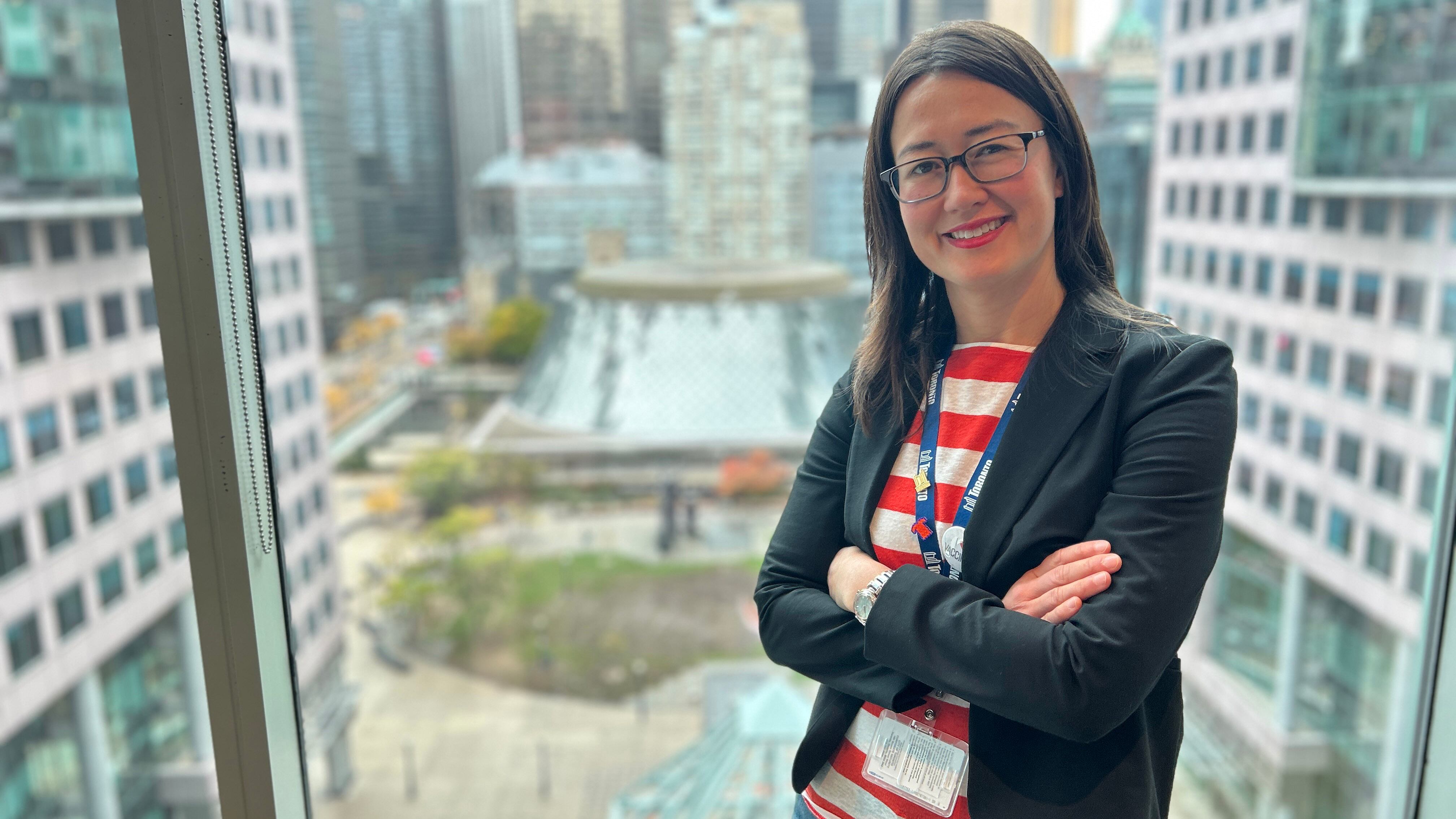
Dr. Michelle Murti doesn’t have to think too hard when asked what her top concern is for the health of Toronto’s residents.
“One of the key things that I’m interested in working on is responding to the affordability crisis, really,” Murti says.
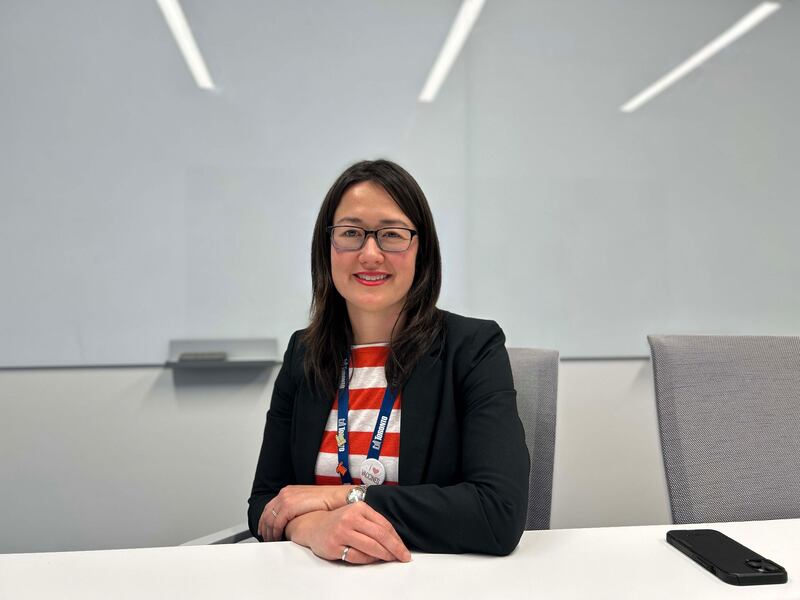
Sitting in a brightly-lit board room high above the Entertainment District, Toronto’s new medical officer is calm, but emphatic as she describes how affordability impacts health.
“One of the key things we’re seeing is people not having stable housing, people not being able to afford food, people not being able to afford medicine, to be able to live healthily in the city.”
On the job for just a few months now (she officially took the reins on Sept. 3), affordability is just one of many problems Toronto’s new top doctor will be tackling in her role at the top of one of the largest public health units in the country, from toxic drugs to vaccinations and a slew of vacant roles to fill.
But if she seems unfazed, it may be because it’s not her first turn at a high-stakes role in public health.
The daughter of immigrants, Murti grew up in Etobicoke and North Toronto, eventually completing degrees in biomedical engineering and medicine at the University of Toronto.
While she wasn’t always sure she wanted to be a doctor, she eventually came around to the idea of family medicine.
“Being with patients is a very rewarding and impactful experience when you can really help the person who’s right in front of you,” Murti says. “But there’s always that feeling like, ‘could we be doing more? How do we sort of help that bigger picture?’
“If they didn’t have enough money to buy food, or if they didn’t have a great place to live, or if they couldn’t afford the medicines I was prescribing them, that’s not something I could fix as a physician. So I wanted to move into an area where I felt like we could really take a look at that population and think about what are those bigger picture factors that impact health and how to influence those.”
That sentiment led her to a career in public health, which included a stint as an epidemic intelligence officer at the U.S. Centers for Disease Control and Prevention (CDC) – a role that sounds like it might come with a double-0 clearance and which was immortalized by Kate Winslet in the somewhat prescient film, “Contagion.”
“It was a very formative experience in my training and career,” Murti says.
When the pandemic hit, she was a medical director at Public Health Ontario, overseeing all of the scientific technical advice around case and contact management, outbreak management, long-term care homes and shelters.
“It was a very busy time,” she recalls, with the science “changing daily.”
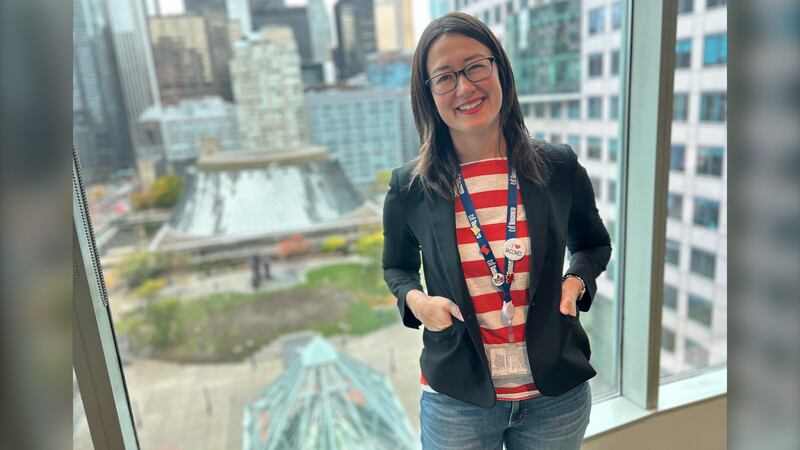
One of her biggest takeaways from that time was the need to communicate changes to the public in a way that would allow people time to digest and adapt.
“I think if anything that we learned from the pandemic, risk communication has got to be one of the top fixtures. And thinking about all of the leaders in Canada, certainly my predecessor, Dr. (Eileen) de Villa, was an outstanding communicator during that time.”
While Murti now holds the top health job in Toronto, she says she still meets regularly with Ontario’s chief medical officer of health, Dr. Kieran Moore.
“We do have a very close relationship with Toronto Public Health and the Office of the Chief Medical Officer and the Ministry of Health and I think it’s important for us to stay connected,” Murti says.
While a job managing thousands of city employees might seem far removed from the doctor’s office, Murti says she also maintains an open line with colleagues, most notably with her own father who at 80 years old still maintains a “thriving” family medicine practice in the city.
“I do hear a lot. He has a very active colleague group and they do pass on their messages for us if they don’t like something,” Murti laughs.
Affordability crisis one of the top health challenges in Toronto
When it comes to affordability, it’s a problem with a family echo for Toronto’s new medical officer of health.
As a teenager, her mother fled the soviet-ruled Czech Republic with her parents, bringing nothing but a small suitcase and a few words of English.
“They had to pretend they were going to a wedding in Vienna. And then from there, they were able to leave to come to Canada,” Murti says.
Growing up as a refugee in Parkdale, Murti says, her mother’s family and other newcomers relied on one another at a time when there were not robust supports in place for them.
Today, Murti points to a school nutrition program as one of the things she’s most proud of at TPH.
“So we are in over 600 schools right now, and we’re looking at trying to expand to all schools by the 26/27 school year. So over 800 schools in the city offering a breakfast program to children,” she says.
Drugs and vaccinations among other challenges
But in addition to affordability, Toronto is a city facing numerous health challenges.
Last year the province announced that it would be shuttering supervised consumption sites near schools in favour of transitioning to Homelessness, Addiction Recovery Treatment (HART) Hubs focused on treating drug addiction. Advocates for those who use drugs have been critical of the move, saying it could cost lives.
“It has certainly taken an arrow out of our quiver,” Murti says.
She says the supervised consumption sites that are still open are experiencing much higher volumes than they are used to.
She also points out that the drugs showing up on the street keep changing, and treatment options are not necessarily able to respond at the same pace.
“We need all the tools at our disposal to really effectively provide people options with how to get treated because we know that we don’t know all the answers to how best to treat people with these very new drugs,” Murti says, adding that funding for treatment through the Hart hubs is certainly welcome as well.
There are also renewed concerns about vaccine hesitancy following a measles outbreak in the province. While Toronto was not seriously impacted, there have been recent cases in the GTA.
“I think what we saw with this outbreak was that we do have very large pockets of people who were not protected against measles,” Murti says.
She says TPH is running a catch-up program this year for all kids in grades two to five who may have missed a dose of measles vaccine during the COVID-19 pandemic.
TPH facing staffing challenges
To be sure, Murti faces organizational challenges within TPH in addition to the sizable task of caring for the health of the local population.
A risk management report in April said TPH is dealing with an exodus of staff due to retirement, fatigue, burnout from the pandemic and other factors.
“I don’t think we’re the only organization going through this,” Murti says, acknowledging that there will also be a number of staff eligible for retirement in the next five years -- a fact she plans to highlight to the TPH board to stress the need for hiring.
To complicate matters, the city has implemented a hiring freeze for non-essential staff as it seeks to tame its spending ahead of the upcoming city budget.
“We are hiring, we want to bring on new staff. We have vacancies and positions that we’re trying to fill. That’s a little challenging right now, given some of the news from the city,” Murti says. “But we’re trying to work through that and make sure that we recognize that these are legislated exemption positions that we need.
“We need public health nurses on that front line, providing vaccines, being in the community; we need public health inspectors going out to restaurants, checking pools, checking tattoo parlors.”
She said there are also “critical positions” on the data management team that need to be filled so that TPH is able to effectively compile and analyze surveillance data and communicate it to the public.
“We are still in the process of working through that,” Murti says when asked whether she faces pushback on hiring. “But we’re hoping that we can move forward on those positions quickly.”
Keeping Toronto healthy during FIFA
Looking forward, Murti says TPH is remaining vigilant, particularly as the city prepares to invite soccer fans from around the world for six FIFA World Cup games the city will be hosting next summer.
In addition to A federally funded wastewater monitoring program which allows TPH to monitor the prevalence of various types of infections in the city, TPH is planning to run a pilot project during FIFA to keep track of pathogens that maybe entering the city from around the world.
Additional wastewater testing will be set up in and around the sites where the games are going to be held, as well as the fan fest zone, and potentially some other areas.
“Being able to collect samples from there will help us provide a little bit more information as to what people might be bringing in from different parts of the world,” Murti says. “So things like measles, even something like polio, something we really don’t see in Canada at all, but is still circulating in some limited countries in the rest of the world.
“Being able to look for something rare like that – we’re still finalizing the full list of infections that we’re going to be able to test for – but I think certainly it’ll be it help us have one more tool in that toolbox to be able to look at what might be happening during the games.”
Editor’s Note: This story has been changed to correct the name of the film mentioned to “Contagion.”

