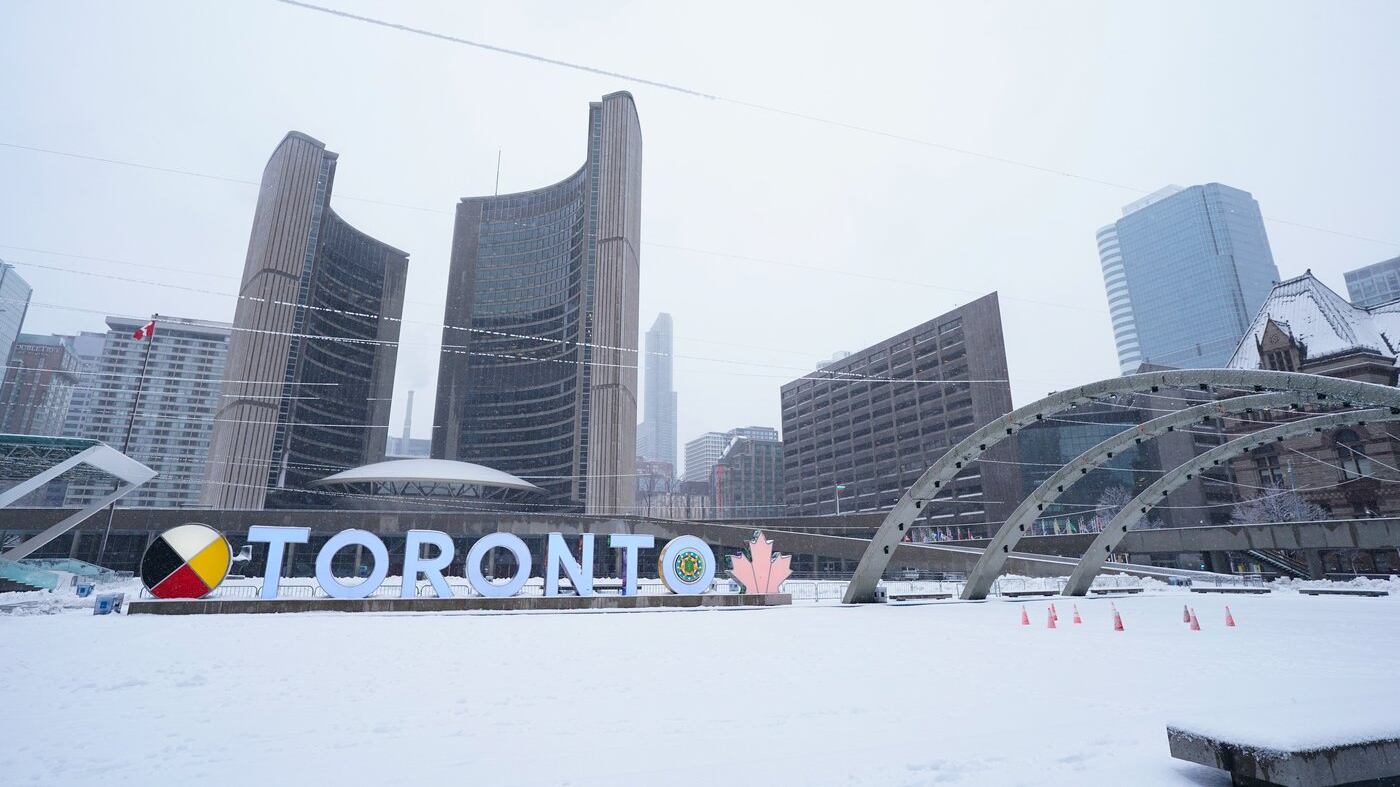
Toronto City Council has left Mayor Olivia Chow’s 2026 city budget mostly intact following final consideration.
Councillors met all day to debate Chow’s budget, moving a series of minor amendments, but leaving the nuts and bolts intact.
The budget includes the lowest property tax increase of Chow’s term – 2.2 per cent – in a year when Toronto voters will also be going to the polls to choose their next mayor.
This year’s budget includes a TTC fare freeze and a monthly fare cap set to come into effect later in the year.
The mayor has insisted that the property tax increase this year needs to be low because residents are struggling with affordability, but critics have accused her of raiding $1.7 billion from city coffers to keep taxes low without cutting services in an election year, kicking a larger tax increase down the road to next year.
Chow’s revised version of the budget, released about a week ago, added more money for youth safety and homeless outreach. It also increased a tax rebate for small businesses.
Those changes were approved by councillors Tuesday, along with a slew of other small motions.
Here’s a rundown of how the final meeting went.
5:45 p.m.
That does it for Toronto’s 2026 budget process. Thanks for following along.
5:36 p.m.
Council carried the remaining items, including those related to TTC and FIFA.
The meeting has now adjourned.
5:30 p.m.
Here’s a quick rundown of some motions that have passed:
- A motion to boost a small business tax break from 15 per cent to 20 per cent
- Continuation of a rolling program review to realize further in-year savings and efficiencies to mitigate any 2027 property tax increase.
- Asking the federal and provincial governments for a share of the HST
- A motion to explore options for making Wheel-Trans more affordable for seniors
- A motion by Coun. Bravo for Toronto police to report in future budgets on savings from services transferred to the city
5:10
Voting now underway on a slew of motions on implementation.
4:45 p.m.
Coun. Crisanti moves a motion for the TTC to explore fare scenarios to increase affordability for Wheel-Trans users aged 65 and over.
Coun. Myers points out Wheel-Trans trips are quite expensive, around $50 per trip and asks if Crisanti would also consider an amendment for the TTC to explore cheaper options for some individuals to use regular TTC service.
4:30 p.m.
Coun. Perruzza moves a motion that the city ask the province to keep all property taxes collected, including portion remitted to education funding.
4:15 p.m.
Coun. Bravo motion calls for the police services board to report in future budgets ion efficiencies and cost savings derived from crisis calls responded to by the Toronto Community Crisis Service; the transfer to the City of the crossing guard program; and increased traffic control done by the city through the traffic agents program.
4:05 p.m.
Coun. Burnside speaking now, says TTC fares have not been keeping pace and there are some people using the system who can afford to pay more. He floats the idea of a 10-cent fare increase to keep up with inflation and adds the TTC has not been meeting its own service standards, making it difficult to attract more riders.
Things get a little heated between Burnside and Myers in a debate over fares and ridership. Myers demands to know who at the TTC gave Burnside his information.
“Is this an inquisition?” Burnside asks, saying he’s not sure of their names.
Myers fires back: “It’s amazing. You’re a former TTC chair. It’s just amazing.”
3:55 p.m.
Coun. Morley has moved a number of motions, including one on snow clearing.
She’s asking for a report looking at providing enhanced snow clearing support for seniors and residents living with disabilities during declared major snow events.
3:40 p.m.
Council now considering budget implementation.
Carroll speaking now, says “we have not plundered, we have not raided” when it comes to reserves.
“If you’re worried about our reserves, I don’t think the public should come away from watching this little TV show on YouTube without forgetting that we still have almost $10 billion in reserves, almost $10 billion,” Carroll says.
She moves motion to increase tax cut from 15 to 20 percent for the Small Business Property Tax Subclass, as was previously announced by Mayor Chow.
3:25 p.m.
A flurry of minor amendments to various programs and agencies moved by Coun. Carroll passes. They include:
- boosting funding to zoo trips for students
- a Canada Day celebration and fireworks display at Mel Lastman Square
- a pilot project to promote Scarborough’s food scene
- a youth-focused innovation hub at the Scarborough Civic Centre
- new staff positions for implementation of the Rat Response Plan and Coyote Coexistence and Response Strategy.
A motion by counc. Bradford for additional money to advance due diligence, initial site planning and community engagement work for the Main Square Community Centre Redevelopment Design project also passes.
A motion by Coun. Morley to add $2.125 million for the Victoria Memorial Square revitalization project passes as well.
3:15 p.m.
No more speakers. Councillors now voting on a slate of motions.
3:05 p.m.
Coun. Fletcher speaking in support of the budget. Defending the use of rainy day reserves, she says “it’s raining!”
“We have somebody south of the border creating a lot of storms, many, many, many storms,” Fletcher says. “It is raining. We have tariffs. We have a very difficult, very, very difficult economic situation in the city. And so that isn’t just in the country or in the province, it’s in the city, I would say.”
Responding to critics, she points out some of them criticized Chow for making property taxes too high in the past two years, when the city saw 9.5 per cent and 6.9 per cent tax increases.
Coun. Bravo weighs in and says she agrees with Fletcher.
2:55 p.m.
Bradford speaking again. He reiterates he thinks this budget raids reserves in an election year and will result in a much larger tax increase next year.
2:45 p.m.
Coun. Colle responding to people upset the police budget is getting an increase.
“The police work has meant that there’s a significant decrease in criminal activity in the City of Toronto, a significant decrease, one of the biggest I’ve seen that has happened because we’ve invested in the police,” Colle says.
Staff said earlier that aside from increases in salaries to account for bargaining etc., most of the increase in the police budget comes from implementing a phased hiring plan, particularly to add more supervisors.
2:40 p.m.
Several councillors now speaking, thanking the budget committee for their work.
Coun. Cheng calls for Toronto to get a new long-term funding formula from other levels of government, saying “a world class city can’t be funded like a small town.”
Coun. Colle points out the federal and provincial governments do not have a public budget process similar to the city, where there is lots of debate and public input.
2:25 p.m.
Coun. Pasternak has moved a motion to delay $4 million for a shelter project in his ward to allow for additional community input. He says there are concerns the project is next to a daycare.
2:15 p.m.
The meeting has resumed.
12:30 p.m.
The meeting is in recess until 2 p.m.
12:20 p.m.
Coun. Holyday says it’s the mayor’s choice if she wants to use reserves to balance the budget, but the city needs to be transparent about what it’s doing.
He holds up Chow’s budget book and says it tells a story about the city doing lots of great things without properly explaining how.
“We’re drawing down on these reserves in order to make the budget appear the way that it does here. That’s the mayor’s call. But I think what we should do is be transparent with people,” Holyday says.
12 p.m.
“We absolutely need help with a new deal 2.0 and we are actively engaged with the provincial government about the new deal, the second part,” Chow says in response to a question from Coun. Cheng.
11:55 a.m.
Coun. Burnside asks a question about snow clearing and whether Mayor Chow would commit to funding snow removal. City staff said earlier that including snow removal in snow clearing operations would cost around $130 million -- the equivalent of a roughly 2.7 per cent property tax increase.
Chow says staff are reviewing the options, with learnings from this season and last season.
11:40 a.m.
Chow and Bradford get into an election-style back-and forth over the use of reserve funds and what the property tax increase will be next year.
Bradford accuses Chow of raiding the reserves to help her chances at re-election (though she has refused so far to confirm whether she is running).
Chow says Bradford has sometimes suggested using reserves in the name of keeping property taxes lower and sometimes criticized their use for same and says he can’t have it both ways.
11:25 a.m.
Coun. Vincent Crisanti asking about fare evasion and how big a problem it is.
“We’re finally getting a handle on fare evasion for the first time in probably seven or eight years,” TTC Chief Strategy and Customer Officer Josh Colle says.
He says the TTC is achieving progress by closing down free entry gates, introducing plain clothes inspections on streetcars and making sure that people are being inspected getting off busses.
11:15 a.m.
Coun. Lily Cheng asks what asks the city is maikng in New Deal 2.0 discussions that could help avoid a significant tax increase next year. She asks if aks swould include revenue tools that grow with the economy.
City Manager Paul Johnson says that could be one rout to go. He notes Toronto continues to face unique budget pressures around transit, emergency services, and housing.
It should be noted that Premier Doug Ford has ruled out handing the city new revenue tools.
11 a.m.
Councillor Bradford fires off a series of questions related to the use of reserve funds this year. City staff confirm that at $1.7 billion, it is the highest amount of reserve funding ever used in a City of Toronto budget.
Bradford asks to what extent the mayor gave direction to do that. Staff respond that the mayor gave direction around the need for this year’s budget to keep “affordability” in mind
“As we built this budget, there was clear direction as it was related to affordability, both in terms of the rates that we set, but as well as the investments that we’re making, be it in social programs or other areas like student nutrition,” CFO Stephen Conforti says.
He confirms the city will face an opening pressure of around $1.1 billion in next year’s budget.
Bradford suggests the additional use of reserve funds in this year’s budget would be equivalent to a roughly 10 per cent property tax increase.
10:45 a.m.
Coun. Carroll asks for confirmation there will be more supervises hired within TPS this year per the budget. Chief Demkiw says that is thew case.
10:15 a.m.
Coun. Saxe also asks if there is funding in the budget to deal with home invasions targeting children, an issue that has been a problem in her ward. Staff respond that there are dedicated resources within the holdup squad to deal with home invasions.
10:10 a.m.
Coun. Saxe asking how much of the money spent on policing protests took away from other areas. Staff say they move resources around and there are enough resources to deal with everything within their mandate.
She also asks whether there should be any changes to the police budget in light of Project South, the massive probe into police corruption.
Staff say the police budget has laid out what the force feels it needs to meet its mandate.
10 a.m.
Coun. Pasternak asking questions cost of policing protests in the city. Staff confirm it has cost $44 million since Oct. 7, 2023.
9:50 a.m.
Coun. Stephen Holyday asking some questions about TTC budget and the use of reserve funds this year.
Staff confirm that the fare cap coming into effect later this year will cost $3.1 million.
They also say this year’s budget makes use of $1.7 billion in reserves, a change of about $400 million compared to last year’s budget. They say the extra use of reserve funds mostly unrelated to balancing the budget. Rather they say mmajority of the difference is associated with accounting changes by the provincial government around shelter funding.
9:30 a.m.
The meeting is underway. Some notes from the speaker here on today’s meeting. She says council will not actually be voting to adopt the budget. If there are no amendments, the budget will be considered adopted at the end of the meeting. If there are, the mayor may veto them or have a period to respond.

