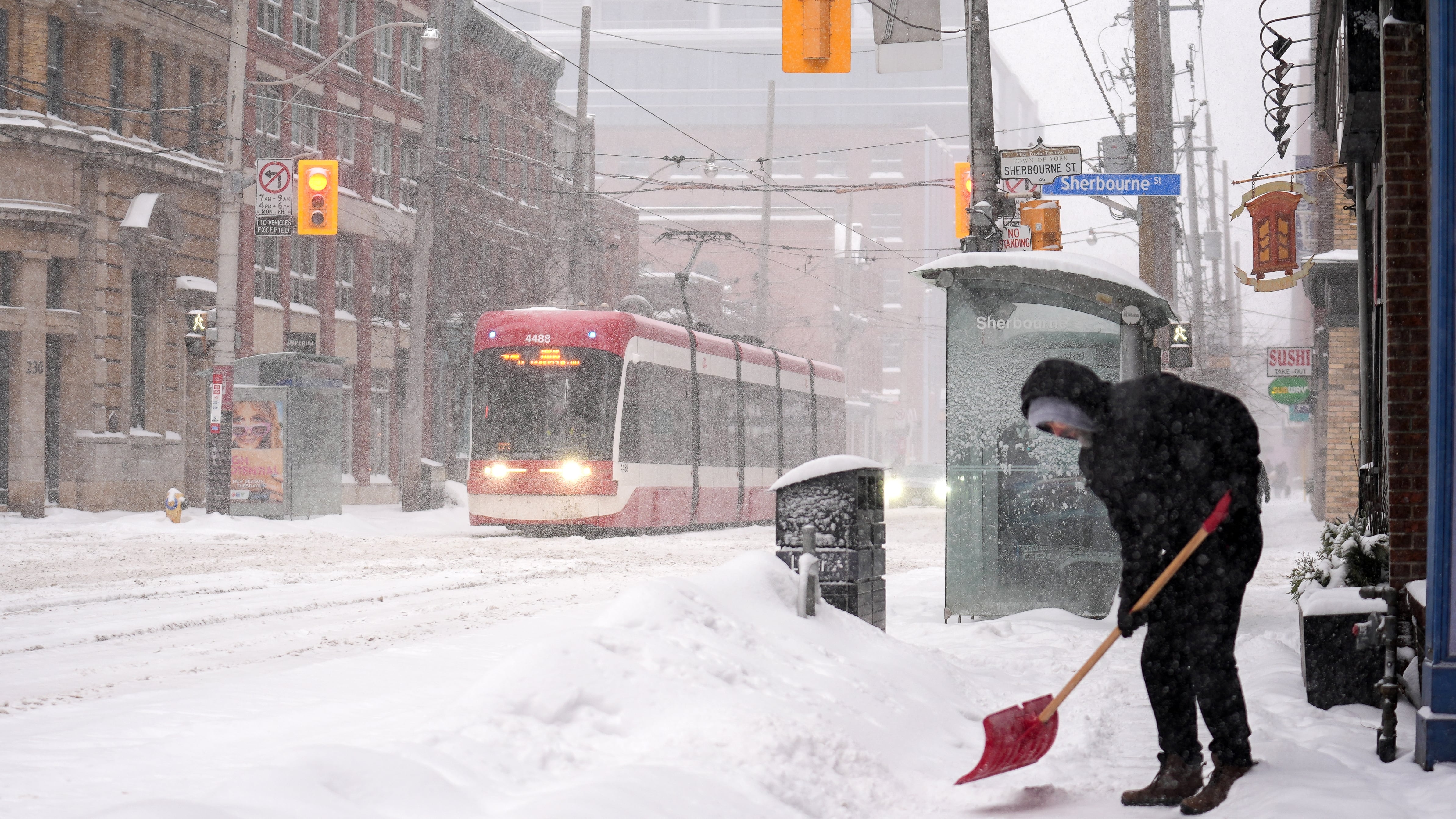
Toronto residents could get paid to shovel their sidewalk as early as next winter.
During Thursday’s council meeting, councillors approved a motion directing city staff to develop a paid surge-capacity sidewalk shovelling program similar to those in New York City, Minneapolis, and Montreal, with possible implementation no later than the 2026-2027 winter season.
Some councillors were skeptical about the program, pointing to how the city already pays contractors to shovel sidewalks.
Coun. Stephen Holyday, who voted against the motion, said the city would be paying twice if the program proceeded.
“How could we face constituents and say, ‘I’m sorry your taxes are going up, but we have all these contracts, but we’re going to pay to do it twice?’ It’s just not logical,” the councillor said.
Property owners in some areas of the city used to be responsible for clearing their own sidewalks, but that changed in 2021 when council voted to expand its snowplowing program to include sidewalks.
However, the city has faced criticism for its snow-clearing operations, which have prompted a number of audits that found problems with its contractors.
In January, City manager Paul Johnson revealed only 66 to 75 per cent of sidewalk machines were operational on a given day due to reliability issues.
Coun. Jon Burnside called the motion a “terrible idea” and a “disaster waiting to happen.”
As the program has not yet been developed, city staff did not have many answers for councillors who asked what it would look like.
Johnson said during council meeting that, based on the intent of the motion, the program would only be used during “extraordinary snow situations” to speed up clearing.
“So, this is not a year-round, do it every time, as you’ve heard from our staff already. Not when we hit two, three, four centimetres. We’re fine on that,” Johnson said.
He noted the program is accounted for within the winter budget.
“It’d have to be one of the challenges that we have to overcome as we look at how we might be able to do this,” Johnson told council.
He was also asked about the risks, and Johnson said there could be when it comes to health and safety.
“What happens if somebody gets injured? What happens around training? Those types of things that we would have to address,” he said.
Instead of implementing this program, Coun. Mike Colle said the city should focus on making sure the contractors the city pays to clear snow do their job.
“No matter what we do, you’re going to have these extraordinary weather events. You can’t control the incredible weather we had this winter. You can’t control it by passing silly motions,” Colle said.
Toronto has been hit hard by winter storms this season, leaving many sidewalks covered with snow for days, which frustrated residents.
According to Retired Environment Canada Senior Climatologist David Phillips, 189.2 centimetres of snow has fallen at Toronto Pearson as of March 20, about 75 centimetres more than the average total snowfall at the airport over the course of a winter season.
While Coun. Amber Morley agreed with Colle that no one can control extreme weather events, she said they will continue, and the city should look at good ideas on how to improve its response.
“We can continue to look to have good ideas to empower Torontonians, especially young people who have been calling out to this chamber and others for more opportunities to be involved in their city and to get paid to roll up their sleeves and be part of solutions,” said Morely, who voted for the motion.
“We’re not looking to completely upend how we do snow removal in this city, but I do think it’s incumbent on us to look at innovative ideas to empower Torontonians, to increase our capacity when it’s needed, and to ensure that people have safe and accessible access to our city, especially those that are disabled or have other mobility challenges during extreme weather temperatures, which continues to be a challenge for us.”
In New York City, officials recruit temporary “Emergency Snow Shovellers” to clear bus stops, crosswalks and fire hydrants after major storms. Pay typically starts at US$19.14 an hour and has risen as high as US$30 an hour during blizzard conditions, with overtime rates after 40 hours.
The program has drawn significant interest, with more than 1,400 new sign-ups in a single day during a recent storm, according to city officials there.
With files from CTV News Toronto’s Jermaine Wilson

