


Former federal Conservative cabinet minister Chris Alexander has officially entered Toronto’s mayoral race, pitching himself as the “outsider” needed to get a city he says is “slightly adrift” back on track.
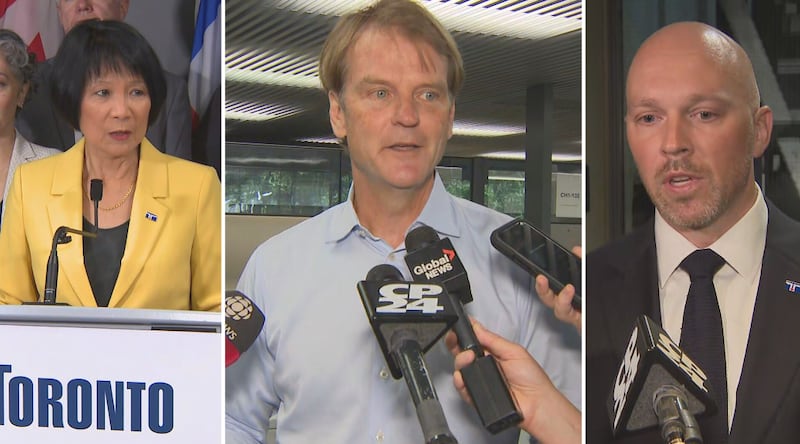
Alexander registered his candidacy Wednesday at Toronto City Hall, joining a list of 32 other candidates that also includes incumbent Mayor Olivia Chow and Coun. Brad Bradford.. His entry immediately drew criticism from Bradford who told reporters at Toronto City Hall that he’s “never heard of” Alexander, while Chow declined to engage directly with his criticism of her leadership.
“We are slightly adrift,” Alexander told reporters after filing his nomination papers for the Oct. 26 election. “It’s going to take an outsider, to be honest, someone who hasn’t been on council to get this city back on track.”
The 57-year-old father of three first confirmed his intentions to CTV News on Tuesday before officially entering the race Wednesday morning.
‘Standing still’
Alexander served as Canada’s ambassador to Afghanistan from 2003 to 2005 before becoming the Conservative MP for Ajax-Pickering. He was citizenship and immigration minister in Stephen Harper’s government from 2013 until the Conservatives were defeated in 2015.
In a post on his campaign website, Alexander said he decided to run because “Toronto has been standing still for three years.”
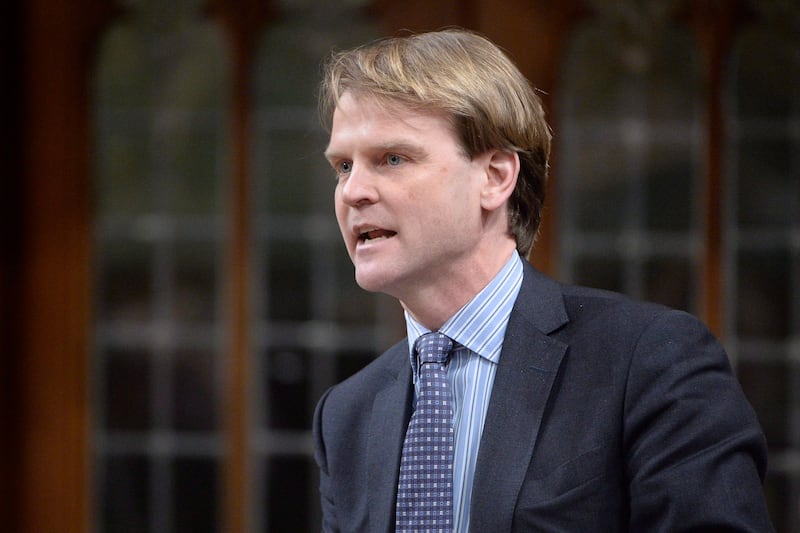
“A city with this much talent, strength and potential should not be under-performing. We need to work together to make Toronto better, the best it can be,” he wrote.
Alexander said his priorities include improving public transit, increasing housing supply and unlocking stronger economic growth.
“I was born in the city. I grew up in Toronto,” he said Wednesday. “I would like to be judged by my whole record, which is one that goes well beyond what any of the candidates in this race so far can point to.”
Rivals respond
Asked about Alexander’s criticisms, Chow repeatedly avoided discussing the campaign, saying there would be “lots of time” to debate the election later.
“The election is three months from now,” she said. “Today, I’m focusing on the last council. We have a lot of very important work ahead of us.”
Bradford, meanwhile, said that Alexander’s political record is incompatible with Toronto’s values.
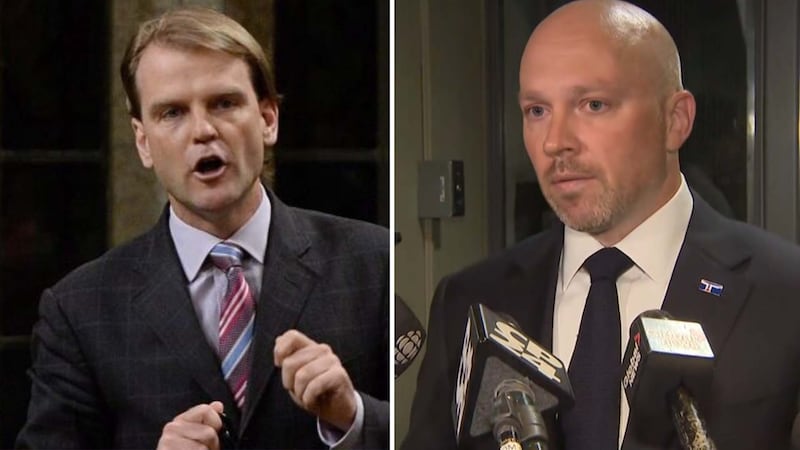
He called the former cabinet minister “unfit for this office,” accusing him of bringing “Trump-style politics” to Canada and dismissing the campaign as a “vanity project” or “an audition for his next job.”
“I think, like a lot of Torontonians, I had never heard of him,” Bradford said at Toronto City Hall. “I’ve never seen him in my life. I don’t think he’s ever stepped foot in this building before. I’ve never talked to him. I literally didn’t know who he was when I first heard the rumors circulating. I had to look him up.”
Alexander rejected those criticisms, saying Toronto should be “celebrating each other and coming together,” not “talking down the skills, talent and background of our own.”
What do the polls say?
Alexander’s entry into the race comes as a new liaison poll suggests Chow would lead Bradford in a head-to-head race.
Released Wednesday, Liaison Strategies surveyed a random sample of 1,000 Toronto residents from July 24 to July 26 and found that Chow holds 49 per cent support among decided voters to Bradford’s 41 per cent.
Among all respondents, Chow had the support of 39 per cent compared to 33 per cent for Bradford. Another eight per cent said they would vote for another candidate while 20 per cent said they remain undecided.
Alexander was not included among the options in the survey.
David Valentin, principal at Liaison Strategies, said “this remains Olivia Chow’s race” but cautioned that it is “not a slam dunk.”
“Chow’s job approval remains positive, but it is no longer a towering number. Fifty-one per cent approve of the job she is doing as mayor, while 43 per cent disapprove and 6 per cent are not sure,” he said, adding that those numbers are “almost identical to the previous survey.”
Participants were reached through random digit dialing (RDD) across both landline and cellular phone networks. The resulting data was weighted to match targets based on the 2021 Census. For the total sample, the margin of error is plus or minus 3.1 percentage points, 19 times out of 20.

