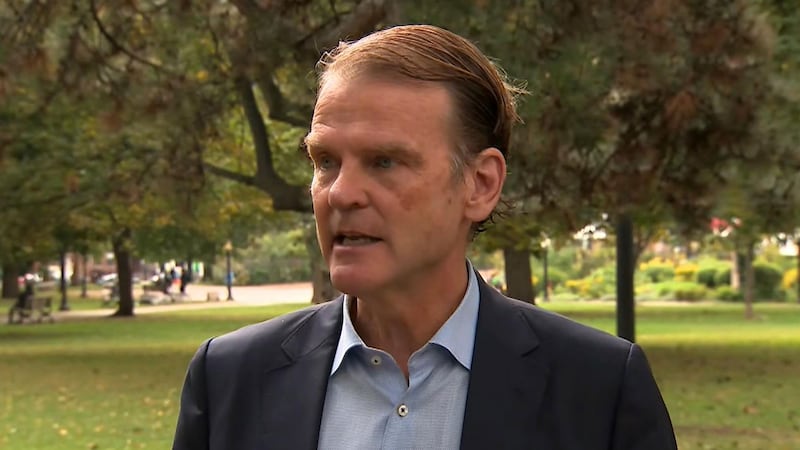
Toronto mayoral candidate Chris Alexander is promising to move thousands of people experiencing homelessness out of shelters and into permanent housing, aiming for 1,000 placements by summer 2027 as part of a four-year plan to relieve pressure on the city’s over-burdened shelter system.
Speaking to reporters Wednesday, Alexander unveiled “A New Way Home for Toronto’s Unhoused,” which calls for a single City Hall lead, stronger case management, and partnerships with landlords, nonprofits, businesses, philanthropists and volunteers to address this crisis.
- How to set CP24 as your preferred source on Google
- How to set CTV News as your preferred source on Google
He said his approach would largely rely on the existing shelter budget, with a housing-first placement costing about $80 per person per night compared with roughly $200 for a shelter bed, although provincial help would be needed for mental-health and addiction services.
“Most of the funding would come from the existing envelope, which this year is $786 million for the shelter system,” he said.
“I’m not saying we’re saving money by doing this, but we’re saving lives.”
Housing first, then supports
Alexander’s plan calls for 1,000 housing-first units by the summer of 2027, while reducing nightly shelter use to 5,000 people by next August and below 3,000 by August of 2028.
The plan would give people an apartment and a lease without requiring sobriety or treatment before they receive housing, while pairing them with case managers “who show up,” he said.
Alexander also wants a dedicated “landlord desk” whose job would be to sign units by offering landlords guaranteed rent, signing incentives, a damage fund, and a 24-hour line.
Further, he said the city would work with the corporate and philanthropic sectors to cover costs like furniture, first month’s rent, and other expenses.
“The real challenge will be to establish that unity of effort,” said Alexander.
His campaign estimates the first 1,000 units would cost about $17 million in the first year, including roughly $6 million for rent benefits and $8 million for support workers. About $14 million of that total would come from the city, according to his campaign.
Alexander’s broader targets include getting the number of unhoused people under 1,000 by October 2027 and less than 200 by 2030.
Shelter system and affordability
According to figures released by the campaign, Toronto spent $786 million gross on shelter operations in 2026.
Alexander’s campaign says shelter and overnight services accommodated 7,262 people on Sept. 24, down from a peak of 10,228 in January 2025.
He said this plan cannot succeed without addressing the cost of housing.
“The number one cause, the number one common denominator across all cities, is rent,” said the mayoral candidate.
Alexander is also proposing a city rent benefit that “fills the hole the provincial cut left.”
“Every hotel shelter contract that ends converts into benefits and support workers, not savings,” he said.
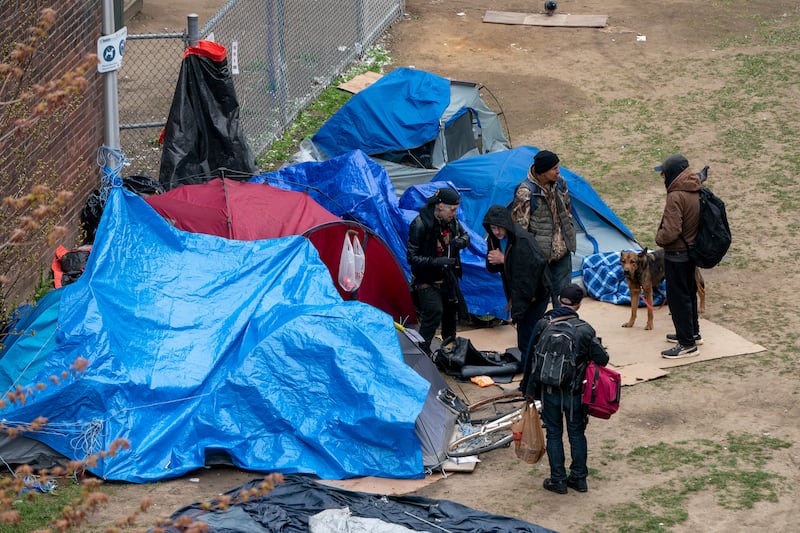
Alexander’s plan also calls for closing Toronto’s 10 largest encampments in 2027, with Alexander saying no site shutting down without stable housing offers.
“We want to bring Toronto together to work together to deal with an injustice, to return dignity and housing stability to a group that lost it,” he said.
Bradford weighs in
Meanwhile, elsewhere on the campaign trial, fellow candidate Brad Bradford shared his reaction to Alexander’s announcement saying Toronto should address homelessness by building on effective community-led programs rather than assuming that more City Hall bureaucracy or spending will produce better results.
“We don’t always have to reinvent the wheel. We don’t have to duplicate programs,” he said.
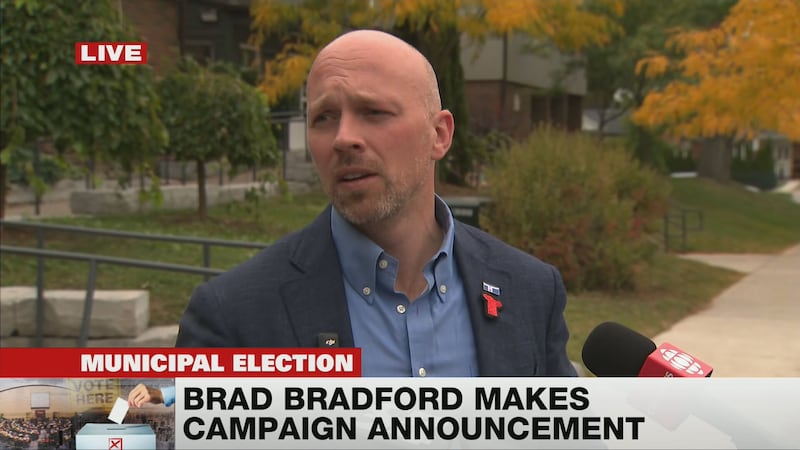
“The budget continues to go up and up and up, and we’re not seeing fewer homeless people on our streets. We’re not necessarily seeing fewer encampments in our parks, so we have to really disassociate the relationship with more money, equaling better results.”
At the same time, Bradford says he recognizes that the need for housing and shelter options is “significant” and says Toronto needs more shelters, youth transitional homes, supportive housing, and affordable and market-rate rental and ownership options.
Chow’s ‘caring approach’ working: campaign
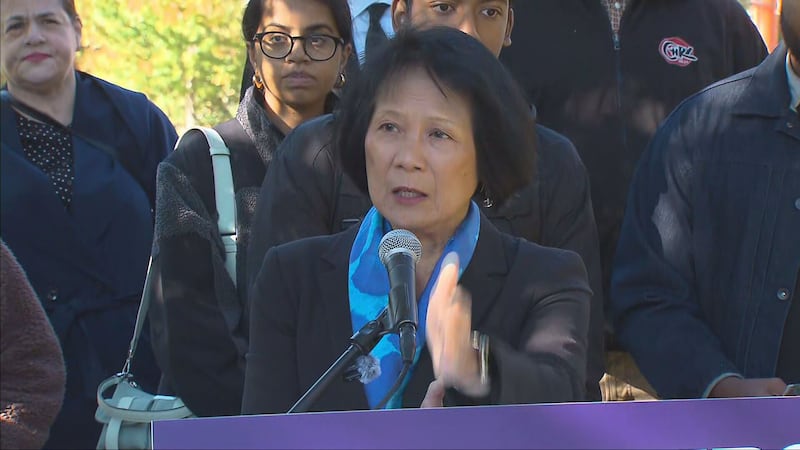
Olivia Chow’s campaign said she’s “proven that a caring approach to homelessness works.”
“She has expanded services for those most in need and made record investments to build affordable housing by partnering with the federal and provincial government,” a spokesperson wrote in an email to CP24 late Wednesday afternoon.
This includes, they said, moving 15,000 people from shelters and encampments into permanent housing since she became mayor, including 4,700 people last year in 2025 noting that encampments are down 70 per cent.
Her campaign also said that Chow has doubled funding for the Rent Bank and other renter supports “to help 4,500 people stay housed and prevent evictions,” championed a proven approach to supportive housing, including 11 new supportive housing projects that are currently under construction, and led the development of new, purpose-built and right-sized shelters.
“Eleven new shelters have been approved, creating 1057 new beds, with some opening later this year,” the spokesperson said.
“This approach is working. Over the past two years, homelessness in Toronto declined 8.2%, despite soaring 17.2% in other areas across the province. Olivia Chow is building more shelter beds and homes to get people off the streets and put a roof over their heads, and she will continue to do so.”
Chow’s campaign charged that Alexander’s plan “shows that he doesn’t understand the challenges we face” saying that his plans would “set us back, taking Toronto off the course that is getting results under Olivia Chow’s leadership.”
“Just like Brad Bradford, who voted against building shelters while saying the opposite, Alexander’s plan isn’t serious about giving people the help they need. We need to keep moving forward with leadership that understands our city.”
Torontonians head to the polls on Oct. 26.

