


CP24 will host a final debate between Brad Bradford and Olivia Chow on Thursday night, and new exclusive polling suggests that nearly 30 per cent of voters are either open or somewhat open to switching sides based on what they hear.
Nanos Research surveyed 762 adult Toronto residents exclusively for CP24 and CTV News Toronto between Oct. 15 and Oct. 18.
It found that 13 per cent of respondents are open to changing the candidate they plan to vote for based on their performance in the debate, and another 16 per cent are somewhat open to changing their ballot.
About 45 per cent of respondents said that they are not open to changing their voting intentions based on the debate, while another nine per cent said that they are somewhat not open to the idea.
The same Nanos Research survey previously showed that about 16 per cent of respondents were still undecided about who to vote for in the Toronto mayoral race.
That means that some committed voters could still be up for grabs, depending on what transpires during the 90-minute debate.
Nanos Research polling released earlier this week showed Chow had a mere 3.2 percentage point lead over Bradford, which was within the margin of error for the sample.
“The Toronto mayoral contest may very well be decided in the Chow-Bradford debate showdown,” CTV News Chief Data Scientist Nik Nanos said in a release. “A significant 13 per cent are open to changing their vote depending on what they see in the debate.”
CP24 will host ‘Toronto Decides: The Municipal Debate’ at 7 p.m.
The debate will air on CP24, stream on CP24.com, CTVNewsToronto.ca, the CP24 App, the CTV News App, as well as the CP24 YouTube channel, X / Twitter, and CP24’s TikTok.
You can also watch the debate on Crave.
“When we look at committed Chow supporters and committed Bradford supporters, more than one out of every four of their own supporters would say, ‘Hey, I’m going to watch this CP24 debate. I might be open to changing my mind depending on what the performance is,’” Nanos said Thursday.
“So this isn’t just about undecided voters. This is about committed voters for Chow and committed voters for Bradford, saying they would be open to changing their vote based on the CP24 debate.”
Chow and Bradford will debate issues that matter most to Toronto residents during the commercial-free debate.
Questions submitted by CP24 viewers will also be featured.
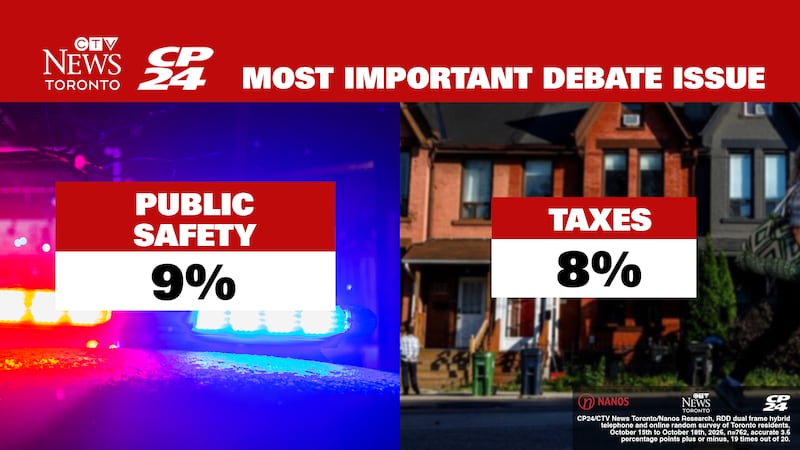
The poll from Nanos Research suggests that a plurality of respondents (19 per cent) view the cost of living in Toronto as their most important debate issue. Other frequently cited issues included congestion (16 per cent), housing affordability (13 per cent), homelessness (10 per cent), public safety (nine per cent), taxes (8 per cent), public transit (8 per cent), spending (6 per cent) and mental health (2 per cent).
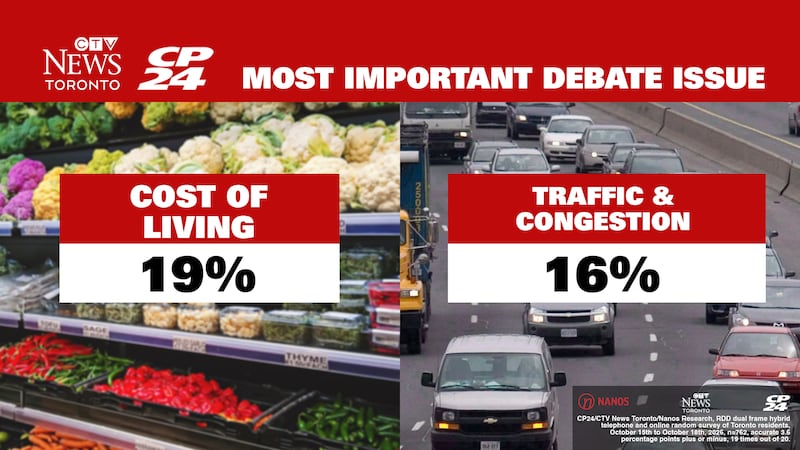
There was some neighbourhood variance, with Scarborough voters more likely to identify congestion as their top issue (21.5 per cent) and voters in Etobicoke, North York, and downtown more likely to say cost of living.
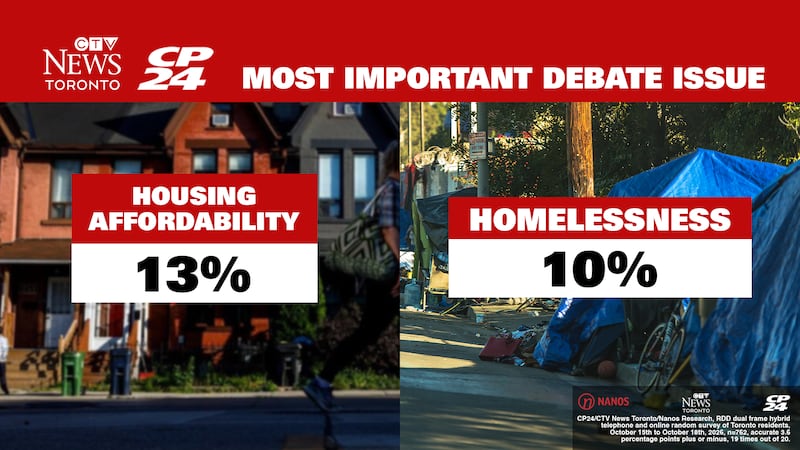
Cost of living was also the top issue among those 18 to 34 (28.2 per cent) and 35 to 54 (19.1 per cent) but a plurality of the oldest respondents, those 55 and up, said that traffic and congestion was their top issue (17.7 per cent).
Asked what qualities they want to see from the candidates during the debate, a plurality of respondents said honesty and transparency (26 per cent). Other responses included the ability to solve problems (22 per cent), a clear vision for the future (19 per cent), an ability to manage finances (15 per cent) and knowledge of all issues (10 per cent).
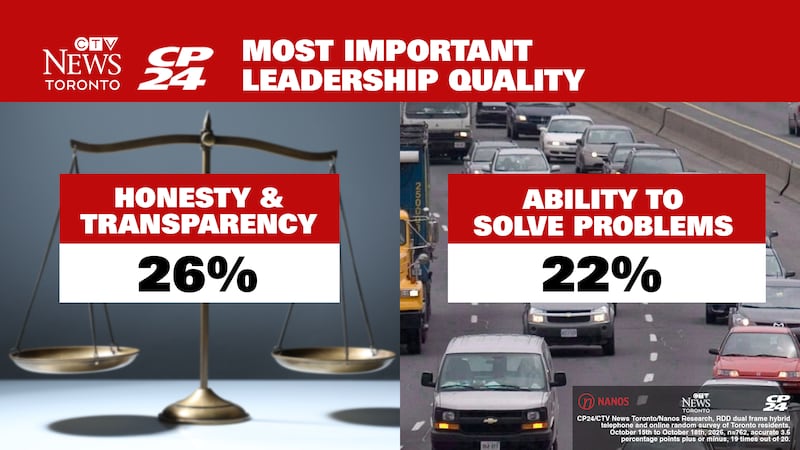
In the statement, Nanos said that Chow voters appear to be focused on honesty while Bradford supporters are more concerned with managing finances.
“There’s a different dynamic playing out on a lot of these issues in different parts of the city. People who live in Scarborough want to hear more about traffic. People who live downtown want to hear about homelessness,” Nanos said.
“Bradford supporters are a little more keyed into taxes and what it means. So you have to think of the mix, the message mix for the candidates of being able to mobilize their own supporters, but then appeal to a broader group of Toronto residents in order to try to push them over the top.”
Methodology
CP24/CTV News Toronto/Nanos conducted a RDD dual frame (cell- and land-lines) hybrid random telephone and online survey of 762 residents of Toronto aged 18 years and over, from Oct 15 to Oct. 18. Respondents were all randomly recruited through a dual-frame (cell- and land-line) RDD sample using live agents. One half of the sample was administered the questionnaire by telephone, and one half was administered online through the Nanos Insights Lab Probability Panel. The random sample was weighted by region, age and gender according to the latest Canadian census data. The full methodology is detailed in the technical note in this report. This research was conducted and released in accordance with the standards of the CRIC of which the firm is an accredited member. METHODOLOGY A random survey of 762 residents of Toronto is accurate ±3.6 percentage points, plus or minus, 19 times out of 20.

