A Brampton family is hoping to raise enough money for their two-and-a-half-year-old son to get treated in the United States for his rare genetic disorder after the province rejected their request for out-of-country funding.
“We don’t have any plan B right now,” Mandeep Chandi said of the crowdfunding campaign the family started.
Zorawar Singh Chandi was seven months old when he received his diagnosis for Aromatic L-Amino Acid Decarboxylase (AADC) deficiency. His parents said they started noticing that Zorawar wasn’t developing at the same rate as other children when he was just two months old.
AADC is an enzyme responsible for catalyzing the conversion of certain amino acids to dopamine and serotonin. This deficiency is more of a developmental disorder than a neurodegenerative one and, according to one peer-reviewed paper, it impacts roughly one out of every 1.3 million people.
Left untreated, it can cause developmental and cognitive delays, muscle weakness and impair movement.
Ramandeep Kaur, his mother, says every day is a challenge for Zorawar. She says several times a week his eyes will stay rolled upward for up to 30 minutes, which is painful for him and hard for her too.
Zorawar is also on a liquid diet as he struggles chewing food.
“Sometimes he is very irritated, cry all the day, and he is not able to—like he can’t say anything that what is going on with him,” Kaur said.
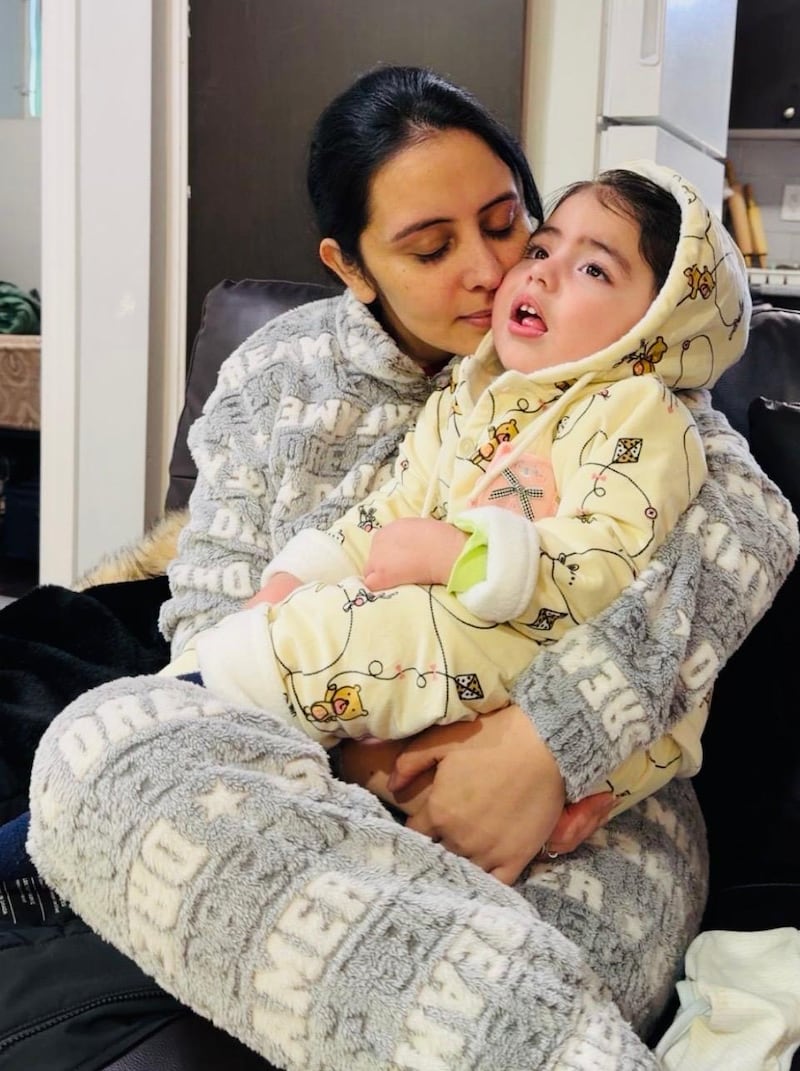
When they received their diagnosis, one of the treatments their doctor recommended was Kebilidi, which is not currently approved in Canada.
“The treatment is a one-time treatment that is very expensive,” Kaur said.
Kebilidi is an FDA-approved gene therapy treatment for AADC deficiency, the first of its kind to be administered directly to the brain. It was approved by the U.S. administration in November, 2024, six months after Zorawar was born.
Boston Children’s Hospital, the hospital where the family is looking to receive this treatment, said that while clinical studies are still ongoing, the treatment has so far shown that patients receiving Kebilidi are “able to synthesize neurotransmitters and begin achieving motor and other developmental milestones.”
- How to set CP24 as your preferred source on Google
- How to set CTV News as your preferred source on Google
The hospital says it is too early to say with certainty that it is a cure but it notes that the treatment appears to correct the root cause of the genetic disorder.
Kebilidi doesn’t cost thousands of dollars, it doesn’t cost hundreds of thousands of dollars—the family says the treatment will cost them millions.
“It will almost cost about like $5 million, so it’s not possible for the middle-class family to pay that amount just for getting the treatment,” Chandi, Zorawar’s father, said in an interview with CTV News Toronto.
The family has set up a GoFundMe to cover the cost of the treatment, as well as medical assessments, travel, and follow-up care fees. At the time of writing, the fundraiser has brought in roughly $1.6 million.
Application for out-of-province funding rejected
The struggle by the Chandi family to get treatment for their son dates back to August, 2025 when their family doctor first submitted a request for prior approval for full payment of insured out-of-country health services on behalf of Zorawar.
“He is severely affected, showing minimal to no improvement with conventional therapies currently provided, highlighting the urgent need for disease-modifying intervention. His current developmental milestone corresponds to that of a 1-month-old,” the application reads, before adding that the benefit of conventional pharmacological therapy has been minimal and inconsistent.
“Gene therapy directly delivers a functional AADC gene to the brain, restoring neurotransmitter production. Clinical trials have treated children as young as 16 months, with younger patients showing the most rapid and significant motor and functional gains. Delaying treatment risks permanent neuromotor impairment and reduced potential for developmental progress.”
The ministry denied the application in January of this year, after requesting more information in October 2025.
In a letter reviewed by CTV News Toronto, it said that the treatment did not meet the requirements laid out under the Health Insurance Act and argued the services for funding are “experimental.”
The family appealed the decision through the Health Services Appeal and Review Board (HSARB) in February, but that appeal was also denied.
“After like waiting for two years, so we still left with no hope,” Chandi said.
Kebilidi, however, has not been approved by Heath Canada and a spokesperson for the federal agency said it has not received a regulatory submission for the treatment.
“The decision and timing of a submission rests with the product manufacturer,” Karine LeBlanc of Health Canada wrote in an email. “Should the manufacturer choose to make a submission, Health Canada would review it in accordance with the applicable regulatory requirements and established review processes.”
How long that process can take depends on various factors, Health Canada says, like the complexity of data and the regulatory pathways used.
While the Ministry of Health could not directly comment on Zorawar’s case, citing patient confidentiality, a spokesperson said the specific requirements for an Ontarian to qualify for out-of-country funding are set out in Regulation 552 under the Health Insurance Act (HIA).
The family’s lawyer tells CTV News Toronto that regulation was amended after Zorawar’s application was refused, significantly curtailing the circumstances in which out-of-country care would be approved. The province announced that amendment on Oct. 6 of this year, but their application as submitted to the health ministry on Aug. 13, 2025.
“After another case that was decided by the courts was decided to be returned to the executive officer, the government, dramatically I guess, increased the criteria or narrowed the criteria under which out-of-country treatment could be approved,” health and regulatory lawyer Lonny Rosen, and founding partner of Rosen Sunshine LLP, said in an interview with CTV News Toronto, noting that there are four conditions that need to be met for the province to approve funding.
Those four conditions are the following: the treatment is performed in Ontario; the drug and it’s administration is publicly funded in Ontario; access to the drug is temporarily unavailable; and it is necessary for the Ontarian to travel out of the country sooner to avoid death or medically significant irreversible tissue damage.
In a letter regarding Chandi’s HSARB file, obtained by CTV News Toronto, a senior medical consultant from the Ministry of Health told the family the changes that were filed on Oct. 6 “are deemed to come into force on October 1, 2011.”
‘There’s no hope’
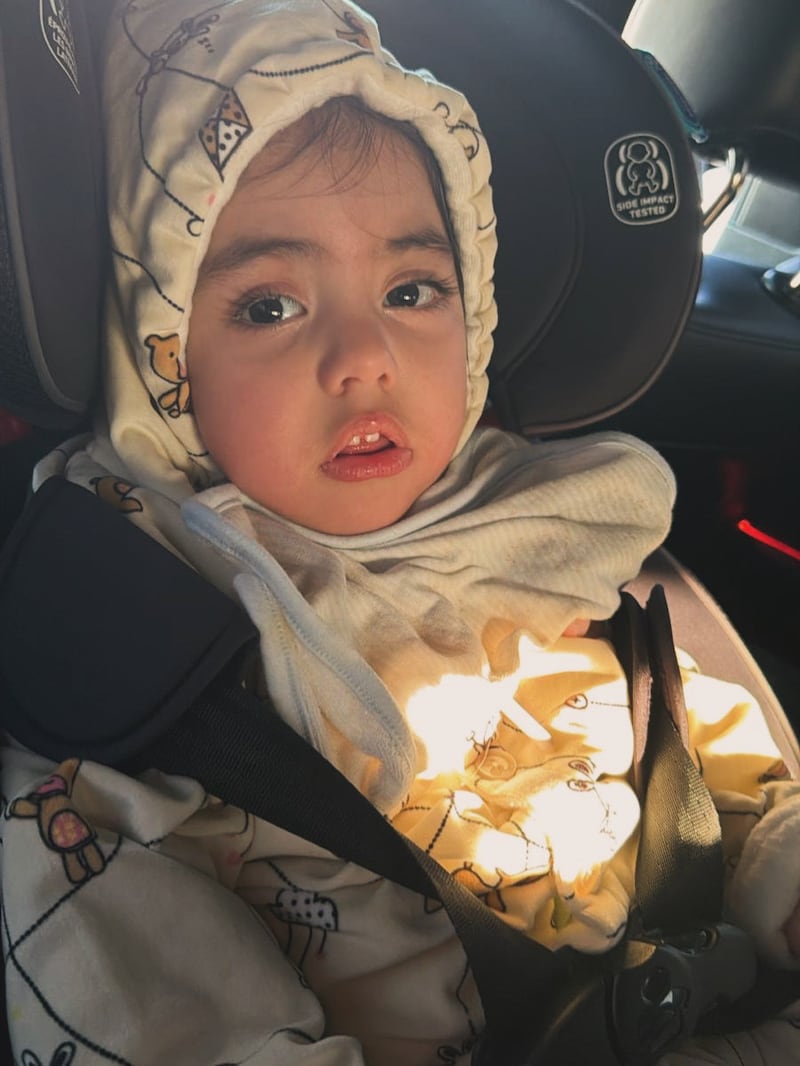
Zorawar’s family hopes they can obtain the treatment soon, as each day poses a new challenge for them. They said it is so hard to see their son crying all the time due to pain.
“There’s no hope,” Chandi said. “Nothing is available for us in Canada right now, so please, help us out. Every child should be getting treated by the government, on the priority levels. Our government have a lot of money to do the rest of the other stuffs, but not for the severe disabled children.”
CTV News Toronto contacted PTC Therapeutics, which is the maker of the drug, but has not received a response.

