The City of Toronto and Toronto police say at least two more speed cameras in the city have been vandalized in the past week.
The Automatic Speed Enforcement (ASE) camera located at Rockcliffe Boulevard near Jane Street and St. Clair Avenue was damaged on Wednesday night, while the one located at Lake Shore Boulevard East just west of Woodbine Avenue was cut down last week on July 16.
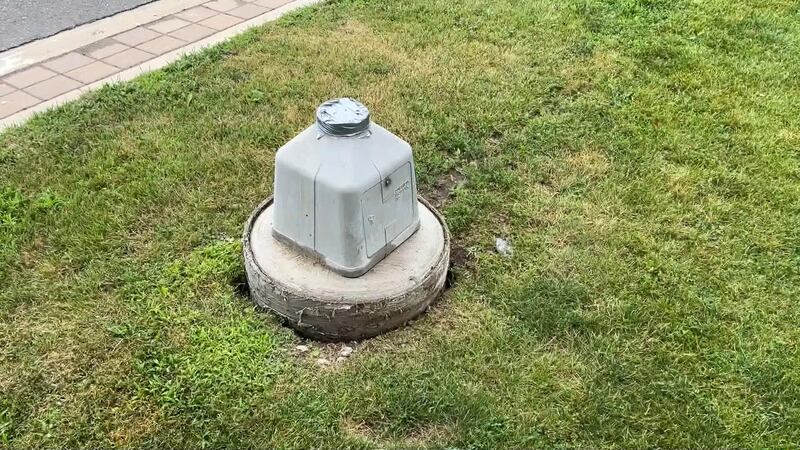
Earlier this month, one of Toronto’s most frequently vandalized speed cameras—on Parkside Drive—was chopped down for the sixth time, despite being under the watch of a Toronto police surveillance camera.
In a statement to CTV News Toronto, the city says they condemn any vandalism of the ASE devices.
“Tampering with or damaging one of these devices allows dangerous speeding to continue and undermines the safety of all road users, particularly those more vulnerable such as pedestrians, cyclists, children and the elderly. The City is working with its vendor and the Toronto Police Service on solutions to prevent future incidents of vandalism.”
The latest acts of vandalism come as a new study by the Hospital for Sick Children found that school and community safety zones with speed cameras saw a steep drop in vehicle speeds, a decline researchers believe will help reduce collisions and injuries on Toronto streets.
The study reviewed vehicle speeds before, during, and after the installation of ASE cameras in 250 school and community safety zones across Toronto between July 2020 and December 2022. It found that the proportion of vehicles speeding in those areas was reduced by 45 per cent.
“Importantly, the effect of enforcement was greater for higher initial vehicle speeds,” the study’s authors noted.
According to the report, there was an 84 per cent reduction in vehicles exceeding the speed limit by 15 km/hour or more, and an 88 per cent reduction in vehicles exceeding the speed limit by 20 km/hour or more.
“Lower vehicle speeds give drivers more time to observe pedestrians and react to their presence, reducing the likelihood of a collision,” the authors said in their analysis.
“In the event of a collision, lower speeds significantly reduce the kinetic energy and, therefore, reduce the chances of severe or fatal injury to a struck pedestrian.”
It is the second time that the Hospital for Sick Children has found a drop in vehicle speeds where speed cameras are placed, with its last study being released in 2023. Both studies used data from the same time period.
“Speed is the single most important factor in pedestrian injury risk,” the study’s first author, Dr. Andrew Howard, who is the head of Orthopaedic Surgery at SickKids, said in a news release issued Friday.
“This study shows that ASE can be an effective way to reduce that risk, especially in areas where children are most vulnerable.”
Speed cameras have become the subject of much debate in recent months by members of the public and even Toronto city council, which is considering a new rule that would prevent drivers from racking up tickets at a single location before receiving notice in the mail.
Coun. Anthony Perruzza, who pitched the motion, recently questioned the efficacy of speed cameras, calling them more of a “speed trap” than a public safety tool.
If approved, the city would cap how many infractions a vehicle owner can receive from a single location before being formally notified.
Earlier this month, a speed camera on Parkside Drive was cut down for the sixth time in nine months.
One of the authors of the study, Linda Rothman, who is an associate professor at Toronto’s Metropolitan University’s School of Occupational and Public Health, said the pushback against speed cameras is concerning.
“They are extremely effective,” she told CP24 on Friday morning.
“We do know that these cameras are placed around schools and community safety zones and that actually for older kids, injuries are the largest cause of death and motor-vehicle collisions are the greatest contributor.”
She said data by Transport Canada has indicated that a quarter of fatal collisions are caused by speed.
“The bottom line is we know these (speed cameras) work and we know that people are speeding,” she said.
“People must just recognize that they need to slow down. If they are doing speeding over and over and over again, then there is no recognition that actually their behaviour is creating a lot of carnage on the streets.”

