Ontario’s plan to give special constables additional powers, allowing them to arrest and charge people caught using drugs in public places, is drawing mixed reviews.
Part of a sweeping justice bill introduced last November, this new regulation for special constables will see modifications made to The Restricting Public Consumption of Illegal Substances Act, 2025.
The act was initially focused on public parks, but the proposed changes would now extend it to special constables in public places, like transit systems.
If passed, police officers and what are known as prescribed provincial offences officers will be on an even footing, meaning they can both direct individuals using drugs to stop or leave the public space or face charges under the provincial code.
They can also require alleged offenders to identify themselves to launch a proceeding under the Provincial Offences Act and have the authority to seize, remove, and destroy illegal substances found in plain view that are near someone believed to be using drugs who is refusing to comply.
Special constables, like police officers, will also have the authority to submit seized substances for examination or analysis to an analyst.
Currently, special constables may, under the direction of a police officer, help the police in performing policing functions in relation to the premises of the authorized special constable employer, including assisting with investigations for Criminal Code offences. They do have the authority to arrest people who refuse to stop consuming drugs on public transit but cannot lay charges.
‘Good option’: special constable group
The Ontario Special Constable Association (OSCA) says granting more powers to sworn peace officers is a “good option,” even if the consequences may be less than those prescribed by the Criminal Code.
“I’m expecting to see possibly a ticket, possibly what’s called a summons, where we can say, ‘Okay, we’re not giving you a fine but we are compelling you to go before a justice of the peace and talk to them about this problem,’” Sarah Kennedy, the association’s president, told CTV News Toronto on Thursday.
“And the reason why that’s not the worst idea is because the provincial courts are really empowered to apply probation orders that require that party to engage in therapy or a rehabilitation effort, and isn’t that better for everybody?”
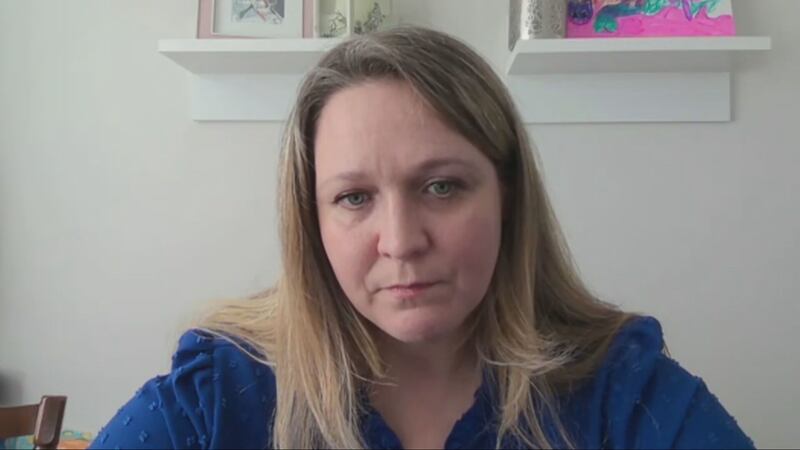
Kennedy said special constables on Toronto’s transit system, which is the third largest in North America and employs just over 100 such officers, are reporting instances of people using drugs on a daily basis.
‘Enhanced powers are not necessary,’ says TTCriders
Andrew Pulsifer, the executive director of the transit advocacy group TTCriders, says they agree that everyone has the right to enjoy and feel safe in public places, but increasing policing on the TTC isn’t the way to make that happen.
“There’s already an increased police presence on the TTC, so these enhanced powers (for special constables) are not necessary,” he told CP24 on Thursday afternoon.
“We’re always advocating for a non-enforcement-based approach to safety on transit. … We want a more compassionate approach.”
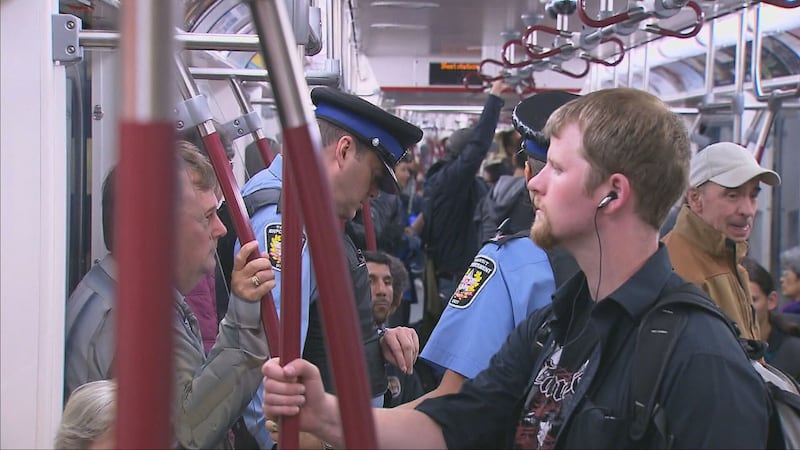
Pulsifer says what’s really needed to address this issue are more social supports.
“(Drug use on public transit) is a direct result of the ford government shutting down supervised consumption sites. These are social services that people need that the Ford government is shutting down,” he said.
In recent years, Toronto has focused on increasing the presence of crisis workers to respond to mental health calls, including substance use.
On the TTC specifically, a pilot project is currently underway, where staff from the Toronto Community Crisis Service are embedded 24/7 at Spadina, Union, and Bloor-Yonge stations. The plan is to scale this $540,000 pilot to a $1.8 million annual program, pending funding approval.
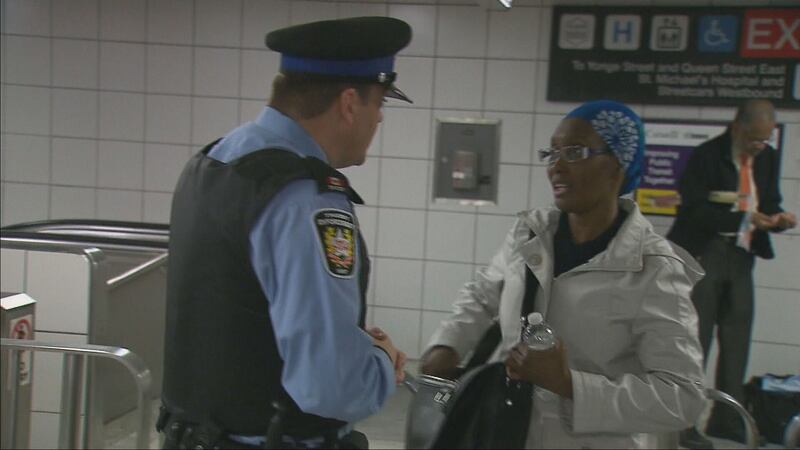
Pulsifer says TTCriders is also taking issue with the “reasonable belief” part of the proposed legislation, where special constables are given the individual discretion to arrest and charge someone they believe is using drugs on public transit and refusing to stop or leave.
“That can lead to the criminalization of poverty and racial profiling,” he said.
CP24 and CTV News Toronto have also spoken with a number of transit users about this proposed regulation. Some are all for it; others, however, have expressed deep reservations.
‘People are scared to go on the subways’: Ford
Speaking following an unrelated news conference on Thursday, Premier Doug Ford said this proposed legislation was introduced as “people are scared to go on the subways right now.”
“They do not feel safe on our subways,” he said.
Ford said he doesn’t necessarily think special constables should have the same powers as the police but said he believes they should be able to intervene as they do when there’s drug use on public transit.
“But when you’re sitting there, and some guy’s drugged out. He has a needle in his arm, jacking it into his arm, it’s ridiculous. They need to get off the subways and make the subway the safest subway,” he said, pointing to his government’s $530 million HART Hub strategy.
“(They’re) going to put a shelter over their heads. They’re going to get them off drugs and give them as much help as possible to find them gainful employment. That’s what we believe in. I sympathize for these addicts. I want to help them, but I’ll tell you one thing—I’m not going to have some drug injection site shooting up all over the streets, needles everywhere.”
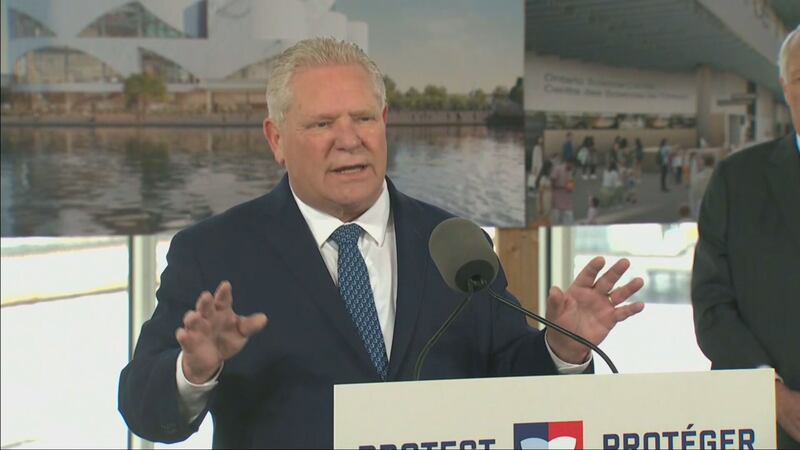
Ford added that he’s spoken to people who live in the neighbourhoods who are reporting that people with drug addictions are making their area “unsafe” and who are committing petty crimes to get money for drugs.
“We’re going to help these people. We’re spending hundreds of millions of dollars to help these people, and I want to get them back on their feet and be productive in society. That’s what I wanted to do. I don’t want them shooting up in the subways,” the Premier said.
In a statement, the TTC said the question of upping powers for special constables on the system to address those using drugs is “part of ongoing discussions with the province and colleagues from other agencies.”
“TTC special constables are highly skilled and trained professionals who must deal with all manner of issues, including drug use. They will continue to keep customers and employees safe in all situations and will engage with police and specialized outreach workers as required,” the city agency said.
The Toronto Police Services board, which appoints the TTC’s special constables, will have the final say on whether the extra powers will be extended to them.
The province’s Solicitor General is inviting people to provide feedback online on the bill until March 1.
With files from CTV News Toronto’s Sean Leathong, Siobhan Morris, and Jermaine Wilson

