Jason Grbavac remembered how packed the trains were when he attended the Euro Cup in 2024. Hordes of soccer fans were singing and drinking as they made their way to the stadium.
“It was just fun and different that way. And I’m not sure maybe how Toronto will be set up for that,” Grbavac said in an interview with CTV News Toronto.
The Hamilton Croatia soccer executive, whose parents immigrated to Canada from Croatia, said he can’t wait to experience something like that on the train ride to the stadium.
“I‘m not sure what my day will look like there. I often wonder if I’m on the Lakeshore West GO train from Burlington to the Exhibition, and it’s Croatia playing. (...) it’ll be surreal to be part of that,” said Grbavac, who has tickets to the June 23 match between Panama and Croatia at Toronto Stadium.
“It’ll be big. Yeah, it’ll just be so, so special for our community.”
For Grbavac and other soccer fans, match days don’t just start when you get to the stadium. It begins way before that, including the journey to the pitch.
That’s why the City of Toronto is banking on fans taking the bus, streetcar and trains to and from the stadium during match days with its “transit-first” mobility plan.
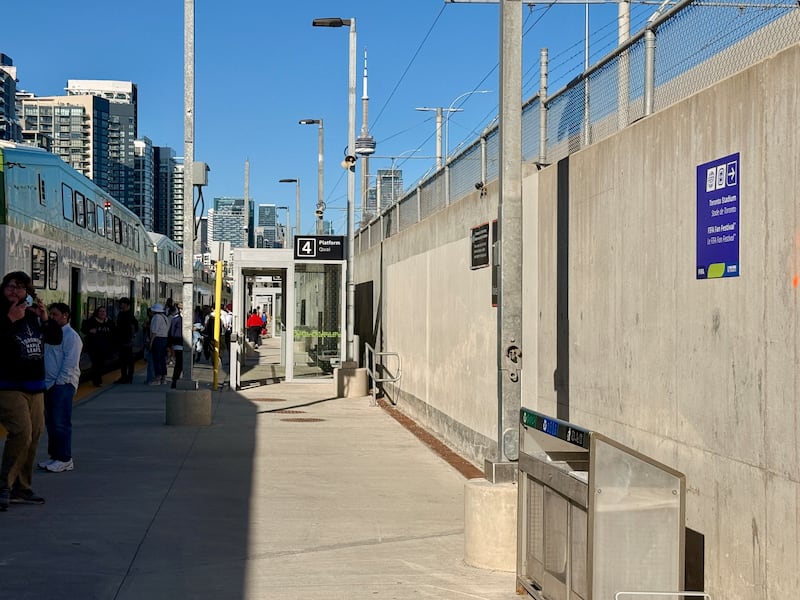
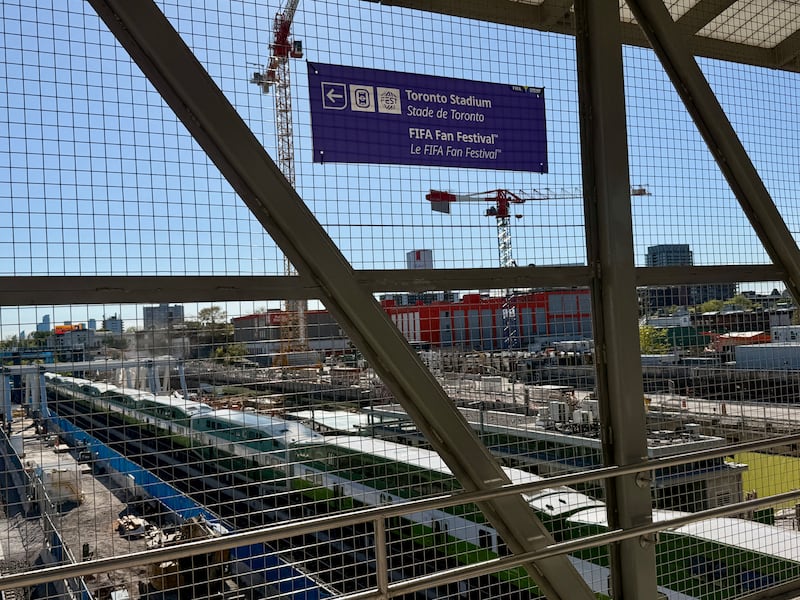
If you’re not a FIFA senior official, a dignitary, a VIP guest, a player, team staff or a referee, the fastest way to get to Toronto Stadium at Exhibition Place and the nearby FIFA Fan Festival at Fort York Boulevard and The Bentway will be via transit.
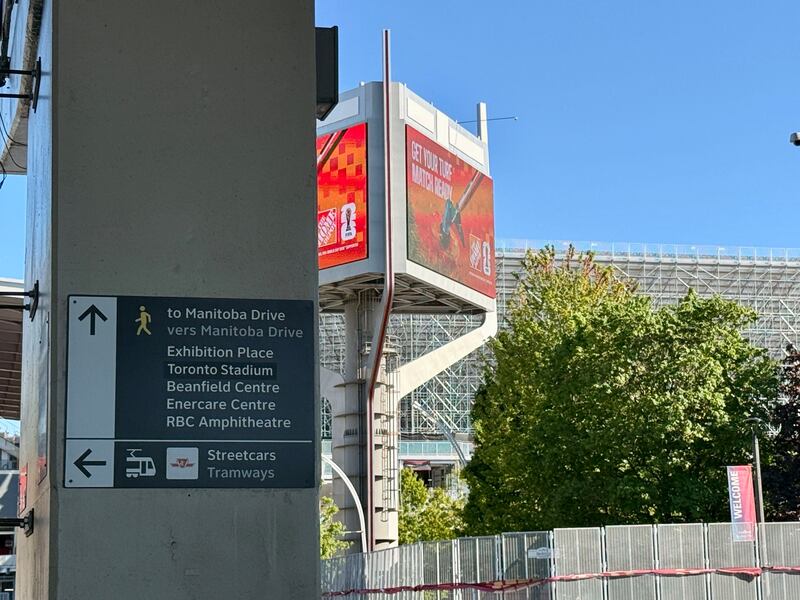
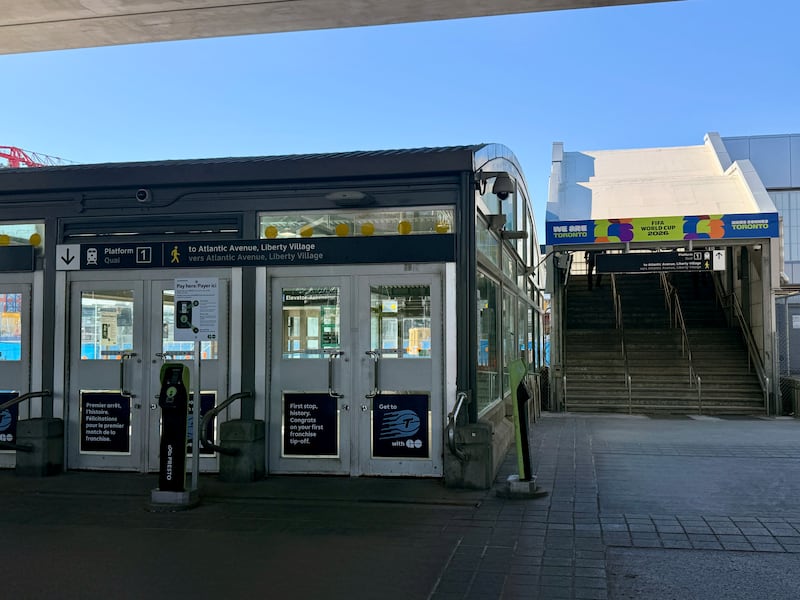
Exhibition GO is steps away from the stadium, and the TTC is introducing a new transit hub on nearby Fleet Street, which will serve as a terminal point for several downtown streetcars.
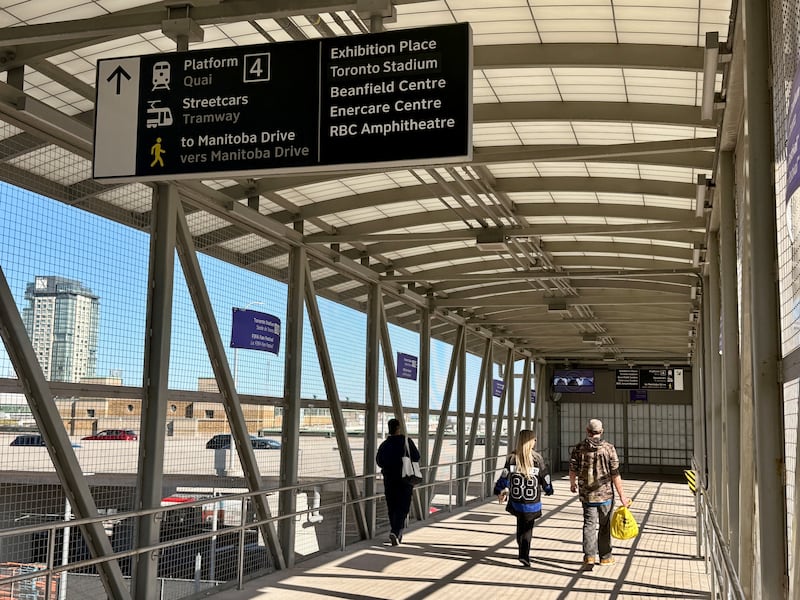
The “transit-first” approach will see vehicular traffic limited around the stadium and Fan Festival with road closures on Lake Shore Boulevard West, Dufferin Street, and Fort York Boulevard. There is also no spectator parking lot at the sites, except for pre-booked accessible parking by FIFA for ticket holders.
Only one large parking lot for FIFA ticket holders with accessibility needs will be available at Exhibition Place on match days.
City officials expect more than 80 per cent of spectators will either take public transit, walk, or cycle to the venue.
The TTC has promised enhanced and expanded service across its bus, streetcar and subway lines during match days. They said improvements such as signal priority and rapid-transit lanes will ensure buses and streetcars operate seamlessly and avoid crowding.
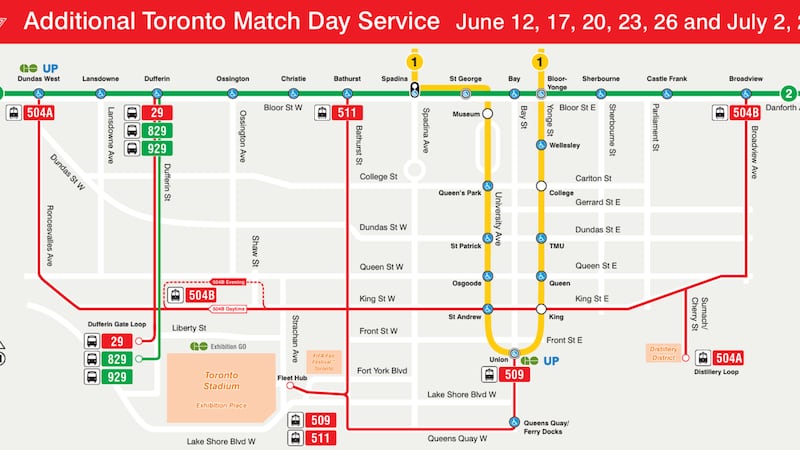
The TTC also launched a new wayfinding system to ensure those who are from outside of the Greater Toronto Area could navigate the subway. The agency plans to deploy more than 600 event ambassadors to help fans and visitors during the tournament.
Meanwhile, GO Transit is also increasing its train service across its system, with Lakeshore West seeing the largest bump in trips as Exhibition GO is part of the line.
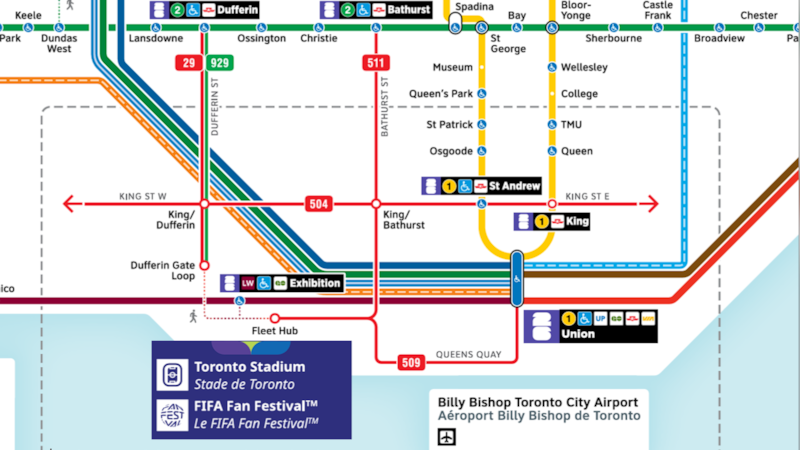
Trains will run every 15 minutes during the duration of the tournament in Toronto, even on days when there are no games being played. On match days, service will increase further, with a total of six trains running every hour.
GO Transit is also encouraging fans who are able to take the 45-minute “scenic walk” from Union Station to Toronto Stadium as an alternative. The walk from Union Station to the Fan Festival will be about 30 minutes.
Is Toronto ready to move tens of thousands?
David Cooper, principal of transportation consulting firm Leading Mobility, says the city’s mobility approach for the World Cup makes sense as it takes advantage of and builds on the transit infrastructure it has.
“We have a very built-out downtown and core of the city. And if you were to go to a Leafs game or a Jays game or a Toronto FC game, transit’s always been the main mode to go there. We don’t have surface parking lots to a great extent,” Cooper said.
Asked if the plan is realistic, he believes so.
“They’ve been planning this for a long time. And a lot of it’s building on existing processes and service levels and enhancements from staff to do this. So, I don’t have any concern that they’re not going to be able to do it,” said Cooper, who is a former senior transportation planner for the city.
“It’s a lot of ways just normal service with some additional capacity that they already do for regular events in the first place. So this is not something that’s unfamiliar to them.”
Toronto is expecting at least 300,000 people for the World Cup. On match days, the city anticipates that upwards of 65,000 people will make their way to the stadium or the FIFA Fan Festival and there will be a 15 per cent increase in the number of vehicles in the downtown core.
Cooper says he is “not worried” about Toronto’s transit during the tournament, as he believes the city has the fleet and staff to move fans along.
“I think they’ll knock it out of the park, because this is something that, moving tens of thousands of people in a very short period of time, the system’s already been designed (to do that), it’s been doing that for decades,” he said.
“When you have a single focus to knock this out of the park, to make sure Toronto keeps moving to make sure people can get to these events, to make sure that we can show the world that we can do this, I think they will be successful.”
What is at stake
For the plan to work, Cooper said, it is critical that all agencies maintain a clear and nimble line of communication, from the TTC to the Toronto police, so that any unexpected issues can be resolved quickly.
With the eyes of the world on Toronto and the other host cities, the FIFA World Cup is a make-or-break event for many transit agencies.
“I think there’s fear because the World Cup’s a big event, right? There’s a big reputational risk to the city and the organization supporting it if they can’t deliver. But at the end of the day, like, we’ve had the ability to have some pretty substantive planning that’s been going on for this,” Cooper said.
Aside from the city’s reputation, he added there is also pressure to deliver excellent transit service, as the tournament could also be a way to capture new transit riders.
“A unique opportunity, especially events have, and we saw this with Taylor Swift on transit, is that it’s one of the few times transit gets a new audience and a new ridership market,” Cooper said.
“If we can make the system shine from a reliability and access perspective, we’re very likely to have those people come back to transit.”
TTC CEO Mandeep Lali agrees.
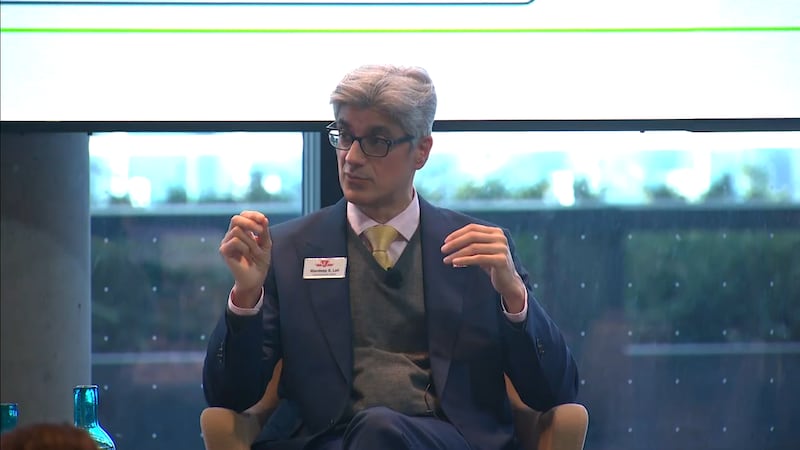
On top of getting fans to where they need to go, Lali said the TTC wants to leave a good impression, especially on tourists.
“So when we look at this event, it’s a once-in-a-lifetime event. It’s not a question of just moving people from left to right, up and down, north, east, south and west. It’s the experience,” Lali said during a Toronto Region Board of Trade event discussing the city’s game plan for FIFA.
“Are they going to come back here again? Are they going to visit this city and spend their money? Are they going to contribute to the economy? Will their kids want to come here based on their experience? So, it’s the customer experience.”
Putting the plan to the test
Matti Siemiatycki, the director of the Infrastructure Institute at the University of Toronto, echoed the same sentiments and lauded the city’s transit-first approach.
“The TTC has had ridership down. It’s been hard to get people back into the downtown. The city has really struggled post-COVID. I think this is great that people are coming and we should be excited about it,” Siemiatycki told CP24.
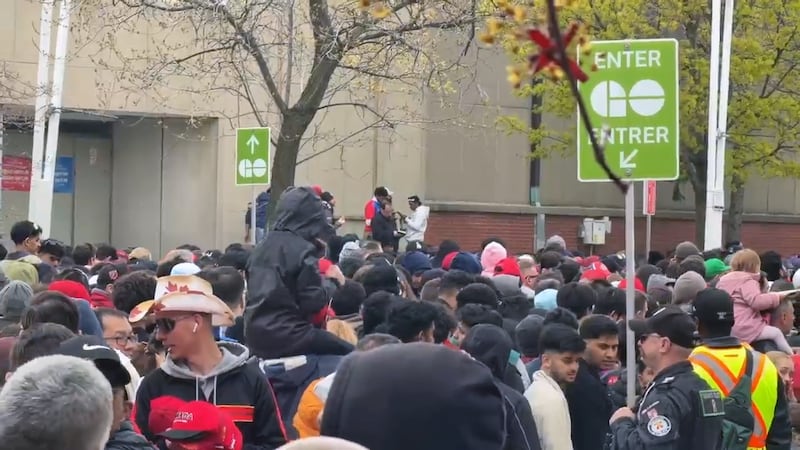
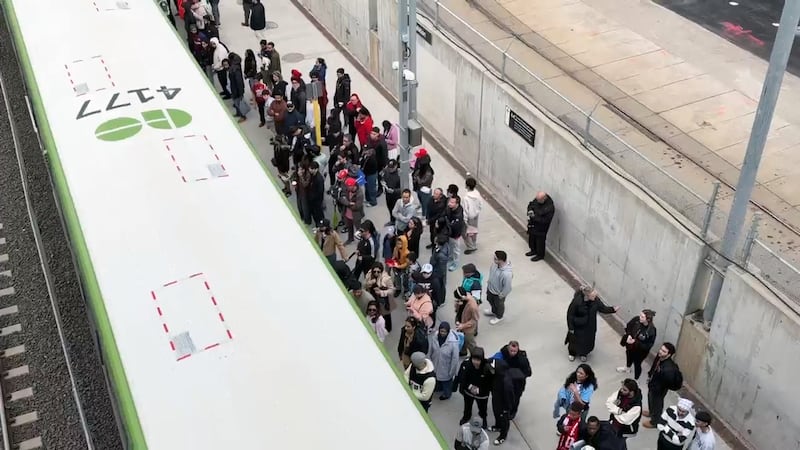
The plan was put to the test on May 9 when soccer superstar Lionel Messi and Inter Miami played against Toronto FC at BMO Field. CTV News camera caught large crowds after the game as they tried to get into the Exhibition GO station.
While officials touted the transit system’s capability of handling tens of thousands of fans, many Torontonians complained to CTV News that day about having a hard time leaving the station and being stuck in crowds.
“You have to test these plans because having a plan is one thing. The implementation is another,” Siemiatycki said.
“And that will be the key that determines whether this is a success or whether we become known as the city that really failed because people couldn’t get there easily.”
Some also expressed concerns that thousands of fans will create a bottleneck at Exhibition GO.
Metrolinx CEO Michael Lindsay told the Toronto Region Board of Trade that while his agency and the TTC are prepared to move soccer fans, the plan could still change.
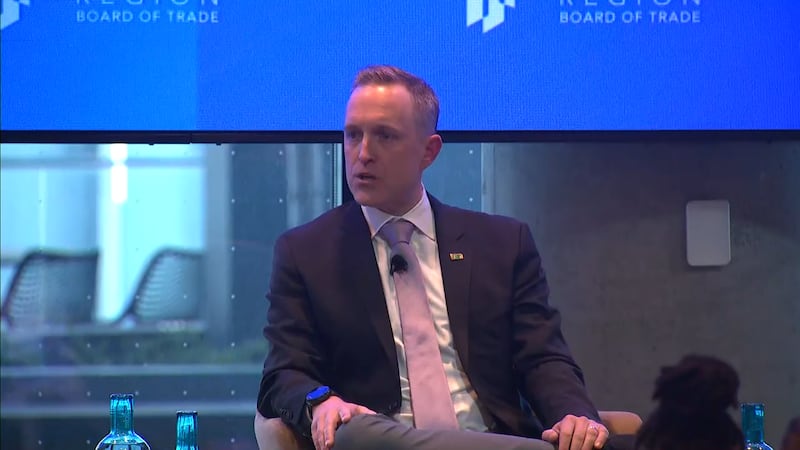
“We will change a little bit what our plans are after match day one happens for sure. We will, 100 per cent we will. And by the way, when Canada wins, and we figure out that people stay downtown for four more hours celebrating, that’ll change things,” Lindsay said.
“So, we’ve done as much planning as we can. No battle plan, as they say, survives.”
With files from Alex Arsenych

