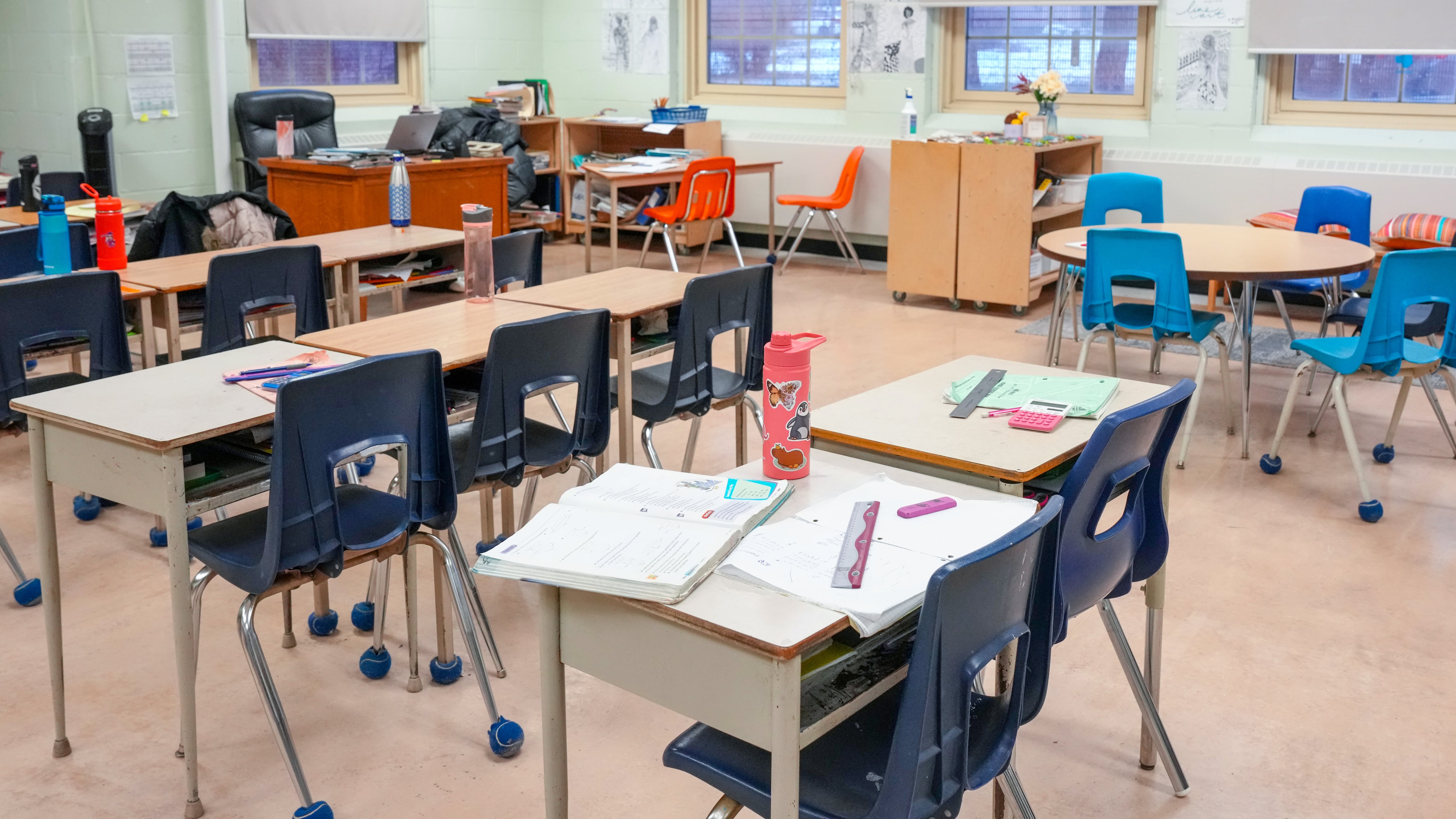
It’s that time of year when elementary students across the Greater Toronto Area are either being moved or have already swapped classrooms, as school boards adjust staffing to meet provincial class-size rules.
It happens every September. School boards across the GTA compare their spring enrolment projections with the number of students who actually showed up in September and then reshuffle classes and teachers. Classes must be set no later than Sept. 30, though count days vary by board.
Under the province’s regulations, the average junior kindergarten or kindergarten class can’t exceed more than 26 students. For grades 4 to 8, that average cannot exceed 24.5 students.
The TDSB said it notified families with elementary school students on Sept. 25 whether their child is impacted by the annual reorganization process. The first day of reorganized classes in the TDSB was this past Monday.
Meanwhile, the Toronto Catholic District School Board (TCDSB) said they started reorganization on Sept. 16, with the process expected to finish sometime in early October. Though that’s past what’s listed in the province’s requirements, the TCDSB says its timeline was pushed back due to the Sept. 8 start to the school year. It also reflects “an increase of students above our projects and plans,” the board said.
“We’re pleased to share that significantly fewer schools are impacted by reorganization this year thanks to more precise enrolment projections and the flexibility of staffing adjustments being made over the summer,” Emma Moynihan of the TDSB wrote in an email.
The TDSB said it could not readily provide data on the number of schools impacted by reorganization this year, and how that compares to the previous school year. The Toronto board says it has been successful in meeting the ministry’s requirements.
The education ministry’s press secretary told CTV News Toronto that school boards plan their staffing every spring using enrolment projections and, from there, they’ll make adjustments in September once “actual student enrolment is finalized.”
“This is a normal process that happens every year to make sure staffing reflects enrolment while meeting class size requirements and collective agreements,” the press secretary wrote in an email. “Boards are expected to manage these changes responsibly and minimize disruption for students and families.”
While this is the standard process, advocates say this time of year is highly disruptive for teachers and students (and their families).
Sara Blumenstein, parent organizer of the Toronto Education Advocacy Network, says this time of year is more stressful than the first week of school, because after weeks of families building a routine, it’s back to square one. She says it is “chaos.”
“When they (our children) are in a class for three weeks, they spend time figuring out their friends, where they’re going, their routines, and that routine is so important for kids, especially the younger ones,” Blumenstein, whose daughter is in Grade 2 at a TDSB school, said.
“You learn the teacher’s expectations. You learn the social dynamics, and then, three weeks into that, you’re told actually half your class is going to a different teacher and everything is up in the air.”
Blumenstein’s child remained in her Grade 1/2 split class, but said some students were moved in and out of the classroom.
Nigel Barriffe, president of the Elementary Teachers of Toronto, echoed Blumenstein’s sentiments, stressing that students are not “numbers on a spreadsheet.” ETT is a union representing more than 10,000 elementary school teachers employed by the Toronto District School Board (TDSB).
Teachers find out what will happen with their classrooms 48 hours in advance, at maximum, Barriffe said.
“We know the dates (on) when it’s going to happen, it’s just a ridiculous process,” Barriffe said. “It really does feel like they’re using an AI algorithm to make these choices.”
For the 2026-27 school year, Barriffe said they’ve heard from some teachers across Toronto that there are “whole classroom communities” that are being disrupted, just to make the numbers fit the staffing model. In a self-reported survey conducted by the union, one ETT member said they have felt “completely blindsided” by reorganization, while a couple of others said there isn’t enough room or support in their classroom for their students.
“It’s always a disaster. This year, it seems to be … particularly disastrous because the Minister of Education Paul Calandra keeps trying to say that they put record money into the schools, but yet, what we’re seeing after reorg is continued large class sizes,” Bariffe said.
What about other GTA school boards?
The Durham District School Board said they finished their reorganization process on Tuesday. The Dufferin-Peel Catholic District School Board did not provide any dates, but said they make “every effort” to minimize the disruption in classrooms while being compliant with the province’s regulations.
The Halton District School Board said all reorganizations will be communicated to families by their child’s school by Oct. 5.
- How to set CP24 as your preferred source on Google
- How to set CTV News as your preferred source on Google
Just like how other school boards monitor enrolment trends in the spring, a spokesperson for the Conseil scolaire Viamonde said they look at class sizes then and throughout the summer, adjusting gradually.
“We make every effort to limit changes after the start of the school year,” Conseil scolaire Viamonde said.
In Blumenstein’s view, reorganization at the end of the first month of school is a policy choice—one that can be changed, if there was “political will.”
“They do these projections in March. Projections are not perfect, but it is their responsibility first and foremost to prioritize the needs and stability of the children, and that’s not what’s happening,” Blumenstein said.

