


Toronto mayoral candidate Chris Alexander is pledging to ramp up construction of affordable housing, setting a goal of breaking ground on at least 3,000 new units next year and 10,000 per year by 2029.
Alexander made the promise during a press conference on Friday.
The City of Toronto has approved more than 33,000 new affordable housing units but in 2025 the number of construction starts involving affordable housing in Toronto stood at only 1,598. In 2024, Toronto recorded less than 1,000 affordable housing starts.
“Under the plan, Toronto would act as a public builder, using public land to build standardized mid-rise apartments with lower-cost construction techniques,” a statement from Alexander’s campaign read.
- How to set CP24 as your preferred source on Google
- How to set CTV News as your preferred source on Google
Toronto currently has a goal of approving 65,000 rent-controlled homes, including a minimum of 41,000 affordable rentals, by 2030.
However, the city’s affordable housing strategy largely relies on partnering with developers to build affordable housing on city-owned land.
Speaking to reporters Friday, Alexander explained his goal is for 3,000 new affordable or rent-geared-to-income housing starts in 2027, with the goal of eventually reaching 10,000 starts annually.
“My announcement today is about building affordable and rent-geared-to-income homes on the scale Toronto needs,” Alexander told reporters.
A closer look at the proposal
Under the proposal, Alexander says the city would assemble 30-50 potential sites by leveraging the Toronto Builds Policy Framework, essentially making the city the “master developer.”
He says buildings would generally be four to eight storeys, with standardized designs and construction methods including mass timber and modular construction.
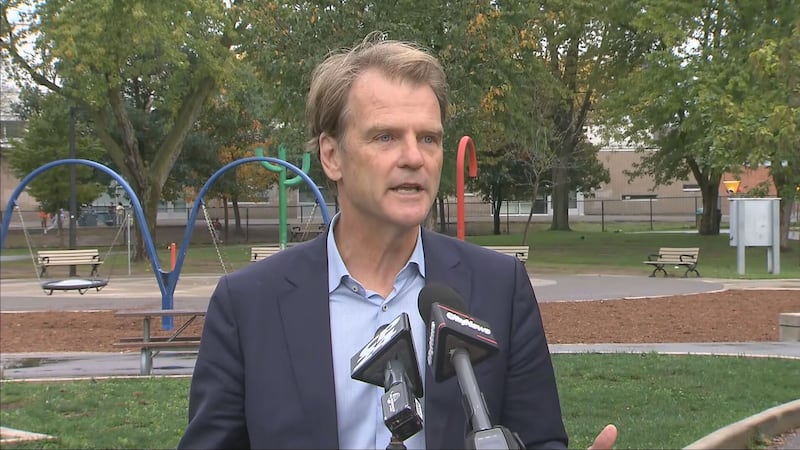
“We’re going to use designs that are already approved off the shelf,” Alexander said.
The plan also calls for fast-tracked approvals with dedicated teams in each of the city’s planning offices.
“Any 100 per cent affordable rental project, built by the city, or led by a non-profit/co-op partner, bypasses public consultation and the Committee of Adjustment entirely,” according to the plan outlined on his campaign website.
The campaign says that eligible projects will receive zoning and site-plan approvals within 30 days.
Alexander says the approach would help Toronto move away from counting homes that have been promised or approved and instead focus on units actually moving into construction.
“We need to get away from these phantom homes,” he said. “We need to get away from this misleading arithmetic and put forward plans that really serve Torontonians.”
Completed buildings would remain on publicly owned land, with Toronto Community Housing or non-profit housing providers operating them under 99-year leases.
The proposal would rely primarily on existing federal financing programs, including the Canada Mortgage and Housing Corp.’s Apartment Construction Loan Program and Build Canada Homes programs.
He also proposed eliminating development charges and parkland levies for qualifying purpose-built rental projects.
“We need scale to address these issues. We need scale to give people dignity,” Alexander said.
Chow says Alexander’s plan ‘sounds familiar’
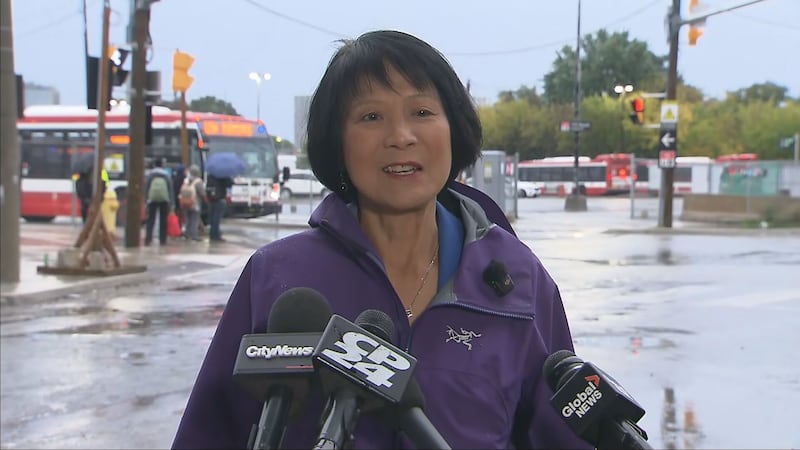
In a statement to CTV News, Olivia Chow’s campaign argued that several elements of his proposal are already part of the city’s housing strategy under her administration.
“The plan Alexander released today is nearly identical to the work that Olivia Chow has been delivering as Mayor,” her campaign said in a statement.
Chow’s campaign pointed to the Toronto Builds Policy Framework, saying 22 projects are under construction this year, with 10 more expected to start construction in 2027 and 51 projects already in development for 2028 and beyond.
The campaign also highlighted modular and mass timber projects at 1120 Ossington Avenue, 11 Brock Avenue, 185 Cummer Avenue and 1113-1125 Dundas Street West.
Chow’s campaign said the city has reduced average housing approval timelines for all projects from more than 1,000 days when she took office to 86 days now.
They also pointed to partnerships with Toronto Community Housing Corporation and non-profit operators including WoodGreen, PARC and St. Clare’s.
On federal financing, Chow’s campaign said she secured $1.8 billion in low-cost financing through the CMCH Apartment Construction Loan Program for nine housing projects delivering more than 3,700 rental homes in Toronto.
“There’s no monopoly on good ideas,” the campaign said. “We welcome Chris Alexander’s support of Olivia Chow’s housing plan.”
Earlier in the morning, Chow spent her time speaking to riders outside the recently opened Scarborough Busway, estimating that “there will be 100,000 riders taking the busway, saving more than an hour every week.”
Bradford defends his pledges
Elsewhere on the campaign trail, Brad Bradford, spent Friday morning answering questions while putting up a campaign sign at Cafe Juventus along Bloor Street West.
Speaking to reporters, Bradford was questioned about why he chose to release his fiscal plan three weeks before the election rather than while participating in the budget process as a city councillor last year.
He argued he’s been “looking at best practices in other jurisdictions, other levels of government,” pointing to “the way (Prime Minister) Mark Carney has reformed the federal budget.”
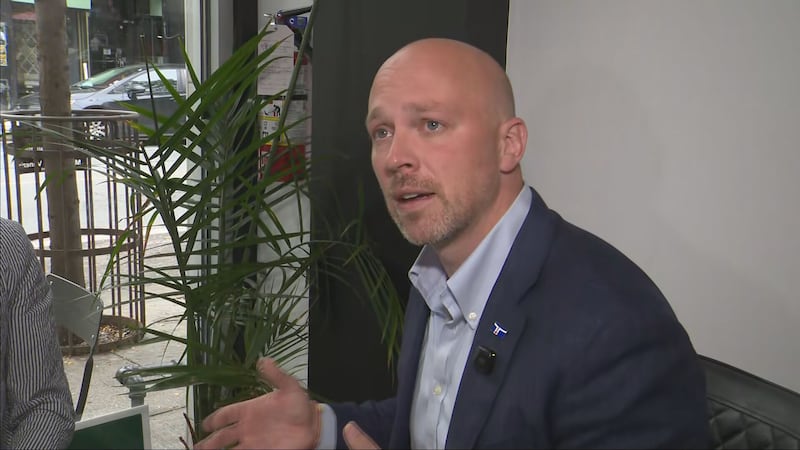
“That is having a very clear demarcation between capital expenses and operating expenses, keeping those things separate, and using smart and thoughtful financing to pay for the long-term infrastructure that the city needs to grow,” he said.
He also pointed to his previous efforts to reduce municipal land transfer tax, saying he raised the issue multiple times over the years.
“If you follow my files, if you follow my record, you will see that I have advocated to reduce or remove the land transfer tax on no less than four separate budgets, four separate occasions. And I would note, Mayor Chow has voted against it every single time,” he said.
On transit, Bradford also criticized the newly opened Scarborough busway where Olivia Chow spent her Friday morning, calling it “another band aid” and “another half baked temporary measure,” while arguing Scarborough has long been overlooked in the city’s transit planning.
He also defended his position on the proposed water utility changes, saying the utility would remain publicly owned and that an estimated $125-million dividend was based on results in other jurisdictions.
Torontonians head to the polls on Oct. 26.

