


The U.S. Coast Guard has suspended its search for a medical transport aircraft from Ontario that went missing over the Atlantic Ocean this weekend.
The federal law enforcement agency and military service shared the news in a press release on Sunday.
“Suspending a search is not an easy decision,” Rear Adm. Matthew Lake, Commander of the Northeast District said.
“We express our deepest condolences to the families and loved ones affected by the tragedy and our gratitude for our partner agencies who helped support search efforts.”
The Coast Guard said a future investigation into the cause of the incident would be “coordinated by the appropriate investigative authorities.”
In total, the Coast Guard and partner agency searched 4,445 miles (7154 kilometres) over approximately 66 hours.
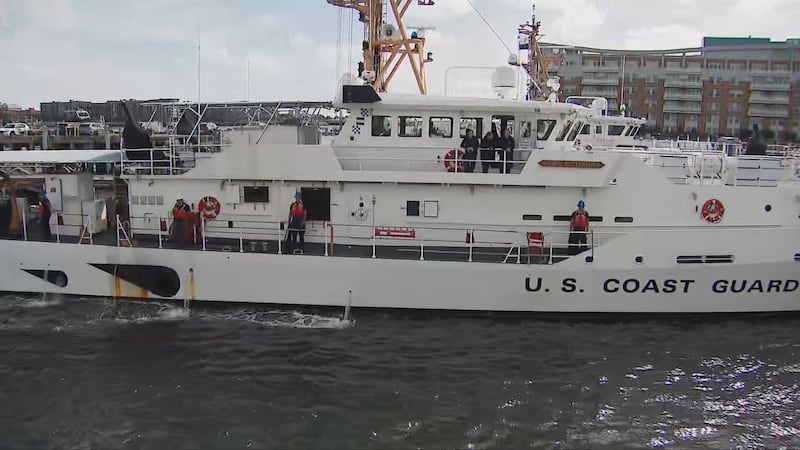
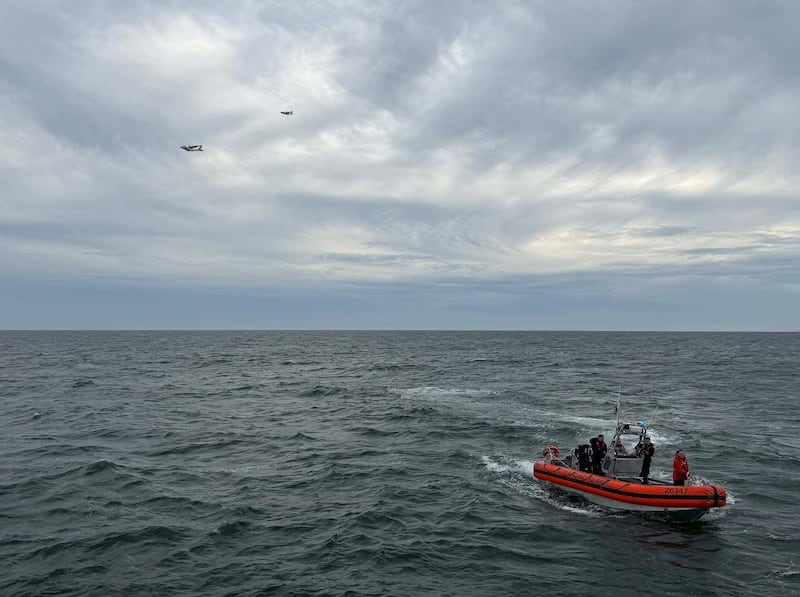
The agencies that took part in the search included an HC-144 Ocean Sentry airplane crew from Coast Guard Air Station Cape Cod, an HC-130 Hercules crew from Coast Guard Air Station Cape Cod, an MH-60 Jayhawk helicopter crew from Coast Guard Air Station Cape Cod, 47-foot Motor Lifeboat crews from Coast Guard Station Brant Point, the crew of the Coast Guard Cutter William Sparling, a Boston-based Fast Response Cutter, two HH-60 helicopter crews from the New York Air National Guard’s 106th Rescue Wing, and an HC-130 aircraft from the New York Air National Guard’s 106th Rescue Wing.
Transport Canada was also closely monitoring and working with authorities on the search-and-rescue efforts, Minister of Transport Steven MacKinnon said on X.
- How to set CP24 as your preferred source on Google
- How to set CTV News as your preferred source on Google
‘Presumed to have died’
In a follow-up statement issued on Sunday regarding its aircraft known as “Heartbeat 104 Medevac,” Latitude Air Ambulance acknowledged the decision by the U.S. Coast Guard to “conclude active search and rescue operations and transition to recovery efforts.”
“Given the information shared by authorities and the conclusion of the search and rescue phase, we must now face the heartbreaking reality that the four members of our Latitude team, our patient and the patient’s family escort, who were aboard Heartbeat 104, are presumed to have died,” they wrote.
“This is an unimaginable loss for our Latitude family and for everyone who loved the six people aboard Heartbeat 104,” the company’s president, Peter Byl, said.
“Our focus now is on supporting their families, supporting our people and assisting the authorities. We will honour our colleagues by remembering the care, professionalism, and commitment they brought to their work every day.”
Latitude Air Ambulance said its four crew members were valued and expressed its gratitude to all who “worked tirelessly” in the search for the “professionalism, determination, and compassion” that “never be forgotten.”
“They dedicated themselves to providing care to people at some of the most difficult moments in their lives, and they were carrying out that mission when this tragedy occurred,” it wrote.
The Canadian air medical transport provider went on to say that its thoughts are with the families, loved ones, friends and colleagues of those who were on the plane.
Latitude added that it would continue to cooperate fully with the U.S. National Transportation Safety Board, the Transportation Safety Board of Canada, and all other relevant authorities as recovery efforts and the investigation proceed.
Unwilling to speculate about what occurred, the company said “determining the circumstances and cause of an aviation accident is a careful and methodical process.”
“Latitude may provide further relevant information when confirmed by the appropriate authorities and can be shared with respect for the families involved,” it wrote.
Aircraft disappeared on Saturday
The Gulfstream G100, operated by Hamilton, Ont.-based Latitude Air Ambulance, disappeared early Saturday morning while flying from Bermuda to Boston. It was carrying four Canadians and two Bermuda nationals.
The U.S. Coast Guard said it was first notified by the Federal Aviation Administration at about 2 a.m. that day that contact had been lost with the aircraft.
The Gulfstream G100, which has the tail number C-GRJP, departed from Bermuda’s L.F. Wade International Airport at 12:41 a.m. Saturday and was headed for Boston Logan International Airport.
Its last known whereabouts was off the coast of Nantucket, Mass.
The pilot had reported electrical problems and declared an emergency as the jet approached the coast, according to air traffic control audio captured and posted by LiveATC.net.
“Roger, you said you’re coming in blind. Is that what you said?” a controller can be heard asking the pilot.
The aircraft was carrying a patient and a family member, who were Bermuda nationals as well as two pilots and two medical staff, according to Latitude Air Ambulance’s operations manager Clarence Togeretz.
He previously said the company lost contact with the aircraft around 1:30 a.m. as it approached Boston and contacted the U.S. Coast Guard after the aircraft failed to arrive.
Latitude Air Ambulance said this is the first time it has lost contact with one of its aircraft.
Debris found near Nantucket, Mass.
On Saturday, the Coast Guard said crews found a debris field off the coast of Nantucket, Mass., where they had been searching on Saturday.
Next of kin has been notified, it said.
‘Large and demanding’ search area
Speaking to reporters earlier on Sunday, Rear-Adm. Matthew W. Lake said they had been searching for about 53 hours and confirmed that the debris field has been determined to be associated with the aircraft.
The search, at that point, encompassed roughly 2,840 square miles (roughly 7,355 square kilometres).
Lake described the search area as “large and demanding,” saying crews would continue to evaluate all available information as the operation progresses.
“The area around the debris field is approximately 80 to 90 feet,” he said.
“Our priority is to locate the six personnel on that aircraft. My thoughts and those of every Coast Guard crew member are with the families on that aircraft.”
Weather has not been a factor in the search efforts, added Coast Guard Capt. John McTamney, chief of response for the northeast district.
“We’ll continue to search and saturate the area until we’re at the point where we are confident that if there were any survivors remaining on the surface of the water, we would have found them,” he said.
Aviation expert weighs in
Mary Schiavo, a former Inspector General of the Transportation Department, thinks the plane may have lost its navigational instruments just as a storm moved across its path on radar.
Flight tracking data showed the aircraft dropped from 24,000 feet to 11,000 feet in about two minutes before levelling off and disappearing from the tracking data.
“Something bad happened with this big drop, and they flew into this big storm. It’s a terrible place to have a loss of your instruments and be flying blind,” said Schiavo, who is an aviation attorney.
“It’s very easy to get disoriented and not know if you’re turning, climbing, descending, etc.”
With files from CP24’s Bryann Aguilar, CTV News Toronto’s Joshua McGinnis, The Associated Press and The Canadian Press

