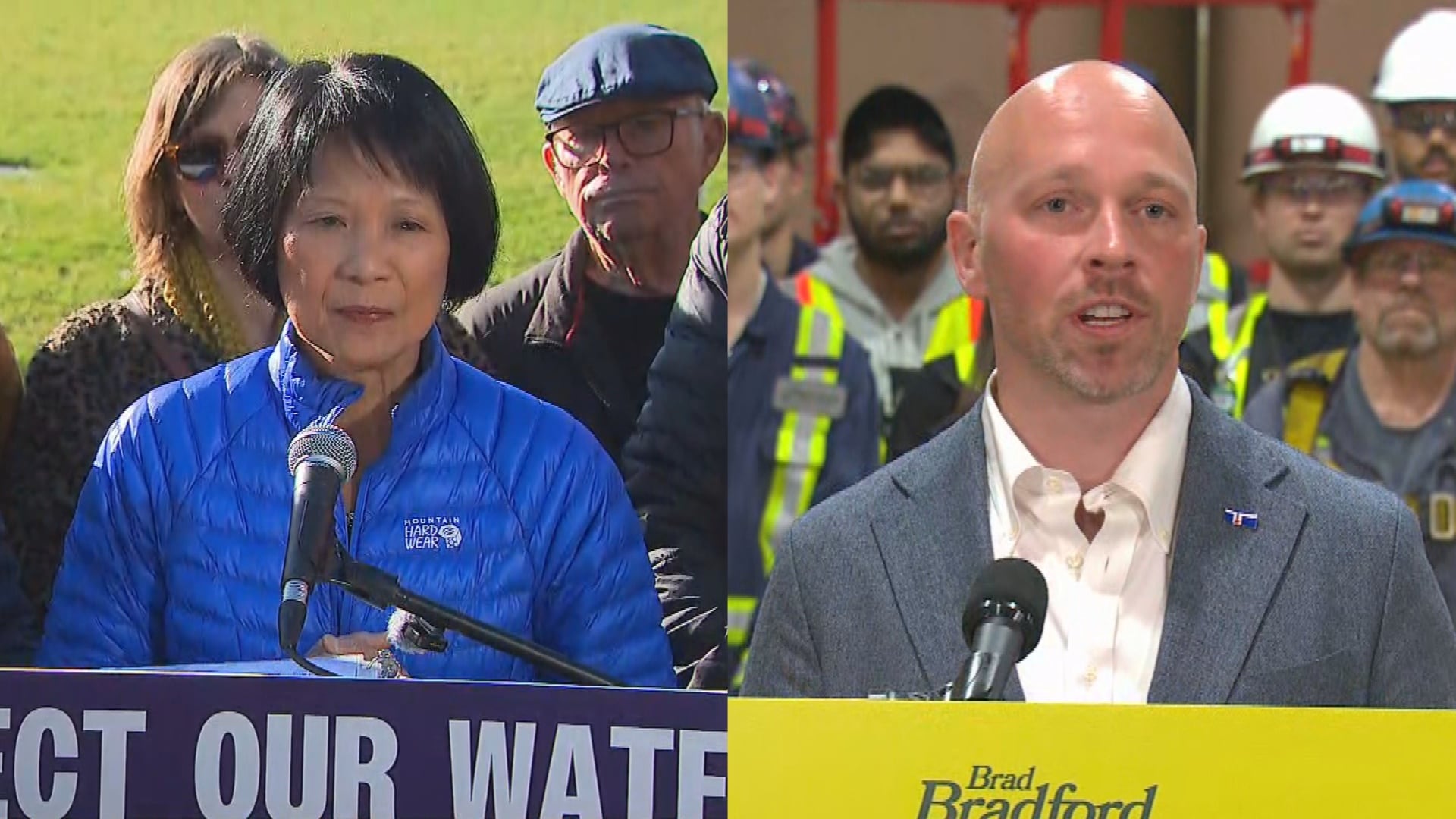
The future of Toronto’s water has become a focal point of the mayoral race with less than five days to go before election day.
Brad Bradford pitched last month to make Toronto Water into a publicly-owned utility, which he said could save the average homeowner $300 a year on their water bill by reducing the amount of money that is collected for city reserves. The model would resemble that of Toronto Hydro, which became a corporation in 1999.
He said that, if elected, the utility would always be “100 per cent” owned by Toronto taxpayers and that rates would be set by an independent board.
The proposal has faced some criticism, and in a letter penned Wednesday by the Toronto Civic Employees Union, Local 416 (which operates and maintains the city’s water) the group warned that the city should not “give up control of Toronto Water [to] an unelected, unaccountable board.”
- How to set CP24 as your preferred source on Google
- How to set CTV News as your preferred source on Google
In the letter, the union listed 15 city councillors who oppose the idea as well as Olivia Chow, who they endorsed earlier this month.
The union said that, based on a legal opinion it sought out from a Toronto-based law firm, making Toronto Water a public utility (under Ontario’s Waste and Wastewater Public Corporations Act), “risks giving up significant control over the way water and wastewater services are governed.”
“City Council can pass a bylaw, but does not have the power to change or over-ride the Ministerial powers to intervene in WWCs (Waste and Wastewater Public Corporation). If the Minister decided to change the ownership or control of a WWC, they would have the power to do so. Further, new city councils or new provincial governments can always change the WWPCA to expressly permit private investment,” the union’s legal analysis read.
At a campaign event outside the RC Harris Water Treatment Plant on Wednesday, Chow once again slammed Bradford’s plan.
“My opponent wants to hand control of Toronto’s water to (Ontario Premier) Doug Ford’s government. That opens the door to privatizing our water, and already there are calls to open his proposed water corporation to private investment, most Torontonians are worried about that. We should be. This is the water our children drink, the water we cook with, the water we depend on every single day, and it belongs to the people of Toronto, which is why I will never give our water away,” she said, alongside environmentalist David Suzuki, who echoed her claims.
In defence of his proposal, Bradford accused Chow of engaging in “gutter politics” and fear mongering because he believes her campaign is in “free fall.”
“The scare tactics that she’s engaging in right now are frankly below her, and they’re below the office of the mayor. And I think she should stop lying to Torontonians and be very clear with them about what we’re talking about because she is deliberately misleading people,” he said.
A recent Nanos poll, conducted exclusively for CTV News Toronto and CP24, found that Chow’s lead over Bradford has shrunk to 3.2 per cent.
READ MORE: Toronto mayor’s race has tightened. Here is what an exclusive poll has found
Bradford went onto say that, under the provincial legislation, no shares of a WWC can be held by a person other than the city, the province or the Canadian government.
In a rebuke of the legal opinion obtained by Local 416, Bradford said that the union’s “strongest argument” is that a future government could change the law in the future.
“That’s true of every law in Ontario. By that logic, nothing this city owns is safe, from Toronto Hydro to the TTC. Toronto Hydro has been a City-owned corporation since 1999, it borrows to build, and nobody calls it privatized,” he said.
Election day is Oct. 26.

