Editor’s note: This is the first of a two-part series profiling Toronto’s leading mayoral candidates ahead of the Oct. 26 election. On Thursday, CP24.com and CTVNewsToronto.ca will publish a second story taking a closer look at Olivia Chow.
Brad Bradford remembers fondly the first time he set foot in Toronto more than 25 years ago.
Raised in Hamilton by a single mother, Bradford recalls taking the GO train into the city and stepping off the platform at Union Station.
From the vaulted ceilings inside the station’s iconic Great Hall to the names of great Canadian cities carved into the stone and the skyscrapers as he stepped out onto Front Street, Bradford said he “just fell in love with the place.”
“And I remember walking out of there, saying to my mom, ‘Toronto is incredible. Do you think I would ever be able to live there someday?’” he said during a recent interview with CP24.com.
Now, that 13-year-old kid is not only living in the city but also has a real shot at running it, according to exclusive polling suggesting Olivia Chow’s once 10-point lead has now shrunk to three points.
From staffer to councillor
Long before he ever considered running for mayor, and around the time he first set his eyes on the big city, Bradford’s interest in urban planning was growing.
The married father of two said that it started with computer games like SimCity, where players build and develop their own virtual city from scratch and keep it running. Even then, Bradford said he thought of himself as a city builder.
At the same time, Bradford was also a competitive figure skater in his youth, and recently showed off a not-too-shabby axel, performed alongside Canadian figure skating royalty, Tessa Virtue.
His ambition for urban planning took him to York University, where he earned his undergraduate degree in environment studies, urban and regional environment, and then to the University of Waterloo where he received his master’s degree in urban planning.
“Out of school, I went and worked in the private sector on transportation and housing projects across the country. I went down to Boston, Massachusetts, and worked in renewable energy policy. And then I came back to Toronto and I landed in the chief planner’s office at the City of Toronto,” Bradford said.
At the time, Bradford reflects, working for the city in what he describes as Canada’s largest urban laboratory was a “dream come true.” The stakes were high, the projects were massive, and the opportunities were endless. Or so he thought.
“It wasn’t too long until I realized that if I wanted to create the type of change, particularly on the housing file, it wasn’t going to be done through the bureaucracy. It was going to be done through elected office,” Bradford said.
Before the 2018 municipal election, Bradford admits he had no political involvement or interest in being a politician whatsoever.
Running in Beaches-East York, the then 32-year-old city planner was up against former NDP MP Matthew Kellway in one of two wards where an incumbent was not seeking re-election.
He was one of only a few candidates running for council in that election cycle to receive an endorsement from former mayor John Tory.
Bradford won, but just barely, with 14,286 votes to Kellway’s 13,998.
His re-election in 2022 was more decisive, with nearly 9,000 more votes than second-place finisher Jennie Worden.
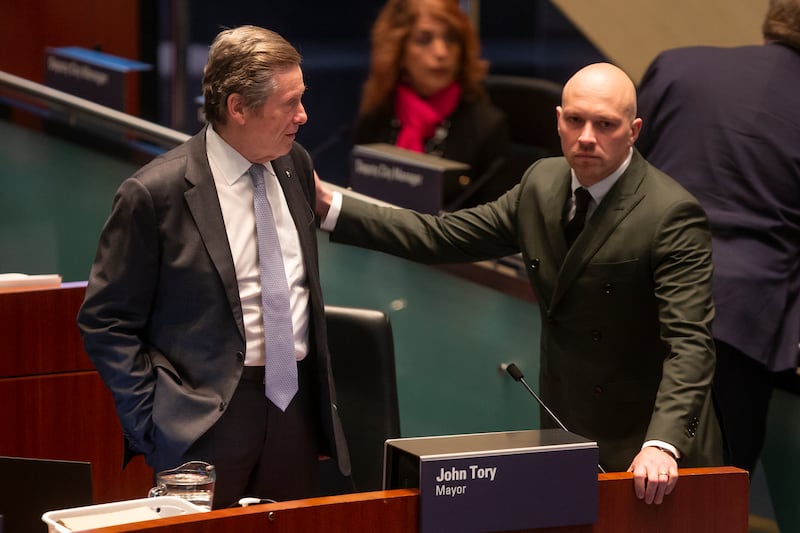
Looking back on the past eight years at city hall, Bradford says he’s proud of the works he’s done for Ward 19 and across the city. Among the accomplishments that stand out to him are his road safety initiatives, his push for a small business property tax subclass, and giving his constituents a voice at city hall when a Metrolinx expansion threatened Small’s Creek in the Beaches.
But the one thing that he says he’s the “most proud of” is his leadership role at 540 Cedarvale Ave., a supportive housing complex that opened in 2022 near Woodbine Avenue and O’Connor Drive that includes dozens of units for the city’s most vulnerable.
He called the project “one of the most challenging things” he’s ever done, mostly due to the intense public backlash he heard from his community about introducing individuals experiencing homelessness into the residential area.
“I actually got death threats on my phone over that,” he said. “And you know, death threats are never acceptable, but people’s concerns, they came from a real place, and largely because there was an information gap.”
Bradford said he connected with community members in the area as the project was getting underway to understand and assuage their concerns. Four years later, he said 540 Cedarvale has been a success, and that one of his biggest vindications came from his biggest critics.
“He came up to me and he said, ‘You know, look, Brad. I know we didn’t agree on this, but I wanted to say I thought we were going to have three 911 calls a day,’” Bradford recalls the man, who he did not name, saying.
“‘We probably have three 911 calls a month, and that’s something that we can live with.’ So, it wasn’t the politically easy thing to do, but it was the right thing to do for the community long term.”
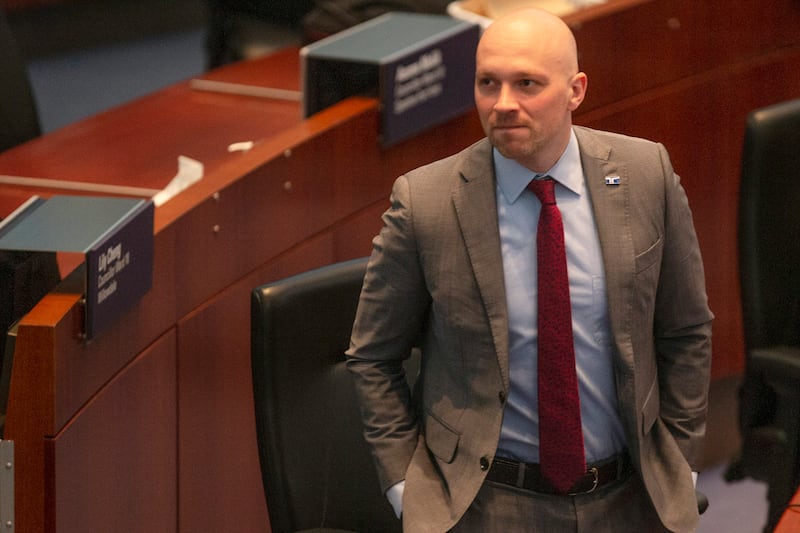
Despite those achievements, critics of Bradford have persisted. For example, some 800 of his own constituents have pledged to not vote for him in a petition hosted by the non-profit advocacy group Progress Toronto.
Some of those criticisms, which the group says come directly from voters in Beaches-East York, include putting his mayoral ambitions ahead of his councillor duties and a lack of responsiveness to community concerns.
Asked about the petition specifically, Bradford concedes that while there’s always room for improvement, the criticism is “overblown.”
“If you talk to regular people that don’t have a political axe to grind, I think they would tell you if they were looking for speed humps on their streets or crosswalks or stop signs, my office was very responsive, and we helped them with that,” he said, describing Progress Toronto as Chow’s “third-party smear organization.”
“I always take my cues from the community, and you can always find detractors. And there are, I’m sure, many instances where my office could have done it better, and I could have done it better, and we could have got back to an email faster or been more responsive. And that’s part of the learning experience,” he said.
Beyond that, Bradford has been accused by incumbent Olivia Chow of “flip flopping” on his political positions. For instance, he voted to expand bike lanes in Etobicoke in 2023, but is now promising to remove them on Bloor Street West between South Kingsway and Resurrection Road.
In 2020, he voted to decrease the Toronto police budget by a minimum of 10 per cent, but now wants to hire 1,000 more frontline officers. He also wants to rename Sankofa Square to Toronto Square, although he voted to change the name change from Yonge-Dundas Square in 2023.
“Brad Bradford raised your TTC fares and cut service again and again. Even when he said he wouldn’t, he flip flopped, just like he did on affordable housing, rent control, policing, bike lanes. Bradford says one thing and does another. He’ll say anything to get elected. That’s just who he is,” says a narrator in a recent campaign advertisement for Chow.
In defence of how his stances have shifted, Bradford said politicians should be allowed to change their minds, and respond to new data as it becomes available.
“When you’re presented with new information, we should all have the humility to be able to consider the facts and the context of the world that we’re living in today, and evolve a position, and that’s what I think everybody in just about every field do,” he said.
Pointing to Etobicoke bike lanes specifically, Bradford said he voted for the expansion with the “best intentions,” but that the data shows the plan from three years ago no longer holds up.
“The numbers are 38,490 cars per day and 197 bikes, so you know you, allocated 50 per cent of the space to half a percentage of the road users, and I don’t think that makes sense,” he said. “But there’s lots of other bike lanes that work really well, and I ride more bikes than probably anyone ever elected to any municipal office in the country.”
Second attempt at the job
This is Bradford’s second attempt at Toronto’s top job.
He placed eighth in the city’s 2023 byelection, which was triggered by Tory’s resignation following an affair with a staffer. The snap election left only a few weeks for candidates to campaign and Chow won in a crowded field of frontrunners with 269,372 votes.
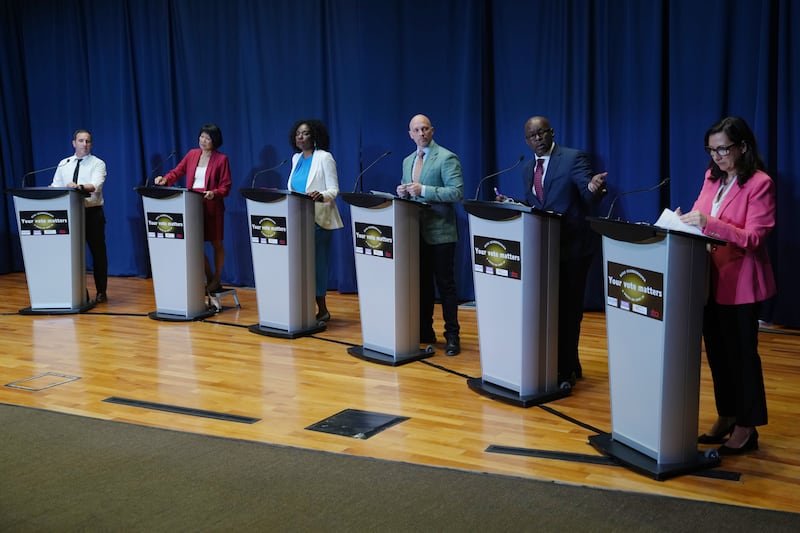
But things are different this election cycle. Bradford has had months of runway to campaign, and, after former MP and federal cabinet minister Chris Alexander dropped out earlier this month, polling shows his main competitor is Chow.
He’s used that time to make major announcements aimed at shaking up the city’s status quo, with an emphasis on affordability, traffic, and public safety.
Bradford has pledged to scrap the municipal land transfer tax on the first $1.1 million of the value of a home, a move he said could save the average homebuyer $18,000 in up-front costs. He’s promised a property tax freeze for his first year in office, and said he’ll keep future increases below the inflation rate in the following three years of his term.
He’s also promised to cut water bills by 25 per cent a year in part by making Toronto Water a public utility.
Chow, for her part, has countered that doing so “opens the door to privatization” and “will make out water less safe.”
In addition to removing bike lanes in Etobicoke to break up traffic, Bradford also vowed to have shovels on the ground on the Scarborough East LRT by 2030 and have priority red bus lanes in the borough removed to make more room for cars.
On public safety, in addition to the 1,000 additional officers, Bradford said he’ll have police substations installed at Sankofa Square and Union Station. He’s also push mandatory addiction treatment for adults with “severe addiction.”
Bradford’s campaign has made a lot of noise about a debate early in the campaign, where both candidates were asked if the city is living up to its full potential. Chow said it was. Bradford said it wasn’t.
At a press conference earlier this week, Bradford said Chow “may as well stand in front of a banner that says mission accomplished.”
Asked what Toronto living up to its full potential looks like in his eyes, Bradford admits: “I’m not sure if we’ll ever reach our full potential in my lifetime.”
“I think Toronto’s potential is actually limitless. But if we could start to execute on the basics, if we could do a better job on the crime and the congestion and the cost file, make it a safer city for everybody, a more affordable city for families, for seniors, for newcomers, and a city that you can get around whether you’re in a car or on transit or riding a bike, then Toronto starts to really shine.”
Bradford is not seeking re-election in his ward as he seeks the mayorship, which means he’ll be out of a job if he doesn’t win on Oct. 26.
CTV News asked him if he’s thought about what he’ll do if he doesn’t win:
“Haven’t even thought about it,” he said.

