Free events that take place across Canada, and around the world, are helping people accept the statement: “death is a part of life.”
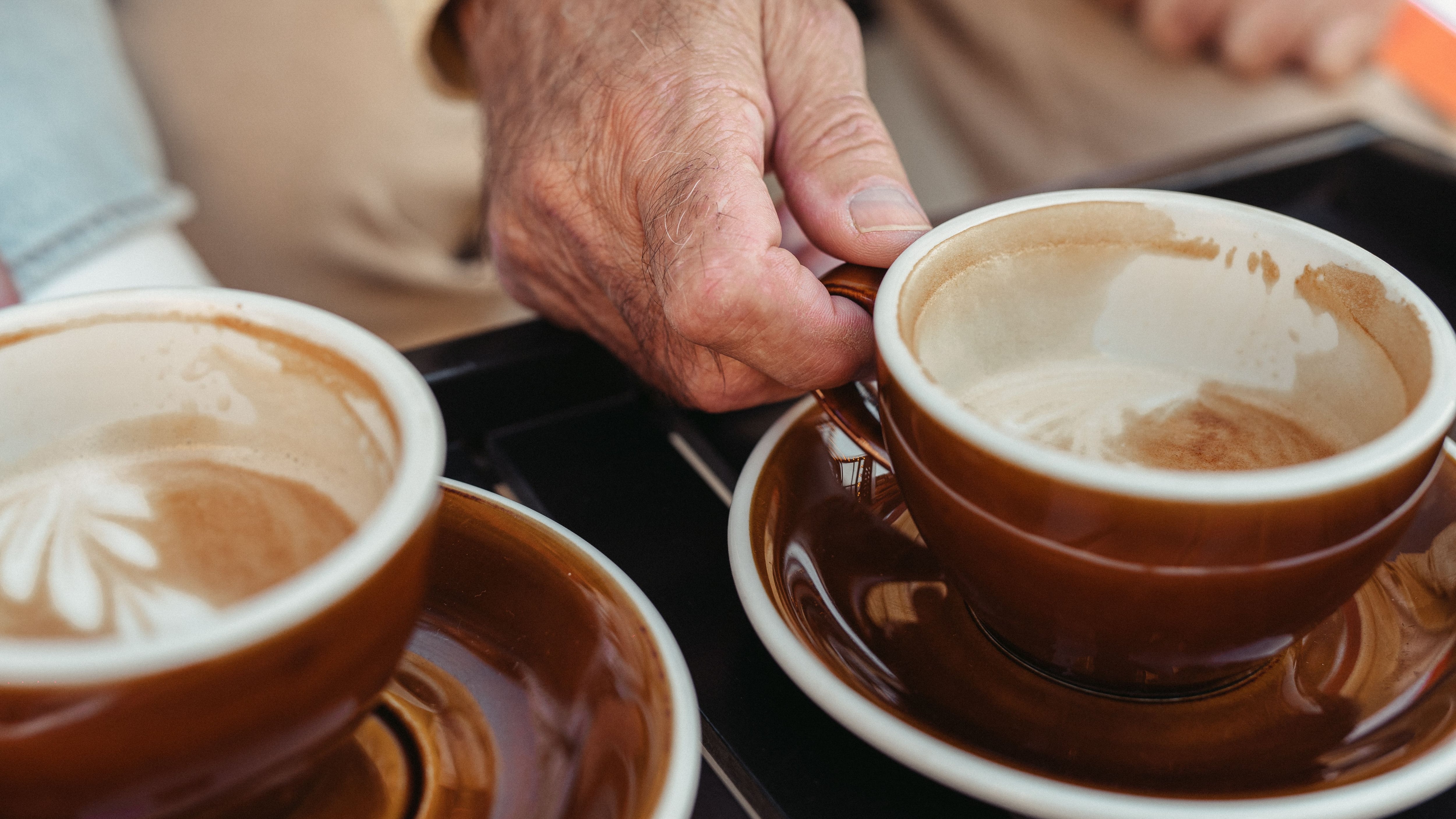
For over a decade, “death cafés” have taken place in coffee shops, community centres, libraries and even cemeteries, to help people get comfortable confronting the topic of death.
“(Death is) taboo, it’s uncomfortable to talk about with people that you love,” said Linda Stuart, who started hosting some of the first death cafés in Canada, in Toronto in 2013.
Stuart has grown up around death her whole life. Her father worked as a supplier to the funeral industry, and she currently works as a funeral celebrant, a similar role to what a minister would do at a funeral, but done in a secular manner.
So, volunteering to host death cafés felt like a natural fit.
What is a death café - and what it’s not
Death cafés were inspired by Swiss sociologist Bernard Crettaz, who championed the idea of talking about life’s tough issues in informal setting. A British man named Jon Underwood, who passed away in 2017, is credited with founding the death café movement in 2011, and helping popularize it internationally.
Underwood made guidelines that were meant to be followed for those volunteering to organize them: Death cafés must be free to attend, they aren’t meant to be promotional for those facilitating or attending, the conversation should be organic and unguided, with no guest speakers or themed talks, and there should be hot beverages and refreshments on offer.
Death cafés also aren’t intended to be a space for people to grieve.
Nadine Lavoie, who regularly hosts death cafés in Toronto, explained that grief groups tend to work as a support group led by a professional to facilitate conversation and help attendees express their challenging feelings.
But at a death café, the facilitators do not lead the conversation. Instead, they “facilitate the space and make sure that the guidelines of the death cafés are respected.”
Attendees are instructed not to make judgements, so people can freely express thoughts on death and dying. Then, they are divided into smaller groups, so conversations are more intimate.
Some of the questions that would come up in the groups hosted by Stuart included: “What is a good death? How do I want my family to feel? What do I want my funeral to look like? How do I hope I die?”
For Lavoie, volunteering to host a death café in Toronto seemed like a logical thing to do. She describes her job as a “special flight attendant,” as she helps people nearing the end of their lives to prepare for that final step.
After attending her first death café over a decade ago, she came away amazed by the experience of speaking about death in an accepting and relaxed environment. She said that many death café organizers are invested in the topic.
“Most people who host those events, have some kind of an interest in the matter of life and death, or death and dying,” she said.
A multi-generational gathering
As for the people attending, Stuart - who stopped facilitating death cafés when the pandemic hit - said the groups she hosted attracted a wide range of people.
“One of the ones I did, there was a girl that was 19 and then you’d have people there in their 80s as well,” she said.
Lavoie’s groups have also ranged in age “from 20 to 100.”
“Sometimes you have elderlies who show up and say ‘We tried to have these conversations with our families but we’ve been shut down, so we come to these places so we can talk about it normally,’” she said.
Lavoie added that there’s always laughter at the death cafés that she’s hosted.
“It’s not gruesome, but the opposite,” she said. “Having those conversations makes you realize that life is not infinite and to make something of this time. That’s what often comes out from those conversation.”

