If you run a small business, there’s a new scam you should be aware of. Criminals are pretending to be someone you do business with to try and redirect payments to their bank accounts.
Scammers want to trick whoever oversees paying the bills into sending them money, and if you do it, it can be difficult to get it back.

“The email the fraudsters were using was identical in signature, logo, and everything we were used to seeing,” Jeff Diebolt, with Abtron Electric and Automation, said.
Diebolt runs a small company in Stratford, Ont., and was caught in a business email scam in August when fraudsters pretended to be one of his suppliers and asked that payments be sent to a different bank account.
The family business, which designs and installs security systems, smart home technology, and home theatres, was scammed out of $36,000.

Diebolt said the email stated that a supplier wanted to change where future payments should be sent.
“The fraudsters managed to get in the middle of the email conversation and convince our office staff to change the payment from one bank account to a different bank account,” said Diebolt.
For almost two months, they sent payments until the real supplier contacted them to ask why they weren’t being paid. That’s when they discovered they had been scammed.
“That’s a hard recoup for a business like us. That’s obviously people’s wages and Christmas bonuses, which I’m going to pay first,” said Diebolt.
What the banks say
Diebolt banks with TD, and the fake business account where the money was sent to scammers was with Scotiabank. Neither bank has been able to help him recover the money.
In a statement to CTV News, a TD spokesperson said, “We cannot speak to details of any particular case due to client privacy. We take all reports of fraud very seriously and work with law enforcement as required.”
Scotiabank did not respond when CTV News inquired about Diebolt’s case.
“We thought there was a reasonable amount of safety to sending the funds to somewhere within Canada,” said Diebolt.
- How to set CP24 as your preferred source on Google
- How to set CTV News as your preferred source on Google
Verify emails
Cybersecurity expert Ritesh Kotak said the business email compromise scam is being used by criminals to trick accounting departments into sending money to fraudsters instead of the legitimate accounts where payments are supposed to go.
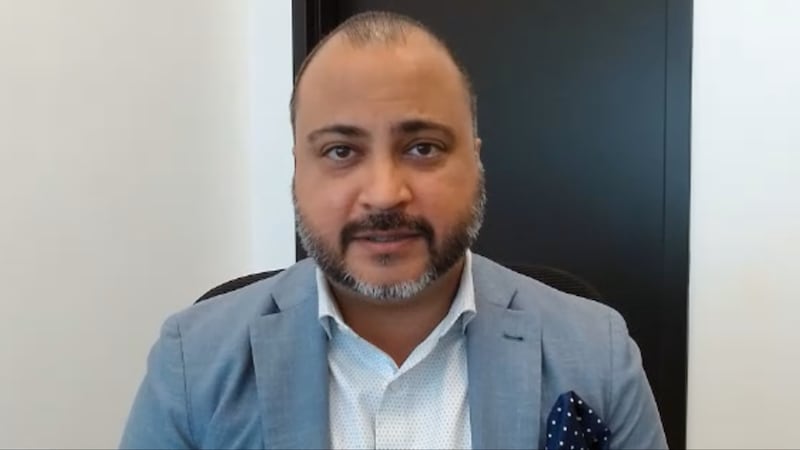
“Unfortunately, we are seeing much more of this, and it’s impacting businesses on a daily basis,” Kotak said.
Kotak said staff should never send money to a new bank account based on an email interaction and said that employees need to call ahead to check first.
“Pick up the phone and make sure you call somebody at the company and say, ‘I just want to verify (that a change has been made to where payments should be sent), and say, ”Can you please verify that for me?’" Kotak said.
Diebolt was not only scammed out of the $36,000, but he also still owes his supplier $36,000.
He feels banks should be doing much more to protect their customers from fraud.
“I feel it’s pretty unfair. I think the banks should do something about it,” said Diebolt.

