New provincial legislation that makes attendance and participation a part of the final grade for secondary school students is now in effect, but a representative from an association representing student trustees says there continues to be uncertainty around “grey areas.”
The policy, which took effect at the beginning of this school year, dictates that 15 per cent of Grade 9 and 10 students’ final marks be based on attendance and participation; 10 per cent for those in Grades 11 and 12.
Education Minister Paul Calandra told reporters last month that the intent behind this policy is simply to penalize kids who are “skipping” classes, not those who “are busy and are doing the right thing.”
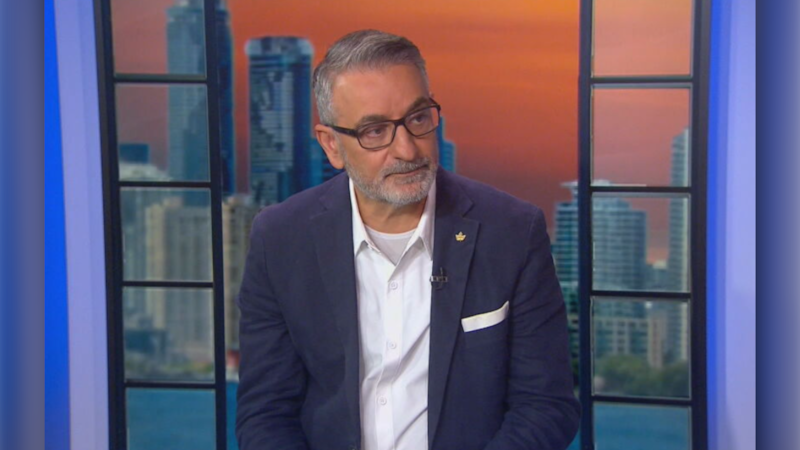
“What this is about is those kids who don’t have an excused absence from their parents, who sometimes their parents don’t even know that they are skipping a class, that is what this is targeted towards,” Calandra said during a Sept. 1 press conference.
He insisted that “parents still have the ability to excuse their children,” saying they “ultimately have control.” If their child has important extracurricular activities or even a family vacation that takes them out of school, the minister says “that is still going to be allowed.”
Calandra did note that parents/guardians are responsible for informing the principal - who will have the ability to “make the determination.”

‘Grey areas still exist’
Some parents and students, however, say they feel further clarity is still needed on this policy.
“We’re hearing questions from students about how exactly (it) is going to work in practice,” said Jay Xu, a Grade 12 student at White Oaks Secondary School in Oakville and a spokesperson for the Ontario Student Trustees’ Association (OSTA).
“Grey areas still exist, especially with extra curricular activities, like conferences and volunteering.”

Tonya Stewart’s daughter is in Grade 11 at a high school in North York, and requires a number of excused absences throughout the school year for dance competitions.
She says her concern is the policy, both for attendance and participation, could be interpreted and enforced differently per school or even per teacher.
“The (Toronto District School Board) hasn’t provided anything to parents. There’s no policy in place,” she said, adding several parents have chimed in on social media and on online groups sharing similar apprehensions.
“The absence policy is open to individual interpretation. … I don’t think the minister or the ministry thought this through very carefully.”
OSTA has a ‘desire for consistence across the province’
Xu, who is a student trustee with the Halton District School Board, said his association has a “desire for consistence across the province” when it comes to the new school attendance and participation policy, adding that achieving that will be more equitable and would reduce interpretation.
“(Attendance) plays a huge role in the (final) grade, especially for senior grades. It can affect post-secondary options,” he said.
Xu added that OSTA would like to see the provincial government develop a more robust breakdown of the new policy’s expectations, with clear rules on when absences can be excused and for what kinds of activities.
Further, he said they’re always open to speaking further with the Ministry of Education about their concerns, underlining that the student voice is key in this discussion.
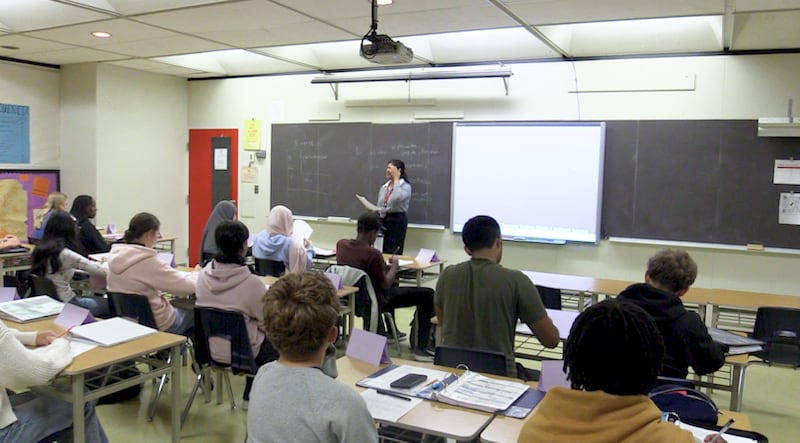
Policy gives ‘real consequences for skipping classes’: minister’s office
In a written statement, Calandra’s press secretary said “classroom attendance and participation help students succeed.”
“In response to a significant decline in student attendance across the education system, we have made changes to keep students in the classroom by reflecting unexcused absences in a student’s final grade - ensuring there are real consequences for skipping class,” Emma Testani wrote in an email to CP24.
“Excused absences, including for recreational, competitive, and school sports, as well as family vacations, are still permitted.”
Testani went on to note that the process to have a student’s absence excused remains the same as it was last year for parents and students.
She added that principals have also been advised to follow the same administration process for excused absences as they did the previous year at their school, adding that they do not need to be more restrictive when approving absences than they were in the past, and processes do not need to be changed in any way.
CP24 has contacted both the English- and French-language public and Catholic school boards in Toronto for comment.
The Toronto District School Board and the Toronto Catholic District School Board both deferred to the Ministry, while the French-language boards did not respond to our requests.

