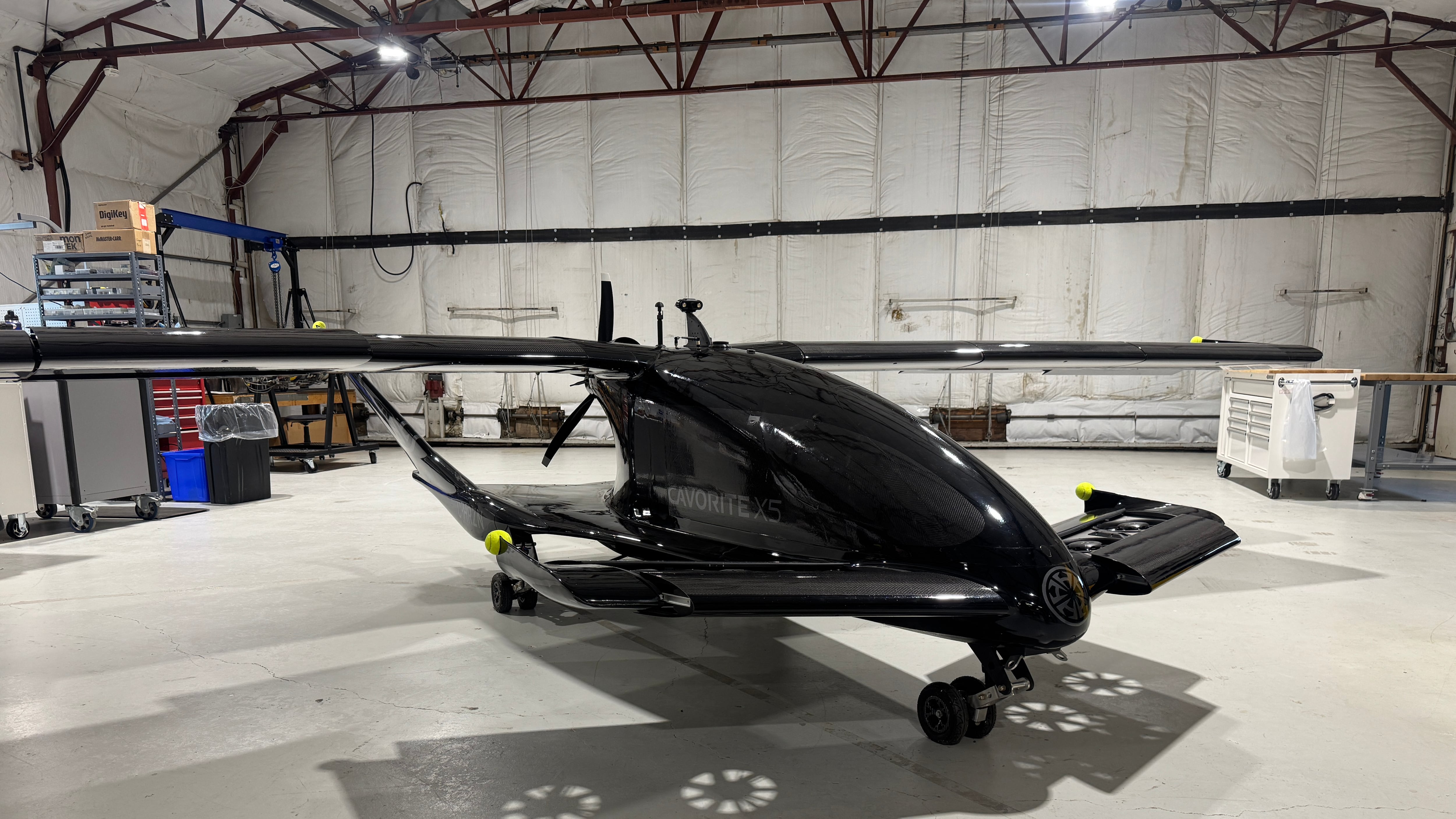
An aircraft sits in the Lindsay, Ont., airport that could change how remote communities across Canada access critical and lifesaving care.
“We’re developing an aircraft that can take off and land just like a helicopter,” said Horizon Aircraft co-founder Brandon Robinson. “So, you don’t need a runway, but enroute it has some special technology whereby it can fly just like a normal aircraft on wing-borne flight.”
Horizon is building a hybrid-electric vertical takeoff and landing (VTOL) aircraft, one of the first in the world. Robinson says the plane could allow better access to remote communities and help with search-and-rescue missions where space for landings is limited.
“It’s about twice as fast as a helicopter, much cheaper to own and operate and much safer,” Robinson said. “It’s the agility of a helicopter with the speed and range of an airplane, which, in a country like Canada, can have huge implications for small communities.”
How it works
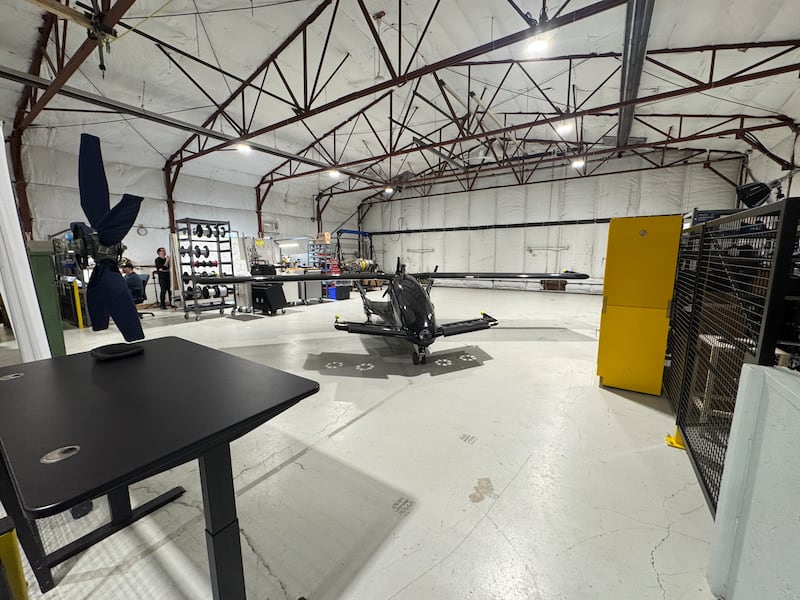
Horizon currently has a half-scale version of its Cavorite X7, which has been through a full test program. The company is now building the full-size version which will be able to carry six passengers and a pilot, travel at speeds of up to 450 kilometres per hour and have a range of up to 800 kilometres.
The plane uses fans hidden inside its wings to lift straight up. Once airborne, the fans are covered and the aircraft flies forward like a conventional airplane. Take-off and landing are both electric, and the batteries recharge while the aircraft is in flight.
Built for the North
Remote medevac is central to Horizon’s business plan. The company aims to better connect hard-to-reach Indigenous communities in the North.
It carries its own generator on board and doesn’t need infrastructure on the ground to recharge.
“It can land in the middle of nowhere in a flat space,” Robinson said. “We can drop off those critical medical supplies or a surgeon or extract a critically injured patient from those northern communities in a much more efficient fashion.”
The aircraft is being designed specifically to operate in a variety of elements including forest fires, the cold, snow and low-visibility conditions which would allow it to serve remote communities year-round.
The aircraft’s potential caught the attention of Constance Lake First Nation, which is about 500 km northeast of Thunder Bay, Ont. Constance Lake has just signed a memorandum of understanding with Horizon to advance the potential purchase of a Cavorite X7.
“It could land right on the spot. Doesn’t need a runway. It’s just like a helicopter or an aircraft built in one,” said Constance Lake First Nation Chief Richard Allen. “That new innovation and technology that brings the best sort of aircraft and saving people that may need that.”
Allen said he hopes his community will be at the front of the line when the first aircraft becomes available, allowing better access for his community but also for neighbouring first nations. While his community is accessible by road many northern First Nations are not, creating challenges in emergencies.
“Our main mission is to save lives,” he said.
Made in Canada
The Cavorite X7 isn’t only being built for Canadian conditions, it’s being built in Canada, a choice Robinson says was intentional.
“There are so many exciting things about doing this right here in Canada. Canada is one of the only countries that has full clean sheet design, build, test and certify,” he said. “We have a proud history of manufacturing aircraft and certifying commercial aircraft and military machines as well.”
Horizon plans to have the full-size aircraft finished and in testing by late spring or early summer. Certification would be the next step and could come as early as 2030.

