While Canada is in a real estate slump, here's the top buyers' market in the country
The real estate market in the Greater Toronto Area is warming up, with Zoocasa’s findings noting it has turned to a buyers' market as of October 2025. Thunder Bay, meanwhile, has the hottest seller’s market in the country. What about the rest of Canada?
Published:
Image 0 of 14
Where to buy and sell real estate in Canada before 2026 The real estate market in the Greater Toronto Area is warming up, with Zoocasa’s findings noting it has turned to a buyers' market as of October 2025. Niagara Region also has the hottest real estate market for buyers across Canada. Thunder Bay, meanwhile, has the most active seller's market.
What are Canada’s best markets to buy and sell? Combing through data from the Canadian Real Estate Association for October, Zoocasa determined what Canadian markets are high in demand by analyzing the latest sales-to-new-listing ratios (SNLR).
“This key metric reveals where the balance of power lies: a ratio about 60% signals a seller’s market, where demand outstrips supply, while anything below 40% marks a buyer’s territory,” the study reads. When supply and demand are aligned, with the SNLR between 40 and 60 per cent, that’s a balanced market.
Real estate market has cooled in 2025 Zoocasa’s CEO Carrie Lysenko explained to CP24 Breakfast that this year has been a cooler market, but now it’s turned into more of a buyer’s territory.
“Buyers have had the opportunity to be a bit more selective than normal, comparatively to other years, and so, really in Ontario, things have come down quite and simmered, really, for the whole year,” Lysenko said.
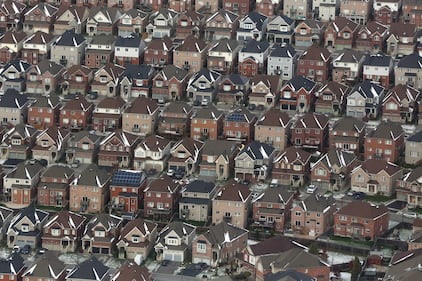
The market in the Greater Toronto Area shifted, Zoocasa finds Over the last 12 months, Zoocasa says many regions—including the GTA—have crossed the threshold of a balanced market into a buyers one, with its sales-to-new-listing ratio dropping to 38.2 per cent. The real estate platform says this indicates a “significant” shift for the GTA, as the market is foraying to one where inventory is outpacing sales.
Windsor-Essex also shifted to a buyer’s market Zoocasa noted that similar to the Greater Toronto Area, this southern Ontario region also cooled off to enter a buyer’s territory. The real estate platform adds there has been a “notable slowdown” in sales compared to the number of new listings, with a sales-to-new-listing ratio now at 38.7 per cent.
“This allows local buyers and investors to enter the market without the intense competition seen in 2022-2023,” the report reads.
‘Not as many bidding wars’ Lysenko says buyer’s have more choice when shopping around for a home in the Greater Toronto Area.
“We’re not seeing as many bidding wars, and really what that means when buyers come to the table is they have a lot more opportunity to negotiate with these sellers,” Zoocasa’s CEO said.
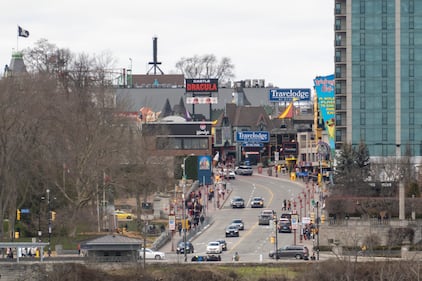
The Niagara Region is the most buyer-friendly market in Canada There is only one more buyer’s market in the province, and that is seen in the Niagara Region, with an SNLR of 36.6 per cent. Zoocasa called the region the most buyer-friendly market it has analyzed, noting it is an ideal area for people moving from a city like Toronto to find more space.
“Sellers are eager to attract buyers, so it’s often possible to by homes for less than the asking price of negotiate favourable terms, like home inspection options,” the report reads.
Thunder Bay, on the other hand, is the hottest seller’s market Thunder Bay’s market has seen a meteoric surge in activity, with its sales-to-new listing ratio at a whopping 106.5 per cent—a notable rise from what it was a year ago, at 79.7 per cent.
“A ratio over 100% indicates that for every new listing entering the market, more than one home is being sold, rapidly depleting older inventory,” Zoocasa’s report said, adding it is an ideal situation for sellers as gives them considerable leverage in the negotiation process.
With it being the hottest seller’s market in Canada, Zoocasa says buyers have to act fast and put out offers that attract sellers, like an above-price offer or waiving conditions, like a home inspection.
Trois-Rivières also boasts a competitive seller’s market While the Quebec-based city’s SNLR did not crack over 100 per cent, Zoocasa says it is an impressive 93.7 per cent ratio, up significantly from 78.2 last October.
Atlantic Canada and Quebec’s real estate markets continue to favour sellers Several cities across Quebec, including Quebec City, Saguenay and Sherbrooke, have markets tilting towards sellers—same with across the Atlantic, with Newfoundland and Labrador having the hottest seller’s market on Canada’s east coast with an 84 per cent SNLR.
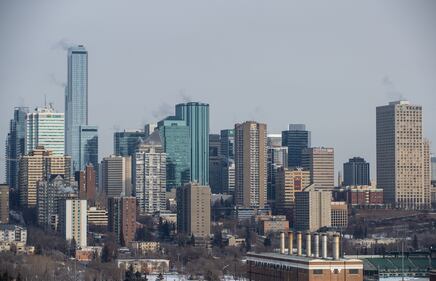
Battle of Alberta persists in province’s real estate market Calgary and Edmonton represent opposite market conditions in the province, with Calgary’s cooling into a balanced market with a 58.5 per cent SNLR and Edmonton’s remaining a seller’s market, at 61.7 per cent.
Calgary’s market eases strain on buyers Currently, Calgary’s market offers a “welcome reprieve for buyers who faced tight conditions” in 2024, as more inventory has been sitting on the market.
Ann-Marie Lurie, Calgary Real Estate Board’s Chief Economist, said in a December report that supply has been sitting at higher than usual levels for the last three months, “mostly due to the gains occurring in the higher-density sectors of row and apartment style units.”
Edmonton has slight edge for sellers Edmonton’s sales-to-new-listing ratio dropped from around 82 per cent in October 2024 to 61.7 per cent this year, cooling significantly but still providing an edge to sellers in the area.
Zoocasa noted the city’s economic update indicated nearly 13,500 housing units were under construction in the city this year, with around 55 to 64 per cent intended as purpose-built rentals.
Ultimately, more people are moving away from big cities Lysenko tells CP24 Breakfast that the cost of living persists across Canada.
“A recent survey indicated that was actually increasing, up to 42 per cent of Canadians saying cost of living is the biggest stress that they’re facing in their household. So that is fundamentality a reality,” Lysenko said, pointing to Toronto’s notoriously high rents and housing costs.
“When that starts to spill out, people are looking for opportunities to make their dollar stretch a little bit farther.”