ADVERTISEMENT
These are Canadian wonders to add to your adventure bucket list
Canada has no shortage of natural and man-made wonders with impressive architecture, 22 UNESCO World Heritage sites, dozens of national parks and reserves, and other provincial gems.
Published:
Image 0 of 101
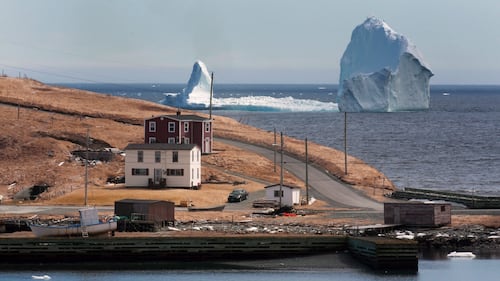
‘Iceberg Alley’ is a stretch of water along the eastern coast of Newfoundland and Labrador where icebergs can be seen.
A large iceberg is visible from the shore in Ferryland, an hour south of St. John's, Newfoundland on Monday, April 10, 2017. THE CANADIAN PRESS/Paul Daly
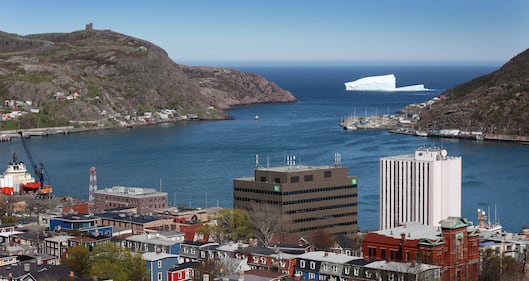
Iceberg Alley is well-known for several reasons, including the fact that the icebergs pose hazards for all the ships passing through.
An iceberg is seen just outside of the Narrows of St. John's Harbour on Friday, June 13, 2014. THE CANADIAN PRESS/Paul Daly
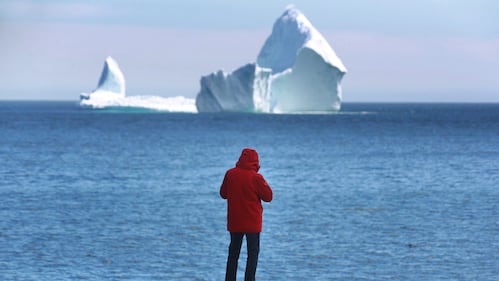
An iceberg is visible from the shore in Ferryland, an hour south of St. John's, Newfoundland on Monday, April 10, 2017. THE CANADIAN PRESS/Paul Daly
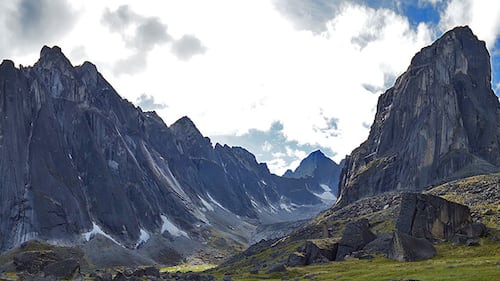
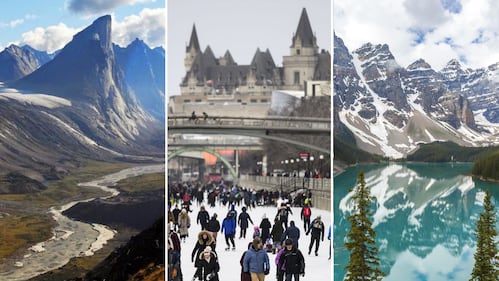
Considered a "paradise" for adventurers who pursue remote wilderness, with alpinists drawn to the Cirque of the Unclimbables, according to Parks Canada.
(Parks Canada)
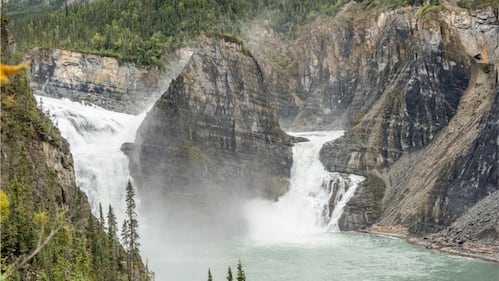
The 30,000 square-kilometre park in Northwest Territories features some of the deepest canyons in Canada, breathtaking alpine vistas and the South Nahanni, a Canadian Heritage River.
Virginia Falls in the Nahanni National Park Reserve is shown in a handout photo. THE CANADIAN PRESS/HO-Parks Canada
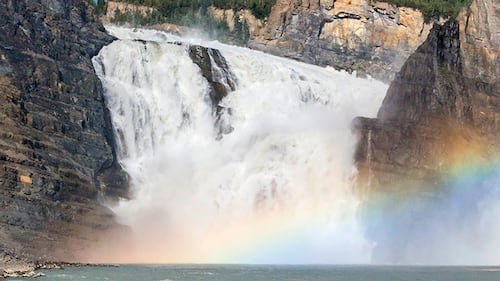
It’s also one of the first UNESCO World Heritage sites, awarded the designation in 1978 after it was given national park reserve status by then Prime Minister Pierre Trudeau in 1972.
(Parks Canada)
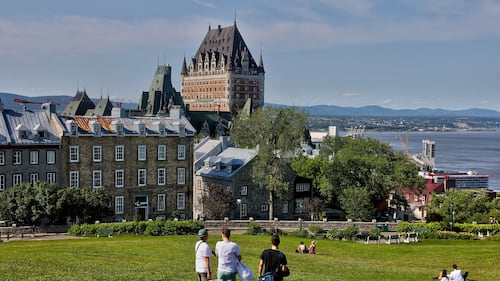
Old Quebec City is the birthplace of French North America and has been a UNESCO World Heritage site 1985.
People picnic along the Plains of Abraham with the Fairmont Le Chateau Frontenac visible in the distance in Old Quebec City on June 25, 2025. (Creative Touch Imaging Ltd./NurPhoto via Getty Images)
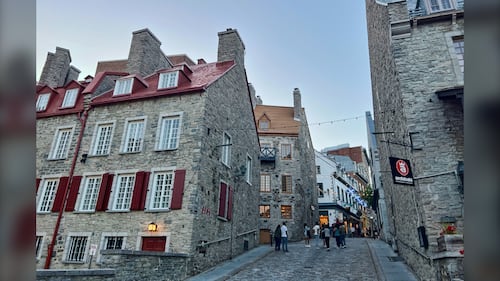
According to the city, it is most intact fortified town north of Mexico, and has retained its architecture more than 400 years.
European style buildings are in Old Quebec City on June 26, 2025. (Creative Touch Imaging Ltd./NurPhoto via Getty Images)
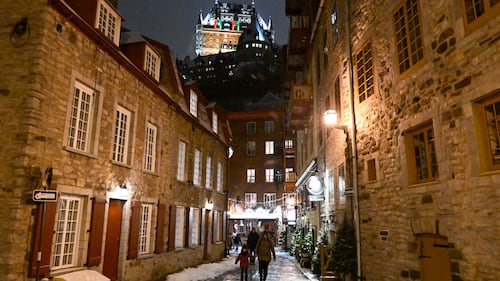
Christmas lights and decorations are seen in the old historic Quartier Petit Champlain in Quebec City on Wednesday, Dec. 21, 2022. THE CANADIAN PRESS/Jacques Boissinot
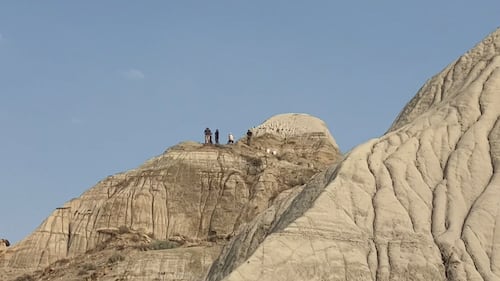
Dinosaur Provincial Park located in Alberta’s badlands contains some of the most important fossil discoveries ever made from the 'Age of Reptiles', according to UNESCO.
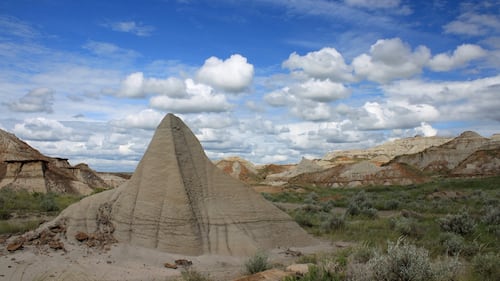
More than 300 first-quality dinosaur skeletons have been pulled from a 27-kilometre stretch along the Red Deer River since digging started in the 1880s, according to Parks Canada.
Dinosaur Provincial Park UNESCO World Heritage Site near Brooks, Alta. (Alberta Tourism)
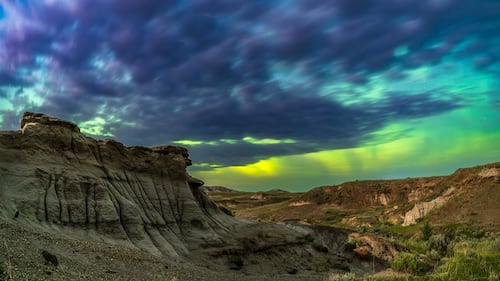
A moonlit scene at Dinosaur Provincial Park, Alberta, with a bright green aurora in the northeast behind the clouds moving in from the north, on June 2, 2025. (Alan Dyer/VWPics/Universal Images Group via Getty Images)
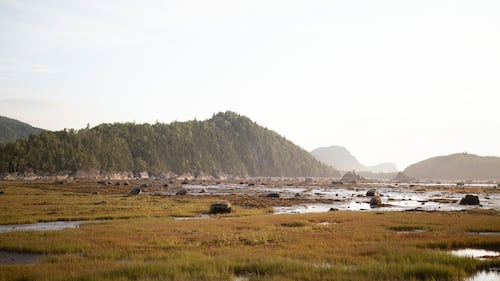
Miguasha National Park in Quebec is a UNESCO World Heritage site and is considered the "world's most outstanding illustration of the Devonian Period known as the 'Age of Fishes'."
(Sepaq/Quebec National Parks)
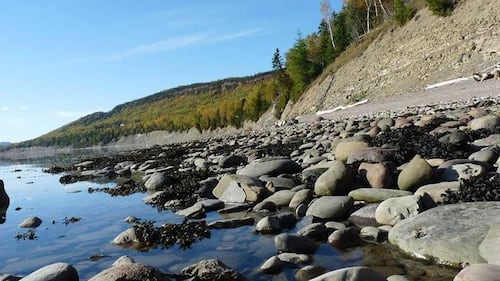
The site, located on the Gaspe Peninsula, holds a large number of “exceptionally well-preserved fossil specimens,” according to UNESCO.
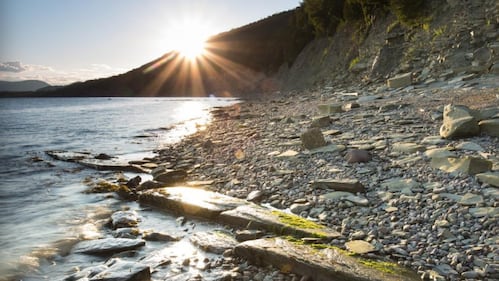
The Miguasha fossil beds were discovered in 1842, and thousands of fossil specimens were collected and shipped to museums and universities around the world in the 1880s, according to Parks Canada.
(Sepaq/Quebec National Parks)
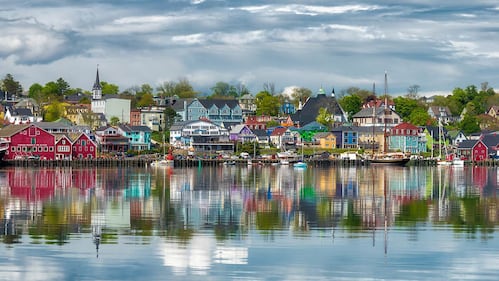
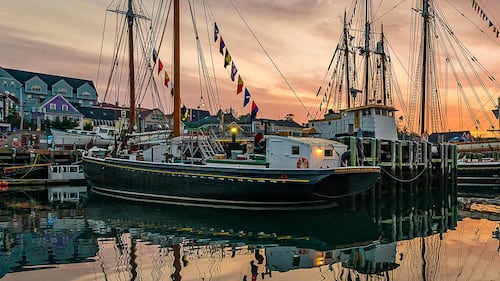
Old Town Lunenburg is considered the “best surviving planned British colonial town in North America,” according to Tourism Nova Scotia.
(Town of Lunenburg)
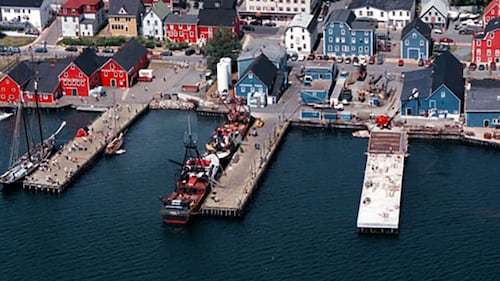
Old Town Lunenburg has retained its original layout and overall appearance, according to UNESCO, which it designated as a World heritage site.
(Town of Lunenburg)
(Town of Lunenburg)
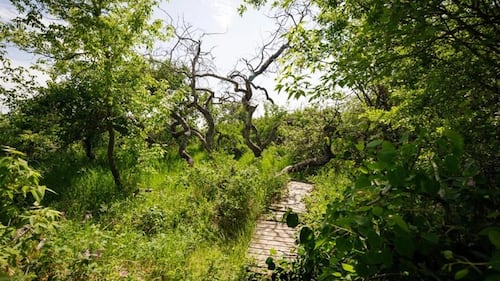
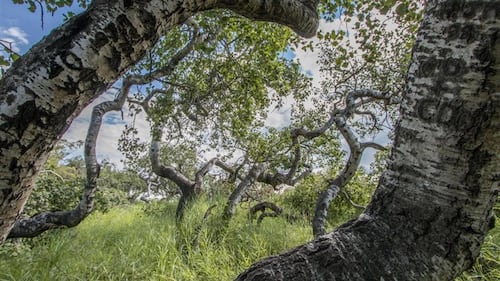
Just off a secluded Saskatchewan grid road is a botanical wonder that draws people from far and wide. What all those people come to see is the twists and turns of the unique aspen trees, which are about 70 years old.
(Tourism Saskatchewan)
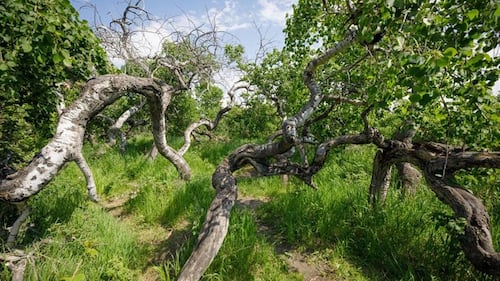
The trees are a genetic anomaly of mysterious origins, and piqued the interest of a group of Manitoba researchers about 20 years ago.
(Tourism Saskatchewan)
(Tourism Saskatchewan)
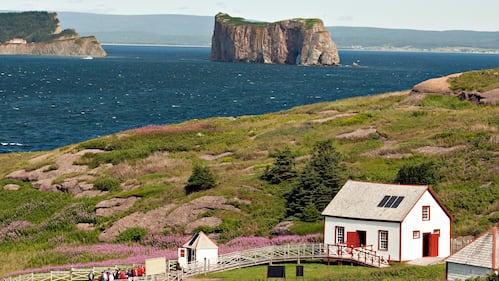
This impressive rock located in Percé Rock National Park in Quebec, was formed some 375 million years ago, and weighs about 5 million tonnes, according to Tourism Perce.
The Bonaventure Island overlooking the Perce rock Wednesday, July 25, 2012. THE CANADIAN PRESS/Jacques Boissinot
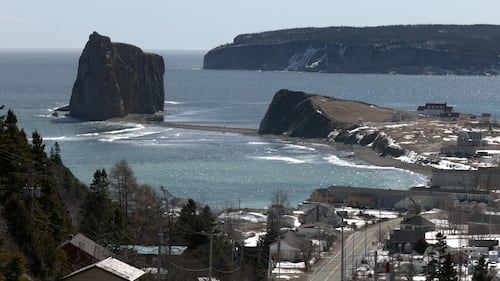
Parts of the iconic rock have crumbled over the years, and walking along the rock’s wall is prohibited.
Parts of the iconic rock have crumbled over the years, and walking along the rock’s wall is prohibited.
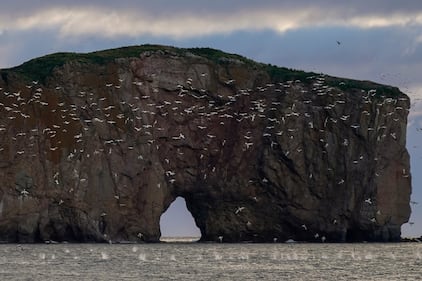
Northern gannets dive for fish near Perce Rock just after sunrise in Perce, Quebec, Canada, Thursday, Sept. 15, 2022. (AP Photo/Carolyn Kaster)
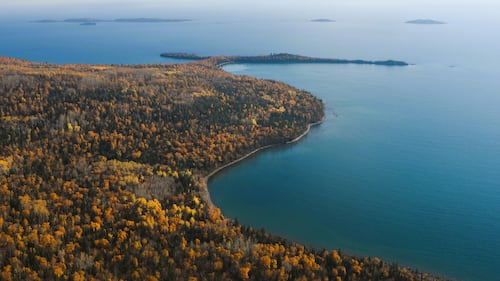
Sleeping Giant Provincial offers breathtaking views of Lake Superior and more than 100 kilometres of hiking trails.
(Sleeping Giant Provincial Park / Facebook)
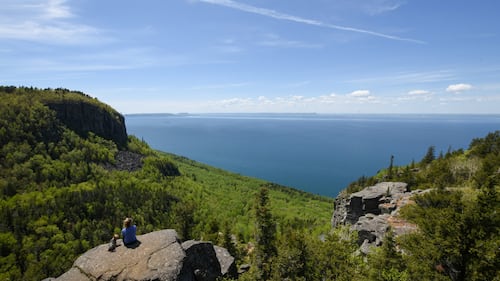
The park is famous for its difficult Top of the Giant Trail, which leads up to the tallest cliffs in Ontario with a spectacular lookout, according to Ontario Parks.
(Sleeping Giant Provincial Park / Facebook)
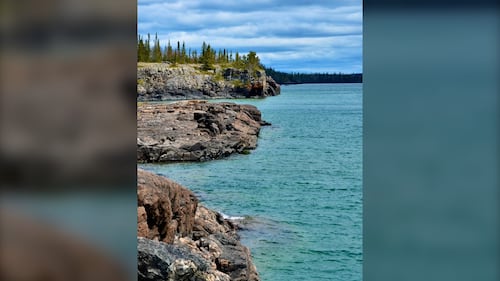
(Sleeping Giant Provincial Park / Facebook)
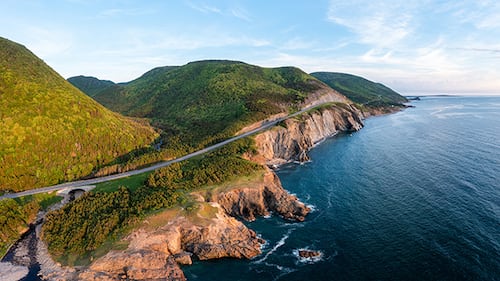
The world-famous Cabot Trail is located in Cape Breton Highlands National Park, and is known for its striking beauty and spectacular views.
(Parks Canada)
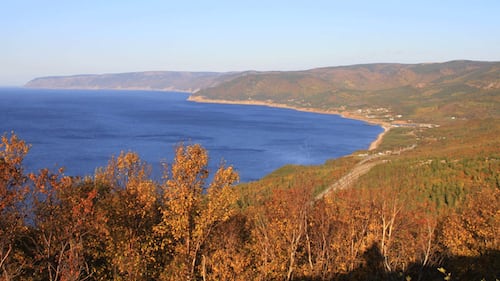
Roughly 300,000 people visited Cape Breton Highlands National Park in 2025. There are more than 30 hiking trails, beaches, lookoffs, campgrounds and cultural sites within the national park.
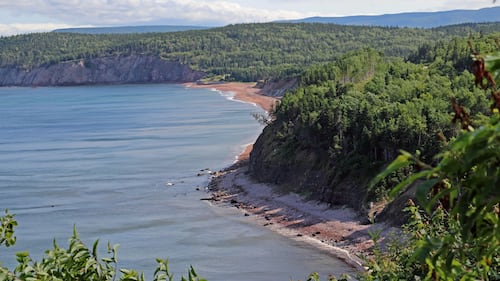
(Education Images/Universal Images Group via Getty Images)

The park, located in Newfoundland and Labrador, has "soaring fjords and moody mountains tower above a diverse panorama of beaches and bogs, forests and barren cliffs," according to Parks Canada.
(Parks Canada)
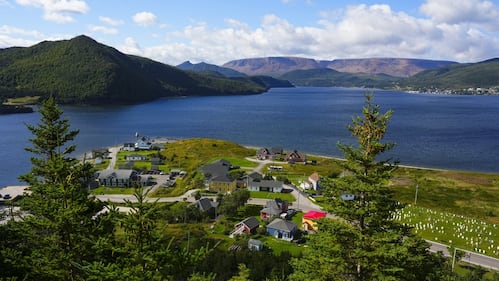
Gros Morne is a designated UNESCO World Heritage site, and “illustrates some of the world’s best examples of the process of plate tectonics.”
The Tablelands of Gros Morne National Park are pictured over Bonne Bay, N.L., on Sept. 4, 2024. THE CANADIAN PRESS/Sean Kilpatrick
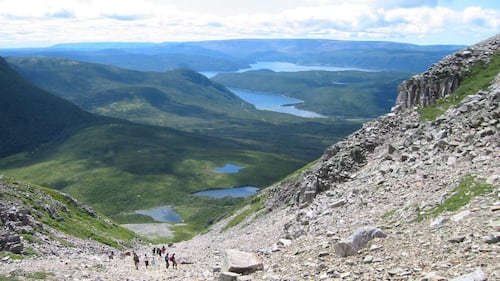
Hikers climb Gros Morne Mountain in western Newfoundland. THE CANADIAN PRESS/Melanie Patten
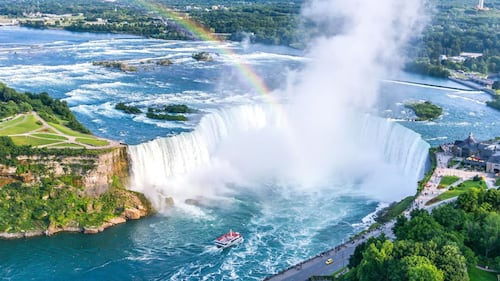
Horseshoe Falls, American Falls and Bridal Veil Falls make up the collection of falls straddling the border between Ontario and New York. The largest of the three, Horseshoe Falls, on the Canadian side, is approximately 57-metres tall and is the most powerful waterfall in North America.
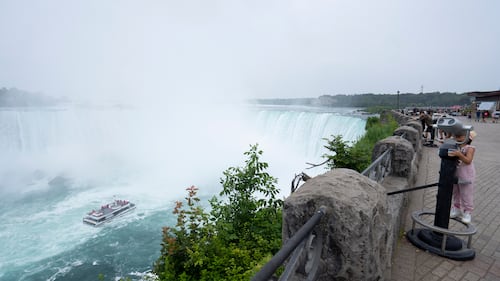
Whether its peering over the railing to watch the racing water tumble over the edge or gazing up at the immense falls from below on one of the area’s various boat tours, visitors will understand why the mighty falls attract so many fans year after year.
People gather under overcast skies in anticipation of watching the total solar eclipse from Niagara Falls, Ontario, Monday, April 8, 2024. (AP Photo/Matt Rourke)
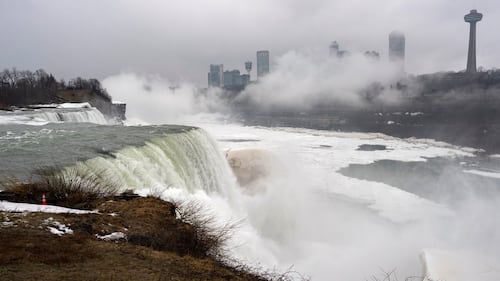
Despite the carnival-like atmosphere of its surrounding businesses and the sidewalks teeming with tourists, Niagara Falls is still an astounding attraction that everyone should try to see at least once in their lifetime.
Vapor rises from Niagara Falls, Friday, March 20, 2026, in Niagara Falls, N.Y. (AP Photo/Yuki Iwamura)
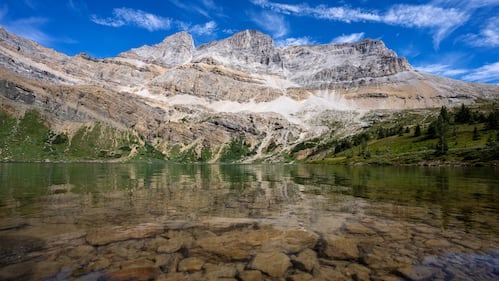
Banff is Canada’s first national park is part of the Canadian Rocky Mountain Parks UNESCO World Heritage Site.
Hidden Lake in Banff National Park is seen on Friday, Sept 1, 2022. THE CANADIAN PRESS/Todd Korol
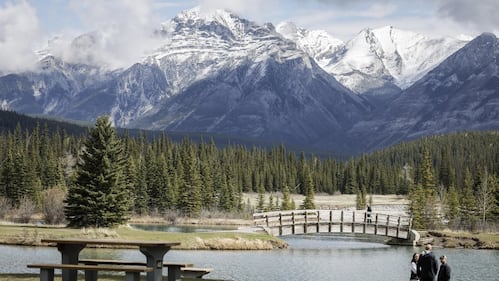
Visitors explore Cascade Ponds in Banff National Park, Alta., Thursday, May 15, 2025. THE CANADIAN PRESS/Jeff McIntosh
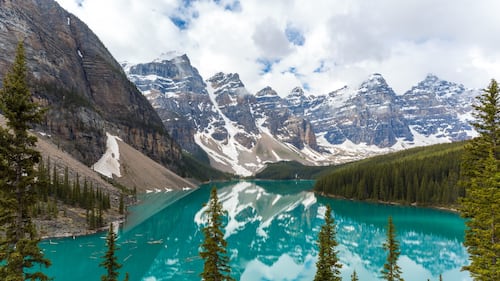
Lake Moraine is one of several stunning lakes located in Banff National Park and is known its turquoise-coloured water.
Moraine Lake and The Valley of the Ten Peaks in Banff National Park, Alberta. (Peter Adams/Avalon/Universal Images Group via Getty Images)
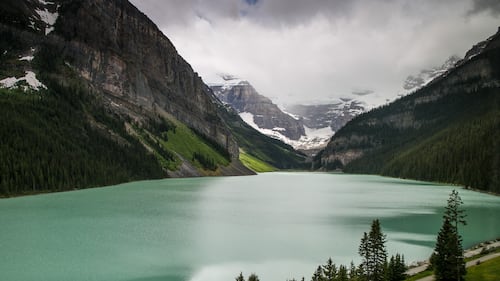
Lake Louise is the most popular of all Banff lakes, and is one of the most visited places in Canada. Lake Louise was once a wild outpost at the end of the Canadian Pacific Railway, according to Parks Canada.
The ever-changing weather conditions of Victoria Glacier and surrounding snowcapped mountains are reflected in the water of Lake Louise on June 26, 2013 in Alberta. (George Rose/Getty Images)
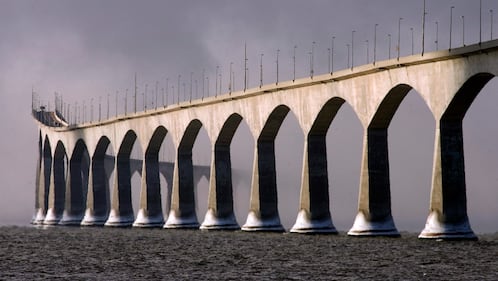
The 12.9-kilometre bridge connecting Prince Edward Island to New Brunswick, took four years to build and officially opened in 1997.
The Confederation Bridge seen from Borden, P.E.I. on Dec. 21, 2008. (THE CANADIAN PRESS/Andrew Vaughan)
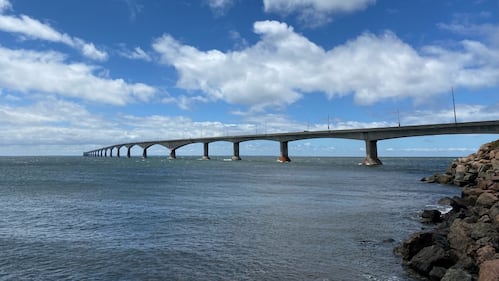
The curved bridge, considered a world engineering feat, is the longest in the world over ice-covered waters, with it’s highest point is 60 metres above sea level.
Prince Edward Island's Confederation Bridge is seen on May 31, 2022. (Jack Morse/CTV Atlantic)
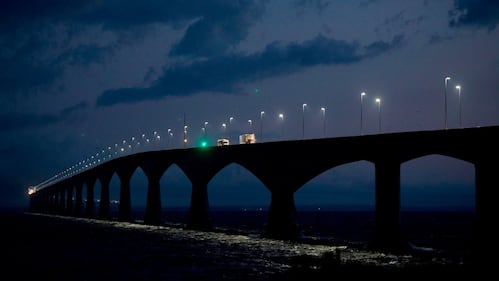
Trucks cross the Confederation bridge near Borden, P.E.I. late Wednesday, August, 14, 2013. (THE CANADIAN PRESS/Jonathan Hayward)
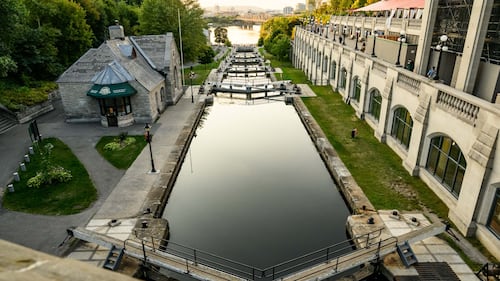
The Rideau Canal is a UNESCO World Heritage Site, spanning 202 kilometres from Ottawa to Kingston Harbour on Lake Ontario.
The Rideau Canal Locks are in Ottawa, Canada, on Sept. 10, 2025. (Domenico Cippitelli/NurPhoto via Getty Images)
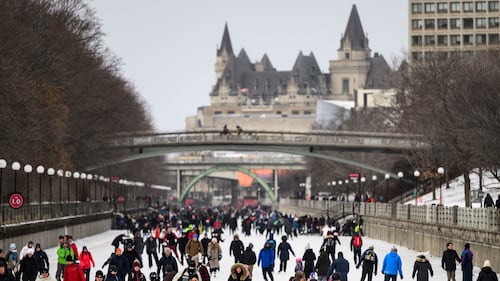
Every winter, a 7.8 kilometre stretch throughout the nation’s capital opens for skating and Winterlude activities.
Skaters make their way along the Rideau Canal Skateway on its opening day in Ottawa, on Saturday, Jan. 11, 2025. The Rideau Canal is a UNESCO World Heritage site. THE CANADIAN PRESS/Justin Tang
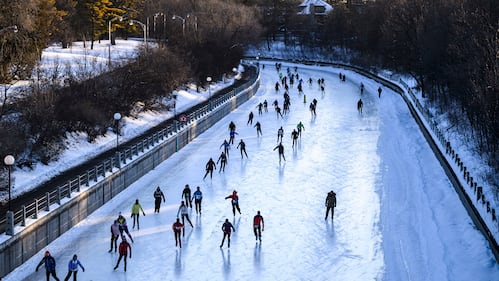
Racers make their way towards Dow's Lake on the Rideau Canal during the skate of the 41st Winterlude Triathlon, on the first weekend of the festival in Ottawa on Saturday, Feb. 1, 2025. THE CANADIAN PRESS/Justin Tang
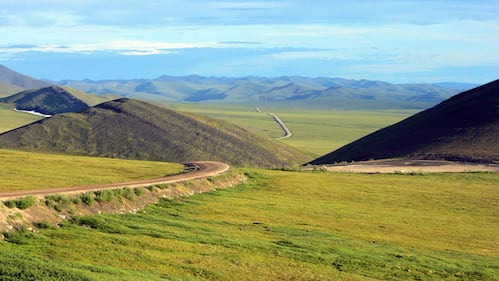
Dempster Highway is a 740-kilometre route from Dawson City, Yukon, to Inuvik, Northwest Territories, and also links to the Tuktoyaktuk Highway to the Arctic Ocean.
(Northwest Territories Tourism)
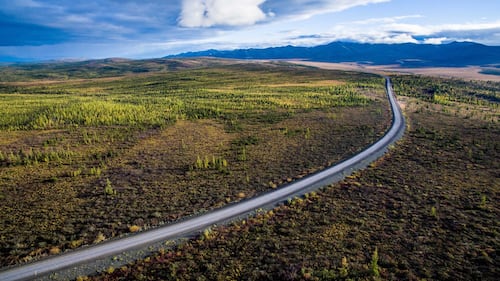
This remote route passes through the Arctic Circle, crosses the Mackenzie, Canada’s largest river basin, and onto the tundra.
(Northwest Territories Tourism)
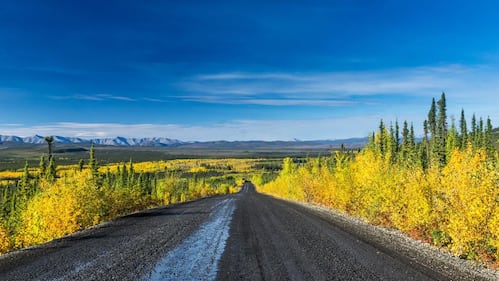
Notable sites along the route include Tombstone Territorial Park in Yukon, the Arctic Circle monument, glaciers, Nataiinlaii Territorial Park and Gwich’in Territorial Park in N.W.T., and the Arctic Ocean in Tuktoyaktuk.
(Northwest Territories Tourism)
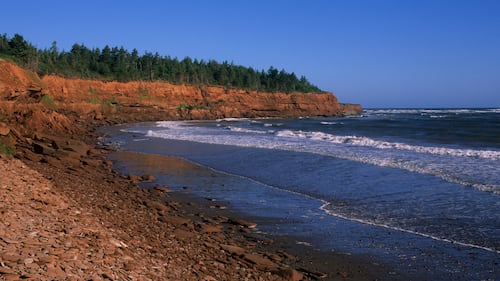
Despite its obvious claim to fame as the home of a certain literary redhead and her beloved Green Gables, Prince Edward Island is also well known for its rolling green hills, acres of farmland (potatoes, yes!) and iconic red sandy beaches.
Red soil at Prince Edward Island National Park. (Wolfgang Kaehler/LightRocket via Getty Images)
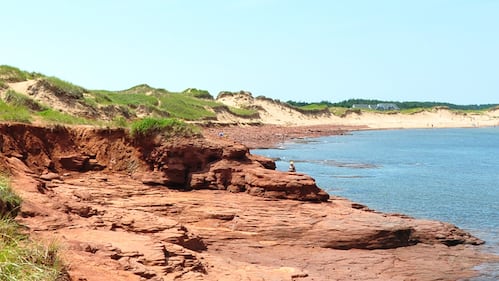
The island’s unique red shade comes from the high iron-oxide content in the soil and makes for a beautiful, picturesque scene, especially when contrasted against a backdrop of jagged dunes and sandstone cliffs.
The gateway to Prince Edward Island’s famous red-sand beaches, Charlottetown blends small-town warmth with quick access to scenic costal drives and postcard-perfect seaside views. (Parks Canada)
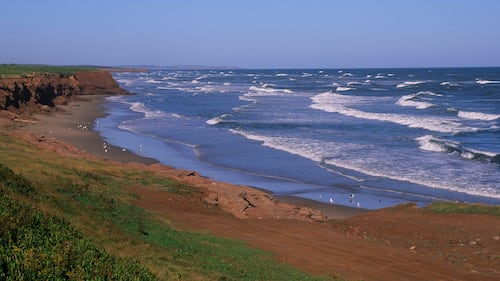
The province’s tourism website suggests renting a car and embarking on the charming 253-kilometre Central Coastal Drive, which passes by the famed Cavendish Beach on Green Gables Shore, on the northern portion of the route.
View of red beach near Rustico at Prince Edward National Par. (Wolfgang Kaehler/LightRocket via Getty Images)
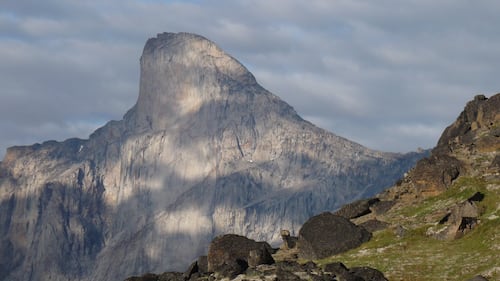
Mount Thor, or Thor Peak, is a mountain located in Auyuittuq National Park, on Baffin Island, Nunavut. It has an elevation of 1,675 m.
Mount Thor is located in Auyuittuq National Park, on Baffin Island, Nunavut. (Paul Gierszewski / Wikimedia Commons)
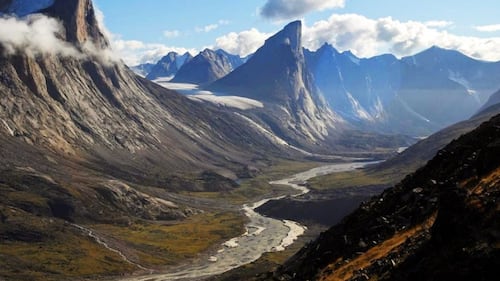
Thor Peak has the greatest vertical drop on Earth of 1,250 metres, according to Guinness World Records.
Mount Thor on the rim of Akshayuk Pass, showing the U-shaped glacial valley. (Swampgoth / Wikimedia Commons)

Auyuittuq is the "land that never melts" in Inuktitut, and is home to natural landmarks such as the Akshayuk Pass, Thor Peak and the Penny Ice Cap.
(Parks Canada)
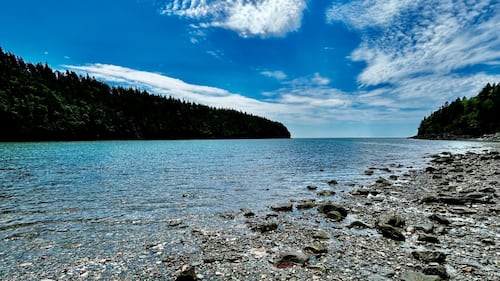
Twice a day, 160 billion tonnes of sea water from the Atlantic Ocean crashes in and out of the famed Bay of Fundy.
The bay, located between New Brunswick and Nova Scotia, is renowned for having the highest tides in the world (as much as 16 metres) and a unique ecological landscape.
The Bay of Fundy is pictured. (CTV News Atlantic)
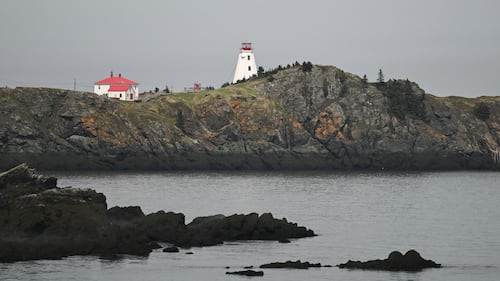
Every year, visitors flock to the Hopewell Rocks, about an hour’s drive south from Moncton, N.B., to admire the stunning misshapen cliff formations and to wait for the impressive tides to peak.
Swallowtail Lighthouse on Grand Manan island, New Brunswick on Thursday, May 8, 2025. THE CANADIAN PRESS/Graham Hughes
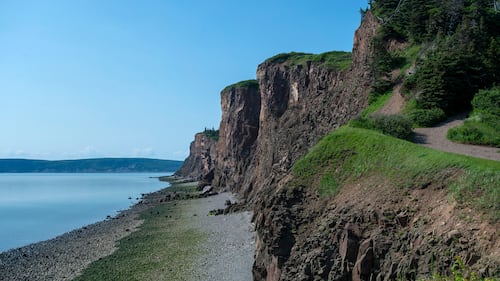
Its stunning coastline, ragged cliffs and thunderous tides make the Bay of Fundy truly a sight to behold.
Massive cliffs tower over the shore near the Cape d’Or Lighthouse, near Advocate Harbour, N.S., on Wednesday, July 3, 2019. THE CANADIAN PRESS/Andrew Vaughan
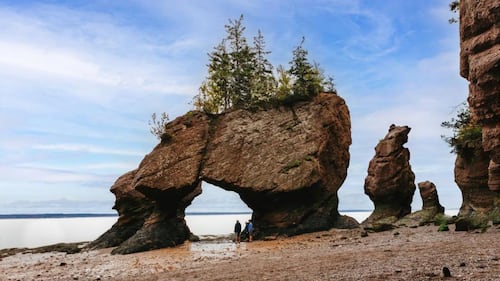
The massive tides of the Bay of Fundy have been “patiently sculpting their masterpiece” in Hopewell Cape for thousands of years, according to Parks New Brunswick.
(Tourism New Brunswick)
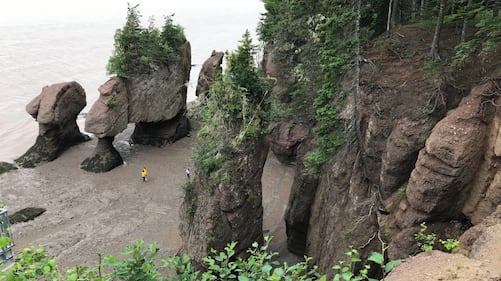
Hopewell Rocks features more than 20 free-standing sea stacks peppered along two kilometers of shoreline.
The Hopewell Rocks are seen at Hopewell Cape, N.B., on July 15, 2020. (CTV Atlantic / Jonathan MacInnis)
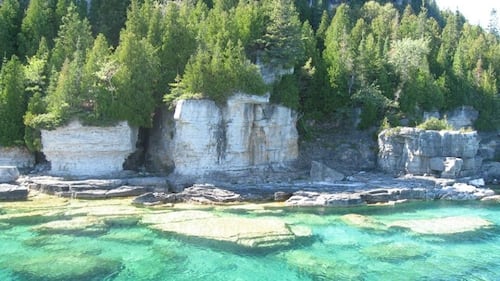
Located at the northern tip of the Bruce Pensinsula, Tobermory is the gateway to Fathom Five National Marine Park in Georgian Bay.
Cliffs are shown at the Fathom Five National Marine Park in Tobermory, Ont. (Explore the Bruce)
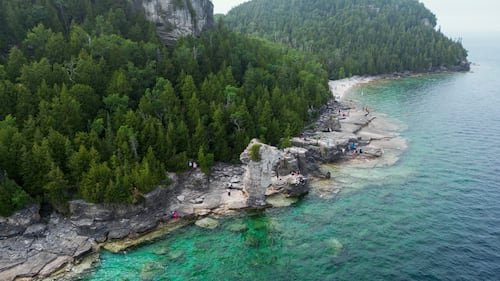
Flowerpot Island, famous for its natural 'flowerpot' rock pillars, caves and historic light station welcomes tourists during summer in Canada.
An aerial view of the Flowerpot Island in Tobermory, Ont., June 30, 2025. (Mert Alper Dervis/Anadolu via Getty Images)
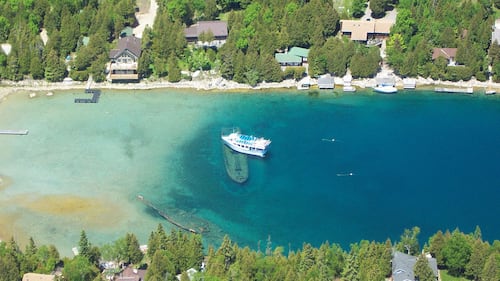
Tobermory is also a diving hub, with more than 20 shipwrecks to explore in clear waters at the marine park.
Sweepstakes is a popular tourist attraction and is frequently visited by divers and glass bottom boat tourists.
(Blue Heron Cruises)
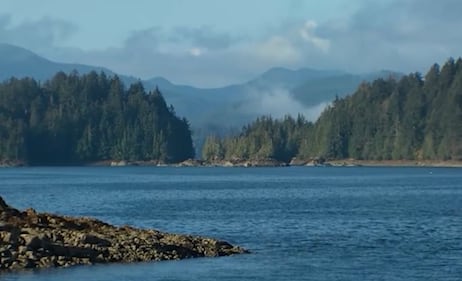
Haida Gwaii or “Islands of the People” is an archipelago off the coast off the northern coast of British Columbia, and is only accessible by air or sea.
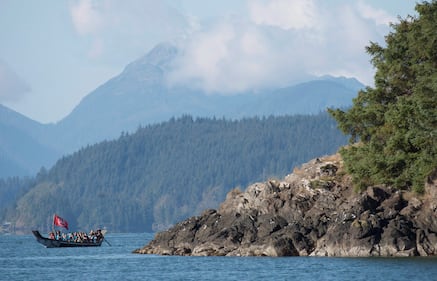
Archaeological evidence of human habitation on these islands dates back over 12,500 years, according to Parks Canada.
The Duke and Duchess of Cambridge paddle with a group in a traditional Haida canoe in the waters of Haida Gwaii, Friday, Sept. 30, 2016. THE CANADIAN PRESS/Jonathan Hayward
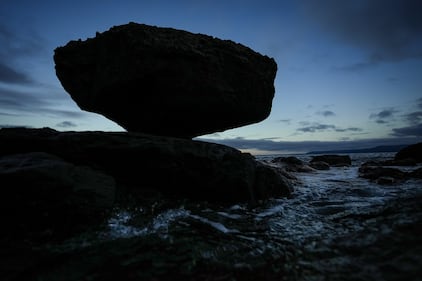
Balance Rock is silhouetted at dusk in Skidegate, B.C., on Haida Gwaii, Monday, Feb. 17, 2025. THE CANADIAN PRESS/Darryl Dyck
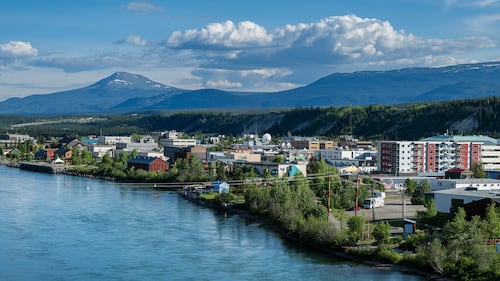
The Yukon River and downtown Whitehorse, Yukon, on Monday, June 24, 2024. THE CANADIAN PRESS/Mike Thomas
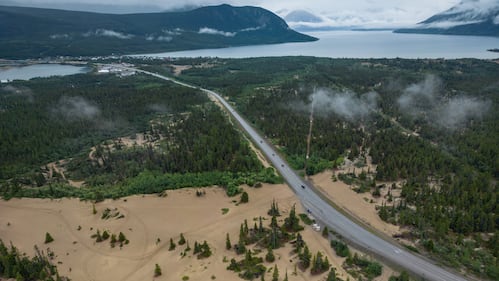
Motorists travel on the Klondike Highway past the Carcross Dunes in Carcross, Yukon, on Friday, July 25, 2025. The sand dunes were formed when a glacial lake dried up after the most recent Ice Age. THE CANADIAN PRESS/Darryl Dyck
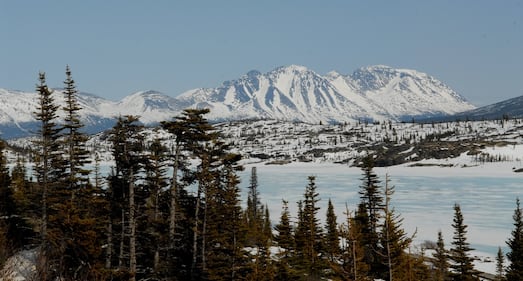
Snow covered mountains and a frozen lake along the Klondike Highway between Skagway, Alaska and Whitehorse, Yukon. (The Canadian Press / Don Denton)
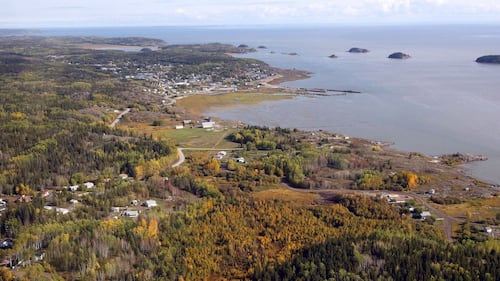
Wood Buffalo National Park is Canada’s largest national park and one of the largest in the world, protecting the country’s Northern Boreal Plains ecosystem, according to Parks Canada.
An aerial view of Fort Chipewyan, Alta., on the border of Wood Buffalo National Park is shown on Monday, Sept. 19, 2011. (THE CANADIAN PRESS/Jeff McIntosh)
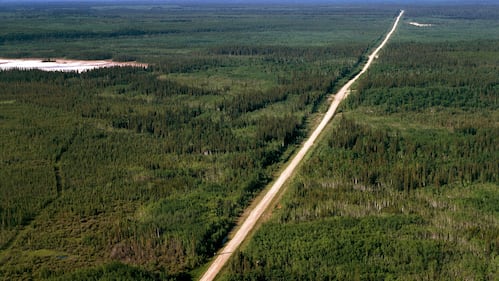
The park, which straddles the Alberta-Northwest Territories boundary, is one of the world's largest freshwater deltas and is the breeding ground for millions of migratory birds from four continental flyways.
Aerial view of Highway 5, Wood Buffalo National Park in Northwest Territories. (DeAgostini/Getty Images)
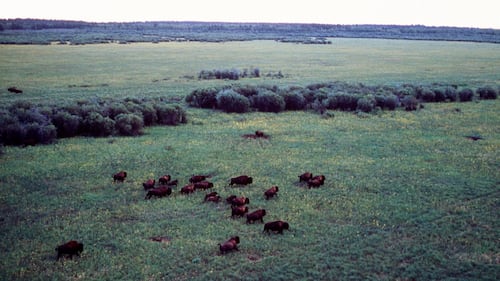
With almost 45,000 square kilometres of grasslands, wetlands and waterways, it is the world's only breeding ground for endangered whooping cranes and home to the world's largest herd of free-ranging wood buffalo.
American bison at Wood Buffalo National Park, Northwest Territories. (by DeAgostini/Getty Images)
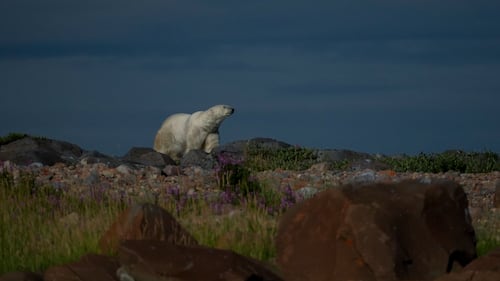
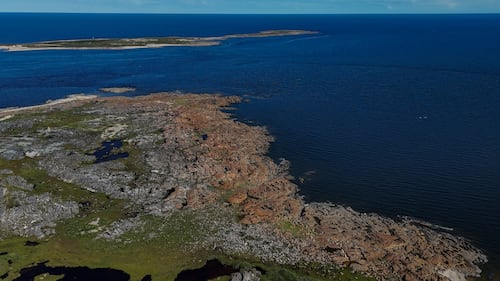
On the remote, southwestern shores of the Hudson Bay, the small town of Churchill, Manitoba, draws thousands of tourists year after year for its summering polar bear population.
A polar bear walks along rocks, Tuesday, Aug. 6, 2024, near Churchill, Manitoba. (AP Photo/Joshua A. Bickel)
Widely known as “the polar bear capital of the world,” Churchill sees about a thousand polar bears visit the area during the warmer months, from July to November.
The Churchill River, left, empties into the Hudson Bay, right, Thursday, Aug. 8, 2024, near Churchill, Manitoba. (AP Photo/Joshua A. Bickel)
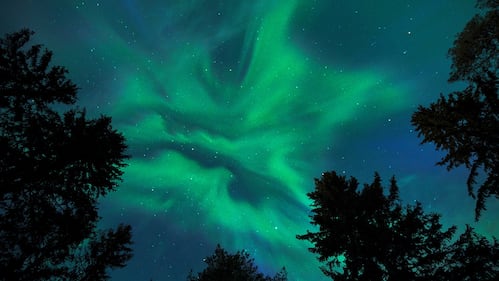
Churchill is also one of the top three places in the world to see the northern lights, and can be viewed most of the year, with ideal times from January-March, according to the Town of Churchill.
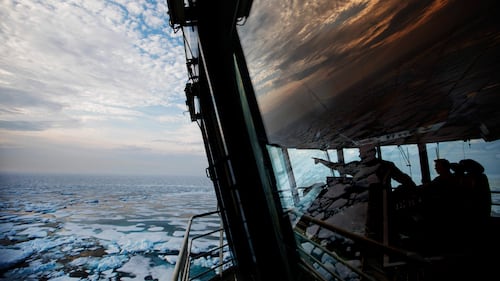
The maritime route that runs through Canadian Arctic islands is inaccessible for much of the year, but is considered a future strategic trade route as ice melts.
Nigel Greenwood, assistant ice navigator, left, talks with second officer Ilkka Alhoke on the bridge of the Finnish icebreaker MSV Nordica as they sail through sea ice while traversing the Northwest Passage in the Canadian Arctic Archipelago, Saturday, July 22, 2017. (AP Photo/David Goldman)
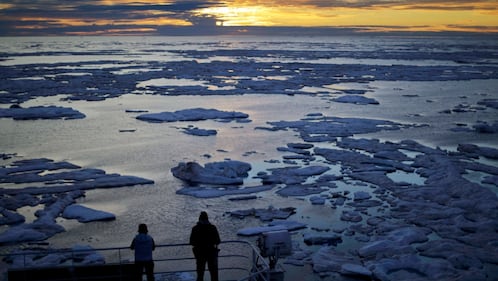
On July 26, 1845, an expedition to find the Northwest Passage led by British explorer John Franklin was last sighted off Baffin Island. The expedition never made it. Trapped by sea ice, Franklin and his men perished from cold, illness and starvation. Their two ships were found in 2014 and 2016.
Researchers look out from the Finnish icebreaker MSV Nordica as the sun sets over sea ice in the Victoria Strait along the Northwest Passage in the Canadian Arctic Archipelago, July 21, 2017. (AP Photo/David Goldman)
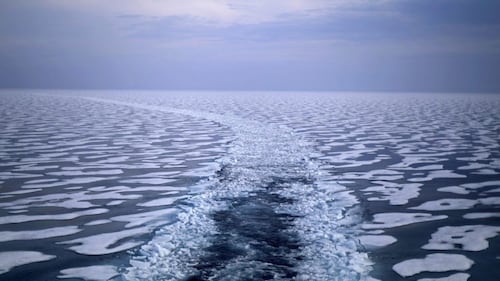
Scientists predict the Northwest Passage will be largely ice free in the summer by 2050 if current levels of warming continue.
A path in the ice is left in the wake of the Finnish icebreaker MSV Nordica as it traverses the Northwest Passage through the Franklin Strait in the Canadian Arctic Archipelago. (David Goldman/AP Photo)
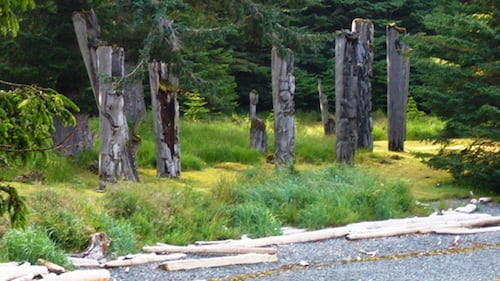
SGang Gwaay is located on Anthony Island at the southern tip of the Haida Gwaii archipelago in British Columbia, and is a UNESCO World Heritage site.
(Parks Canada)
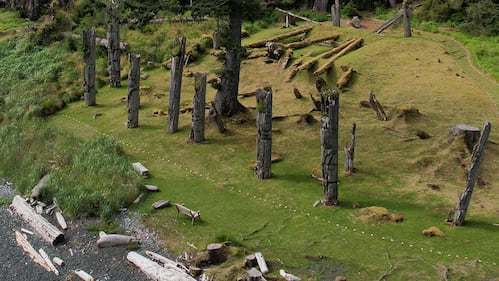
“What was once a vigorous Haida community of 300 people is today a haunting assemblage of weathered and fragmented house frames and mortuary and memorial poles” according to Parks Canada.
(Parks Canada)
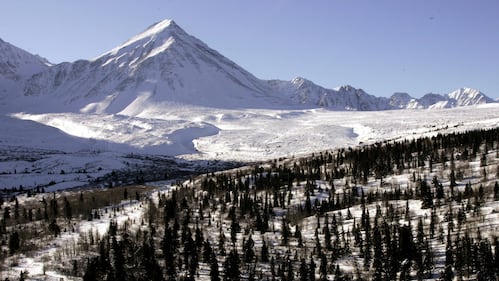
Home to Canada’s highest peak (Mount Logan at 5,959-metre tall), its largest ice field, clear lakes and more than 2,000 glaciers, Kluane National Park is truly a wonder to behold. The Park was designated a UNESCO World Heritage Site in 1980.
An arial view of Kluane National Park and Reserve in the Yukon Sunday March 4, 2007. (CP PHOTO/Chuck Stoody) CANADA
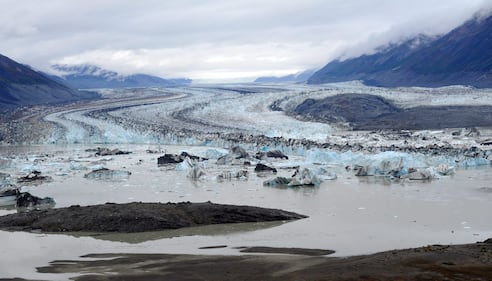
Located in southwestern Yukon, the gigantic park covers 22,013 square kilometres of untamed territory and breathtaking panoramas that will impress even the most seasoned traveller.
Lowell Glacier in Kluane National Park, Yukon on Friday, August 26, 2011. THE CANADIAN PRESS/Sean Kilpatrick
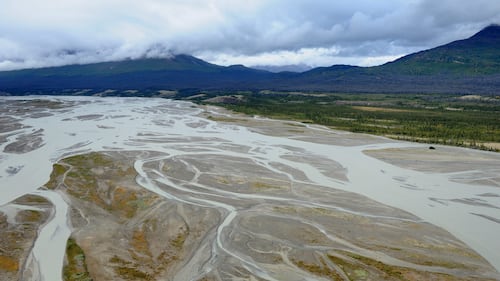
The most genetically diverse grizzly bear population can also be found roaming in the park’s valleys of coniferous and deciduous forests along with other wildlife such as, caribou, moose, mountain goats and black bears.
Alsek River in Kluane National Park, Yukon on Friday, August 26, 2011. THE CANADIAN PRESS/Sean Kilpatrick
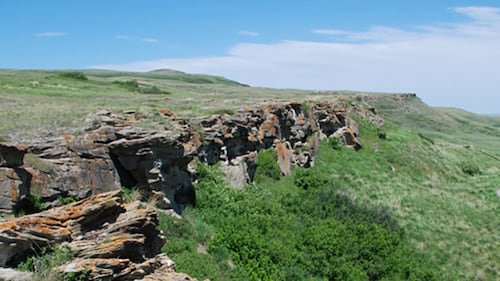
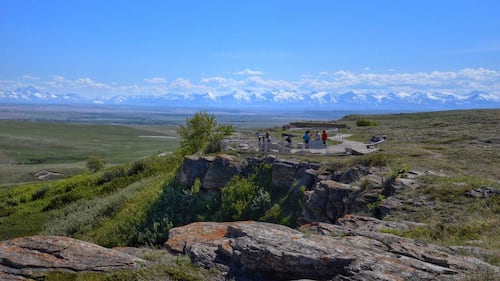
Head-Smashed-In Buffalo Jump is a UNESCO World Heritage Site located on the traditional territory of the Blackfoot Confederacy in Alberta and highlights their stories, traditions and knowledge.
(Parks Canada)
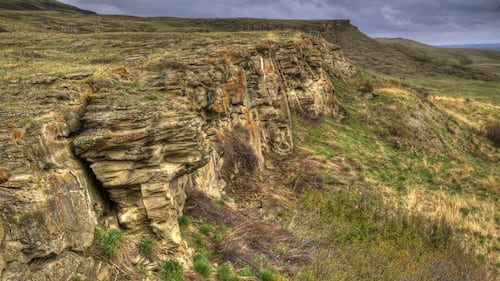
The historic site “preserves and interprets over 6,000 years of Plains Buffalo culture,” according to its website.
(Head-Smashed-In Buffalo Jump World Heritage Site)
(Head-Smashed-In Buffalo Jump World Heritage Site)

Part of UNESCO's Canadian Rocky Mountain Parks World Heritage Site, Jasper boasts the world's second-largest dark sky preserve.
(Parks Canada)
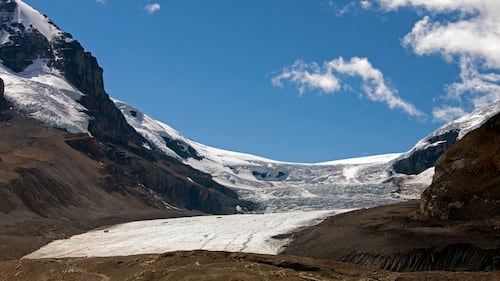
The parks is home to hundreds of glaciers including the well-known Athabasca glacier, and many more along the iconic Columbia Icefield.
Tourists visiting retreating Athabasca Glacier, part of the Columbia Icefield in the Canadian Rockies, Jasper National Park, Alberta. (Arterra/Universal Images Group via Getty Images)

"Adventurers can take advantage of alpine day hikes, incredible backcountry locations, adrenaline pumping mountain biking and great paddling," according to Parks Canada.
(Parks Canada)
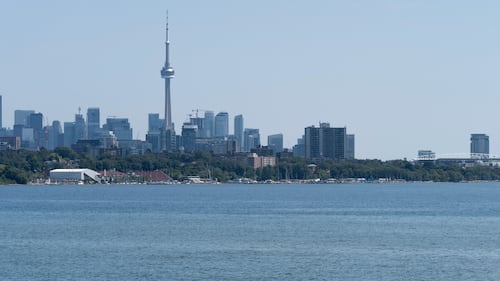
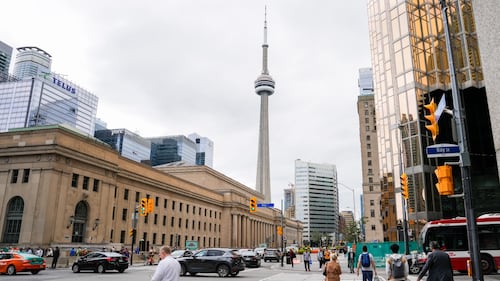
The 553.3-metre Toronto landmark was the tallest freestanding structure in the world from 1974-2009 and offers breathtaking panoramic views of the city and waterfront.
The CN Tower looms in the distance as a pair of kayakers paddle on Lake Ontario in Toronto, on Tuesday, Aug. 22, 2023. THE CANADIAN PRESS/Spencer Colby

Construction began in 1973 to strengthen broadcast signals across the region. It was completed in 1975 and opened to the public in 1976.
The CN tower is seen through a partially open Rogers Centre dome as the Toronto Blue Jays take on the Minnesota Twins during MLB baseball action in Toronto, on Tuesday, Aug. 26, 2025. THE CANADIAN PRESS/Sammy Kogan
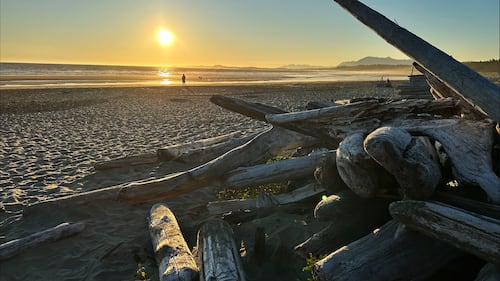
Pacific Rim National Park Reserve off Vancouver Island is known for its long beaches, "unspoiled temperate rainforests and adventures that will delight the explorer in all."
People are seen on Wickaninnish Beach at Pacific Rim National Park near Tofino, B.C., on Tuesday, July 29, 2025, amid a tsunami advisory. THE CANADIAN PRESS/Dirk Meissner
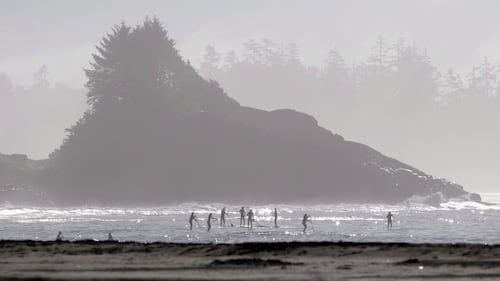
Located within the park is Tofino, the surfing capital of Canada, and known for its relaxed atmosphere, storm watching and beach vibes.
Paddlers are seen below a massive outcropping of rocks during the first annual West Coast SUP Symposium in Tofino, B.C., Saturday, Oct. 3, 2015. THE CANADIAN PRESS/Chad Hipolito
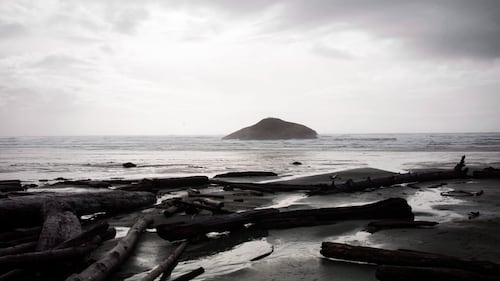
Driftwood is piled up along Long Beach, in the Pacific Rim National Park on Tuesday, Jan. 23, 2018. THE CANADIAN PRESS/Melissa Renwick
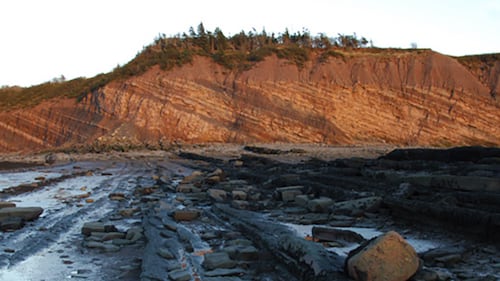
"Towering cliffs reveal the world’s most complete fossil record of life in the ‘Coal Age’ when lush forests covered Joggins and much of the world’s tropical regions, 300 million years ago," according to Tourism Nova Scotia.
(Parks Canada)
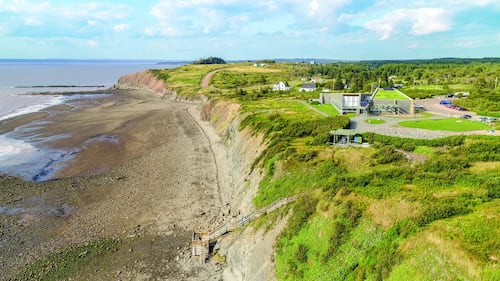
New, rare fossils may be exposed from "Constant erosion from the Bay of Fundy’s tides, rising and falling up to 13 metres in Joggins twice daily."
(Tourism Nova Scotia)

Located in the Rocky Mountains, the park has "clear lakes, thundering waterfalls, rainbow-coloured streams, colourful rocks and mountain vistas" for hikers and sightseers.
(Parks Canada)

Visitors can experience abundant wildlife while exploring a "vivid red canyon to mist-cloaked waterfalls." (Parks Canada)
(Parks Canada)
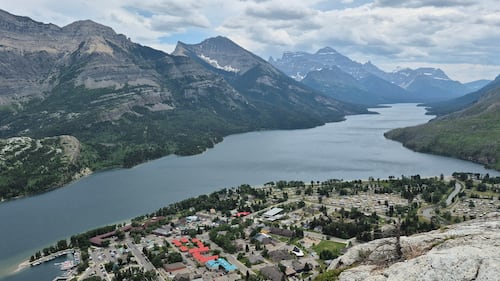
The Waterton townsite at Waterton Lakes National Park, Alta., is seen on Wednesday, June 25, 2025. (THE CANADIAN PRESS/Curtis Ng)