Lawyers for the provincial government tangled with lawyers for two cancer patients who were denied public funding for out-of-country treatment for their rare conditions in Ontario’s Divisional Court on Tuesday.
The lawyers for Kevin Nash and Sabrina Apitz-Grossman said the two patients were given a runaround in their applications for funding and further disadvantaged when Ontario retroactively changed a regulation after a different patient won a separate court challenge a few months back.
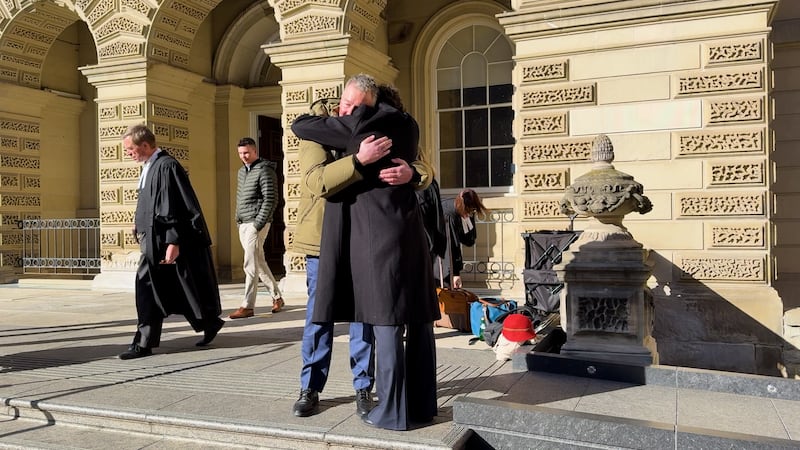
“The government has doubled down on its own unfairness by not only denying funding but by retroactively changing the regulations to cancel the out of country approval program as it existed and extinguishing the applicants’ request,” said lawyer Alyssa Holland.
Lawyers on behalf of the Ontario government say the province is free to set the terms of health care coverage, and that limiting public funding doesn’t trigger any reason for the courts to intervene.
“Limits on funding don’t deprive individuals of their right to life and security of the person under the Charter,” said lawyer Matthew Horner.
“Funding some treatments and not others is a necessary part of a public health care system,” he said.
- How to set CP24 as your preferred source on Google
- How to set CTV News as your preferred source on Google
Speaking to reporters at Queen’s Park, Ontario’s premier, Doug Ford, invoked the memory of his late brother Rob Ford to express sympathy for the patients.
Ford said he would, however, not reinstate funding for out-of-country treatments to stop foreign pharmaceutical companies from taking advantage of the province’s public health care system.
“First of all, it’s heartbreaking. I remember when my brother passed away from cancer… Rob, I was willing to do anything. You’re at that desperate point,” he said.
“A lot of these companies are saying, ‘I don’t want to go through the process. I don’t want to go through Health Canada, and they want to take advantage of people in need of treatment. So we’re going to continue trying to support these people as much as possible. What they’re trying to do is enhance their bottom line, which is terrible in my opinion. They’re trying to circumvent the process,” Ford said.
Outside court, Nash told reporters that the aggressive melanoma he is fighting means the stakes can’t be higher.
“It’s life or death. If I don’t win this, I won’t get TIL therapy, and my odds of living much past February are zero,” he said.
“The cancer is spreading everywhere now, and eventually it will start breaking through my skin, my hips will become riddled with cancer, and I won’t be able to walk,” he said.
Nash is among a group of Canadians whose rare diseases aren’t responding to typical treatments available in Canada.
Their doctors have recommended treatments available only in the United States, and these patients had previously attempted to get funding for those treatments using programs that offer them some hope, including the Case By Case Review Program and the Out of Country Prior Approval Program.
However, the patients say they have been subjected to unusual delays and denials. Apitz-Grossman said her urgent request for funding for her synovial sarcoma was delayed for weeks, and then she was told in her denial letter to appeal to the Health Services Appeal and Review Board.
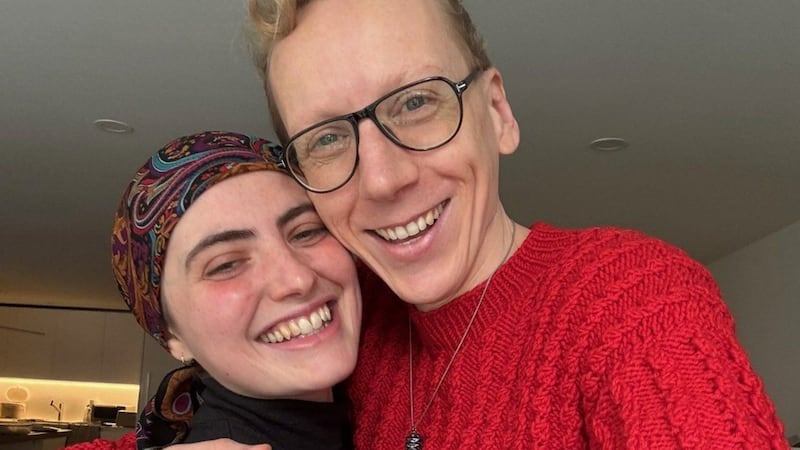
However, when she did that, government lawyers successfully argued that the board did not have the jurisdiction to hear the case, setting her back months, she said. In September 2025, she was told she had between 12 and 18 months to live.
She said it was frustrating that a previous patient, Alex Schved, won in court, with judges finding he was eligible for some $515,000 USD in treatment. But then the provincial government retroactively changed the rules so that the program would apply only to treatments that are currently funded, but there is some temporary disruption in access locally.
“It’s a sports analogy. Like, you ask for a video review, and in the middle of the video review, the ref decides that during the whole time you were allowed to be offside. It’s not the rules of the game usually,” she said.
Even if the pair are successful in their challenge, other people in Ontario who are diagnosed with rare diseases for which there is no treatment in Ontario would appear to be on their own when it comes to paying for treatment.
In announcing the change on Oct. 6, the Ontario government said “clarifying” the regulation retroactively to 2011 would save the Ontario Health Insurance Plan $5.2 billion.
In his remarks in the legislature hallways, Ford said he was “hearing numbers of $5 billion.”
However, government lawyers did not quote that figure, and the patients’ lawyers said the range of figures quoted in the press were “remarkably high but have not been produced with reliability on the record.”
When asked about that figure outside court, Holland said, ‘It’s not substantiated anywhere in the evidence.”
In another part of the announcement, the government referenced the policy change would “limit the significant increase in requests for out-of-country treatments that has occurred over the past few years, which would otherwise incur up to $170 million in additional annual costs.”
Nash said he’s not going to give up—even if he dies while trying.
“If I die in February, there’ll be another Kevin Nash fighting for this because it’s fundamentally wrong,” he said.

