
Police raided yet another magic mushroom store in Ontario earlier this month.
Investigators report shutting down a Shroomyz store on Main Street in Hamilton on Sept. 5.
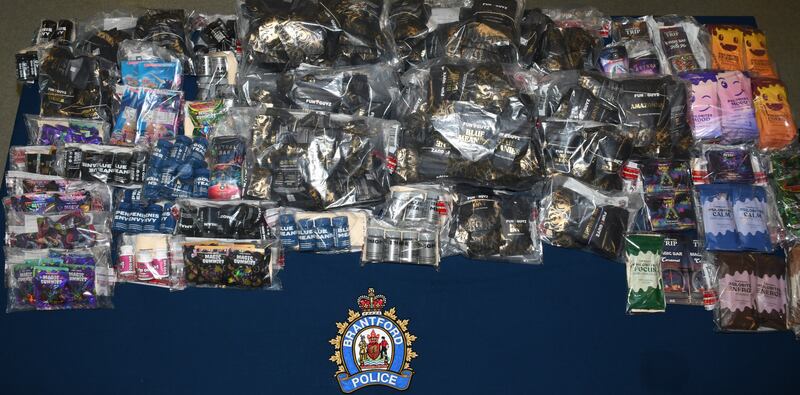
Hamilton police say they seized more than $12,000 worth of psilocybin mushrooms, otherwise known as magic mushrooms, from the dispensary and arrested an employee “without incident.”
The raid was just the latest in a series of incidents involving illegal dispensaries in the Greater Toronto and Hamilton Area (GTHA).
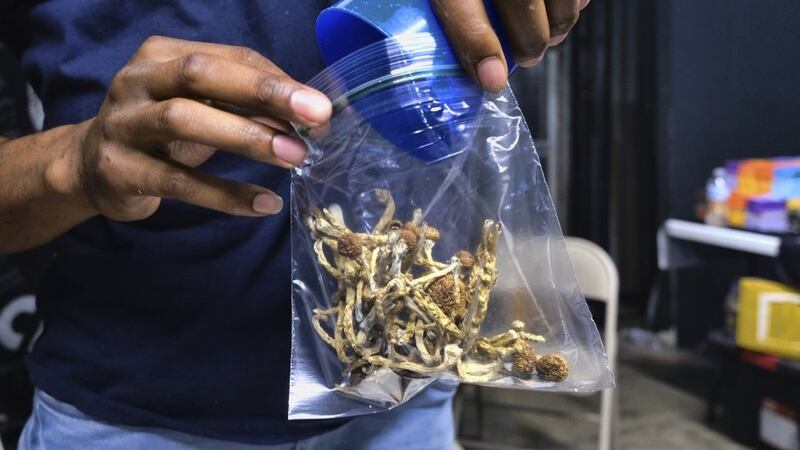
Psilocybin mushrooms are hallucinogenic fungi that are illegal under the Controlled Drug and Substances Act.
In recent years, magic mushroom shops have been routinely raided across Ontario. CTV News has previously reported on searches in Sudbury, Barrie, and Windsor. But the shops continue to crop up.
On Aug. 19, police raided a Fun Guyz magic mushroom store on Baldwin Street, in Kensington Market. Police said the store was operating illegally and an employee was arrested at the time and charged with drug trafficking offences.
There have also been numerous incidents that have appeared to target the businesses in the GTA.
On Aug. 21 a pickup truck crashed into a Shroomyz dispensary near Bloor Street and Brunswick Avenue, in the Annex.
A vehicle also crashed into another Shroomyz location near Yonge and Grosvenor streets on Aug. 11.
That incident came less than a week after police were called to the same location for a suspected arson.
It is not currently known if the incidents are connected.

‘More than an occasional blind eye’
Andrew Hathaway, a University of Guelph professor who specializes in Canadian drug policy, spoke to CTV News Toronto about the possible future of magic mushroom dispensaries.
He said that for now, police appear to be largely turning a “blind eye” to the businesses.
“I’d say more than an occasional blind eye, I’d say pretty consistent blind eye, until on occasion, they see the need to enforce the law,” Hathaway said. “Perhaps there’s a sense the envelope has been pushed, has become a little too visible, a little too out there. It might come on the heels of a complaint from a community citizen, who doesn’t appreciate it being so in their face.”
Toronto police told CTVNews.ca in a statement that “officers are largely responding to community complaints about psilocybin dispensaries, and when a report is made, it is investigated.”
However, in that same statement, police conceded that “as soon as these shops are closed, they often reopen shortly after under the same or different names.”
The store in Kensington had been open for months prior to the raid and appeared to still be serving customers after the raid.
Hathaway remembered the situation in the city prior to the legalization of cannabis when he said that many businesses openly flouted the law and raids were commonplace.
“We’re seeing pretty much the same with mushrooms now,” he said.
‘Going to go the way of marijuana’
Chris Lewis. a former Ontario Provincial Police commissioner and the public safety analyst at CTV News, previously told CTV News that “it’s been pretty obvious (magic mushrooms) are going to go the way of marijuana in terms of legality.”
He said that while some may question why so many of the shops are able to openly flout the law, it likely comes down to resources.
“You think of the protests every day all over the city, you only have so many officers to deal with all that and you only have so many officers to fight the narcotics problems.”
“What so many departments have been doing is basically, unless they get complaints, unless it becomes apparent that young people are being sold to by these places, they’ve been really letting them ride, waiting for the legislation to change, and using their very limited resources to fight bigger problems.”
‘A bit of a new age kind of hippy thing’
The Government of Canada has said that “there is little evidence that people can become physically or psychologically dependent on magic mushrooms.” However, it says that “magic mushrooms may cause you to see, hear or feel things that are not there, or to experience anxiety, fear, nausea and muscle twitches accompanied by increased heart rate and blood pressure.” It also points out that “no studies have evaluated the long-term effects of repetitive use of magic mushrooms.”
The University of Ottawa unveiled a master’s program in Psychedelics and Consciousness Studies in May of last year and the Michener Institute in Toronto has a course listed called “Foundations of Psychedelic Psychotherapy.” Both of these work towards developing psychedelics as a normalized medicinal tool.
Nonetheless, Hathaway admits that mushrooms are “still seen as a bit of a new age kind of hippie thing” but he says “that’s starting to change.”
“Young people are experimenting with micro dosing and things like that, which is a very different kind of purposeful use, trying not to alter your consciousness too excessively. So you can use it in an everyday kind of functional capacity for work and for recreational purposes,” he said.
Health Canada has approved more than 300 exemptions to allow people to undergo psilocybin-assisted therapy since a Saskatoon man was first granted access in 2020.
Toronto police say that their enforcement activities right now are largely focused on the trafficking of “illegal drugs that are resulting in overdose deaths and having a traumatic and devastating impact on our communities.”
Lewis agrees with Toronto police that there are more dangerous drugs, specifically fentanyl, “That’s what’s killing more people across Canada than any drug ever in history.”
“You’ve got X number of drug enforcement people, where are you going to put your efforts? A drug that’s kind of wishy washy, is it illegal? Is it not? Is there benefit to it? Its kind of still up in the air, versus drugs that are killing people in the street, and that’s what happening to magic mushroom enforcement.”
With files from The Canadian Press.

